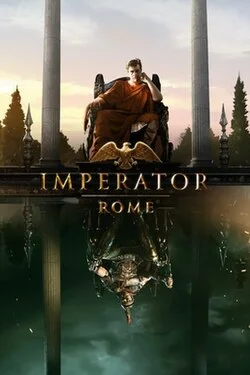
Imperator: Rome
 76
★ /10
76
★ /10
 PC
PC

Imperator: Rome (2019) holds one of the most turbulent, fascinating, and triumphant redemption arcs in the entire history of grand strategy gaming. Released on April 25, 2019, on a highly advanced, visually sweeping iteration of the 3D Clausewitz Engine (leveraging the Jomini toolset), the title was designed as the ultimate spiritual successor to 2008’s Europa Universalis: Rome.
At launch, the game suffered from a severe backlash from fans who felt the gameplay was a shallow hybrid of EU4 and CK2, overly reliant on abstract “mana points”. However, instead of abandoning the title immediately, Paradox executed one of the most aggressive, foundational mechanical redesigns in studio history, culminating in the legendary 2.0 “Marius” Update. Though Paradox officially paused active studio development shortly after, the structural bones left behind were so masterfully tuned that the game underwent a massive, community-led renaissance.
The Classical Canvas: 304 BCE to 27 BCE
The grand strategy simulation narrows its scope to antiquity, mapping an incredibly detailed, high-resolution grid of the ancient world stretching from the fog of Scotland across the Mediterranean and North Africa all the way to the wealthy borders of the Maurya Empire in India.
The campaign engine sets its starting gun explicitly in 304 BCE (conventionally tracked as 450 Ab Urbe Condita—the founding of Rome). This drops players right into the immediate chaos following the death of Alexander the Great during the Wars of the Diadochi, while a young Roman Republic begins its early regional struggles against the Samnites. The timeline ticks forward in pausable real-time to a hard stop in 27 BCE, capturing the exact historical collapse of the Republic and the rise of the absolute Roman Empire. Players can command any independent nation, city-state, or migratory tribe active on Earth during this era.
Key Mechanical Masterstrokes
1. The Marius 2.0 Military Metamorphosis (Levies vs. Legions)
The baseline launch model of spamming gold to instantly recruit arbitrary cohorts was completely eradicated by the 2.0 Marius overhaul. Warfare was re-engineered around the realistic social structure of the ancient world:
- Provincial Levies: When a war breaks out, you do not build units; you dynamically raise Levies from your administrative provinces. The engine physically transforms a percentage of your local, non-slave population (POPs) into active soldiers. If your levy units are wiped out in combat, those explicit citizens are permanently erased from your economy. After the war, you must disband your levies so they can return to their home fields, preventing your farms from falling into ruin.
- Standing Professional Legions: As your civilization unlocks deep Civic technologies and passes advanced military laws, you gain the ability to establish permanent, standing Legions. Legions do not disband, maintain incredibly high baseline discipline, and can construct specialized military roads across map coordinates. However, they are incredibly expensive to maintain and carry a dangerous risk: long-serving legions will shift their personal loyalty away from the senate or king and become fiercely loyal to their commanding General, setting the stage for a sudden, empire-shattering Civil War.
2. The Granular Pop Engine
The economic and social health of your empire is dictated by managing millions of individual citizens split across five strict Population Classes (POPs):
- Nobles: The elite tier; generates massive amounts of research points and baseline trade routes, but demands high luxury imports and easily fuels political unrest.
- Citizens: The administrative backbone; provides research output and forms the core of your high-tier heavy infantry levy regiments.
- Freemen: The baseline military manpower pool; provides minimal tax value but represents the primary raw numbers required to replenish standard army cohorts.
- Tribesmen: Prevalent in decentralized regions; generates minor tax and basic manpower, but severely reduces local provincial civilization values.
- Slaves: The purely agrarian blue-collar workforce; completely barred from military service, but generates the raw provincial gold taxes and resource surpluses required for international export.
Your primary societal challenge is managing the Religion and Culture of these POPs. Conquering vast foreign territories floods your borders with un-assimilated populations. If their culture group’s happiness drops too low, provinces will cease paying taxes, halt trade, and eventually launch massive, synchronized provincial independence rebellions.
3. Branching Military Traditions
To differentiate factions without relying on hardcoded rails, empires unlock specialized Military Traditions by spending military experience. These function as deep, cultural perk paths (e.g., Roman, Greek, Levantine, Barbarian, Persian, Indian, North African). Advancing down these paths fundamentally reshapes how your armies fight—allowing Roman factions to unlock unique combat formations like the Triple Axis (Triplex Acies), granting Nomadic factions massive horse archer bonuses, or allowing Indian factions to deploy highly devastating war elephant combat tactics.
The Government Matrix
| Government Form | Primary Faction Examples | Core Internal Political Infrastructure | Unique Strategic Threat / Loop |
| The Republic | Rome, Carthage | Governed by an elected Ruler (Consul) tracking a dynamic Senate split between three major political factions (Civic, Military, Mercantile). | The Senate Veto: You cannot pass laws, change taxes, or declare wars unless you maintain a majority voting coalition in the Senate, forcing you to rely on bribes or tyranny. |
| The Monarchy | Egypt, Macedon, Seleucid | Governed by an absolute King or Queen with lifelong rule, backed by an elite royal family court tracking Bloodline Heritages. | Succession Disputes: When a monarch dies, family pretenders with high personal power and loyal armies will actively launch sudden civil wars to seize the throne. |
| The Tribal Assembly | Arverni, Iceni | Governed by a Clan Chief supported by a loose, highly autonomous council of independent Clan Chiefs. | Retinue Independence: Minor chiefs maintain their own personal military retinues at zero cost to your treasury, but will openly ignore your war orders if your centralized clan stability falls. |
Paradox Sunset, The 2024 Resurrections, & The 2026 Era Status
In May 2021, following the release of the 2.0 Marius update and the Heirs of Alexander content pack, Paradox Interactive made the official announcement that they were completely suspending active development on Imperator: Rome to reallocate development staff to other active live-service flagships.
However, the game’s story didn’t end there. Thanks to a massive, highly coordinated fan campaign, player counts spiked dramatically, prompting Paradox to release a surprise, official Patch 2.0.4 “Augustus” in April 2024 to the main product channel, which fixed long-standing engine memory leaks and fully optimized the title for seamless play on the Steam Deck. This was followed by Patch 2.0.5 in late 2024 to fully stabilize multiplayer networking layouts.
The community remains incredibly vibrant, actively celebrating an annual “Imperator Day” every Ides of March (March 14th – 15th) to coordinate massive global multiplayer lobbies and roleplay mega-campaigns.
The Sovereign Modding Masterpiece: Imperator Invictus
Because Paradox left the game client in an exceptionally optimized, stable open state, the modding community stepped in to act as the game’s unofficial, active development team. The premier, absolute mandatory total overhaul project is Imperator Invictus.
The Invictus project functions essentially as an official expansion pipeline:
- Map & Culture Expansions: Dynamically splits historical culture groups, adds deep-tier unique inventions for specific sub-factions, and physically expands the map parameters into Sub-Saharan Africa and the Maldives.
- Deep Flavor Overhauls: Injects thousands of historically accurate flavor events, custom branching mission trees for previously empty minor city-states, fully functional dual-king regency mechanics for Sparta, and entirely new religious paradigms (like the expansion of Buddhist awakening stages).
- UI Preservation: Fully integrates with advanced companion mods like Refined UI (2.0.5), giving the 2019 engine full dynamic interface color shifts, detailed family trees, and convenient diplomatic province-selling interactions right on the canvas.