Lords of the Realm II
 77
★ /10
77
★ /10
 PC
PC Sierra

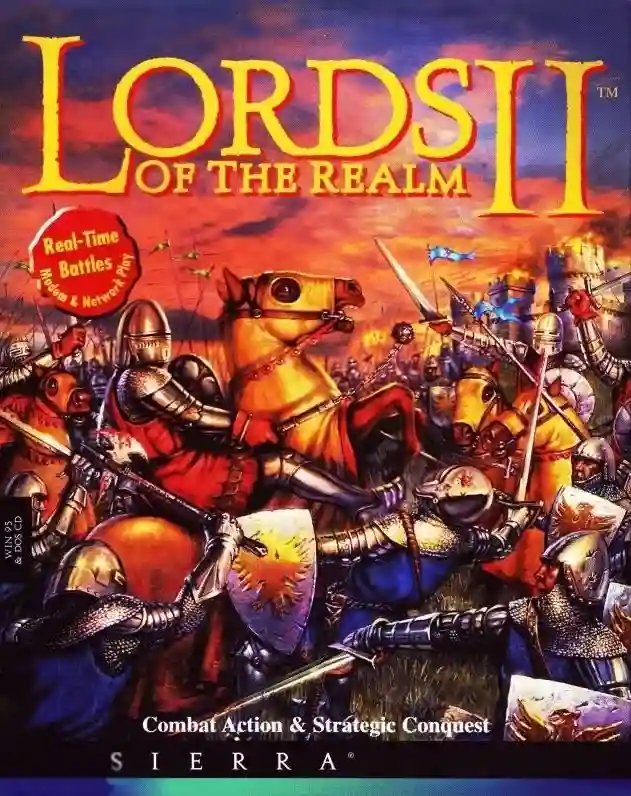
Lords of the Realm II (1996) is widely celebrated as the absolute pinnacle, structural masterpiece, and definitive high-water mark of retro historical strategy. Developed by the city-builder virtuosos at Impressions Games and published by Sierra On-Line, the title seamlessly welded together meticulous, turn-based medieval macro-management with fast-paced, real-time tactical grid warfare.
Arriving the same year that Warcraft II dominated the PC market, Lords II carved out a legendary niche by forcing players to master the fragile, razor-thin logistics of managing a medieval society before forging them into steel-clad conquering armies.
The Narrative: The War for the Empty Crown (1268 A.D.)
The plot drops players into the chaotic geopolitical landscape of 1268 A.D. The King of England has died without a legitimate heir, leaving the throne entirely vacant and plunging England and Wales into an anarchic, multi-front civil war.
Players step into the boots of an ambitious local noble lord (“The Prince”). Surrounded by four intensely competitive, land-hungry AI rivals vying for the throne, your objective is absolute and unyielding: convert a lone, ragged hamlet of wheat fields into a continent-conquering empire, construct terrifying stone strongholds, and systematically eradicate all opposition until the crown is rightfully yours by divine right.
The Macro Economy: Advanced Farming & The Industrial Chain
The defining legacy of Lords of the Realm II is its uncompromising, tightly tuned management of peasant serf labor. Turns play out on an overworld map divided into four seasonal turns per year (Winter, Spring, Summer, Autumn). Every single peasant must be manually allocated to a task; shifting too many serfs into the army will cause your fields to fail and your population to starve.
1. The Dairy vs. Wheat Trade-Off
Feeding your growing population requires balancing two fundamentally distinct agricultural pillars:
- Cattle Farming (Cows): A highly reliable, low-risk food source that generates a steady, non-seasonal stream of Dairy produce. However, cows suffer from diseconomies of scale. If your herds become overcrowded, vegetation degrades and disease spikes. This requires more dairy maids just to break even, potentially collapsing your farming efficiency and forcing you to slaughter the herd for an emergency influx of Beef.
- Wheat Farming (Grain): A highly explosive, maximum-yield agricultural cycle. Seeds are planted in the Winter, carefully tended through Spring and Summer, and demand a massive harvest workforce in the Autumn to yield up to a 12x return. However, grain is incredibly volatile; a single random event—like a summer drought, a flash flood, or a breakout of Rats in the Granary—can vaporize your winter food stores instantly.
2. The Weapon Industrial Chain
To build an army, you cannot merely spend gold to conjure soliders out of thin air; you must physically manufacture their equipment piece-by-piece from raw natural resource processing nodes:
- Forestry, Iron Mines, & Stone Quarries: Peasants extract raw timber, iron ore, and castle stone.
- The Blacksmith Forge: Workers consume wood and iron supplies to hammer out six explicit equipment stockpiles: Bows (requiring pure wood), Crossbows, Pikes, Maces, Swords, and Knight Armor (requiring varying combinations of wood and iron).
- Conscription: Once your armory holds the physical weapon inventory, you draft peasants out of your productive town workforce to form an active military regiment, permanently lowering your county’s labor pool.
The AI Rogue’s Gallery: Opposing Nobles Matrix
Every match pits you against an iconic, asymmetric rogue’s gallery of AI commanders. Each lord features a completely hardcoded behavioral profile that dictates their tax rates, defensive layouts, and military preferences:
| Noble Lord | Behavioral Profile & AI Persona | Preferred Castle Fortifications | Signature Army Grid Layout |
| The Baron (Red) | Cautious & Methodical: A wise, patient land-manager who completely consolidates a strong economic base and builds up localized defense layers before expanding. | Focuses on high-tier, well-defended stone bastions. | Fields highly disciplined, heavily armored frontlines of Swordsmen and Pikemen. |
| The Bishop (Blue) | Deceptive & Fanatical: A corrupt religious hypocrite who heavily over-taxes his populace and pushes large military drafts, leaving his serfs perpetually unhappy. | Exclusively spends massive chunks of treasury to build grand Royal Castles. | Spams overwhelming, low-quality wave-swarms consisting heavily of Peasants and Bowmen. |
| The Countess (Purple) | Hyper-Aggressive & Treacherous: A cold, expansion-focused tyrant who expands rapidly and routinely overextends her borders. Highly untrustworthy as an ally. | Tends to build minimal fortifications early to divert all wealth to conquest. | Deploys fast-moving shock forces designed to rapidly overwhelm targets. |
| The Knight (Yellow) | Brash & Headstrong: A young, hyper-aggressive warlord who launches relentless, early-game military operations against adjacent counties. | Erects incredibly small, flimsy wooden palisades or primitive keeps. | Rushes massive, terrifyingly high-tier armies packing heavy Knights and melee fighters. |
The Tactical Field: Real-Time Army Grid & Sieges
When armies collide or a county capital is assaulted, the game shifts to a real-time tactical battlefield. Notably, arrows pass cleanly through friendly units, making unit layering a powerful tactical tool.
1. The Armed Roster
- Peasants: Armed with simple pitchforks. Low attack, zero armor, but vital as cheap arrow-fodder to fill in enemy castle moats.
- Macemen: Inexpensive and highly agile shock troops. Lacking heavy armor, they excel at flanking maneuvers to systematically butcher exposed archers.
- Pikemen: The ultimate iron wall. Moving at a snail’s pace, their immense armor withstands incredible punishment, acting as a hard defensive counter to enemy cavalry.
- Swordsmen: The gold-standard melee vanguard. They boast exceptional balanced stats in offense and defense for their resource cost.
- Bowmen: Long-range snipers with a rapid rate of fire, perfect for holding castle towers or picking off unarmored threats from afar.
- Crossbowmen: Slow-firing but lethal armor-piercers. Their heavy bolts punch cleanly through Plate armor, Knights, and incoming siege weapons.
- Knights: The most expensive, resource-intensive mounted cavalry. Blazing fast and devastating on the charge, though unable to scale castle walls or dig moats.
2. The Siege Crucible
Assaulting a fortified county seat transforms the match into a brutal mechanical siege.
- The Construction Phase: Attackers must spend turns constructing heavy siege assets on the overworld layer: Catapults, Trebuchets, Battering Rams, and Siege Towers.
- The Breach: In real-time, Catapults can be targeted to smash down castle stairs, trapping archers in their own towers. Attackers must command their infantry to dig and fill in defensive water moats while defenders man the stone crenellations, raining down long-range volleys and tipping massive cauldrons of Boiling Oil directly onto the gatehouses to incinerate anyone attempting a breach.
Release History, Expansion, and Modern Preservation
- Original PC Launch: November 20, 1996 (Running on Windows 95 and MS-DOS frameworks).
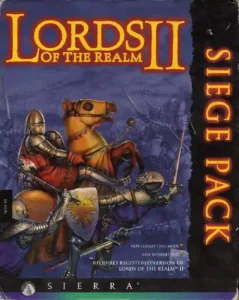
- The Siege Pack Expansion (1997): Delivered a massive post-launch upgrade, packing in over 50 highly intricate custom combat maps, advanced historical scenario simulations, and redesigned AI castle layouts.
- Modern Lifecycle Status: The legacy catalog is currently managed and preserved by Rebellion. The definitive version is instantly accessible today on PC via Steam and GOG under the title Lords of the Realm II. The digital installation comes completely pre-packaged with the Siege Pack expansion embedded and uses a transparent, highly calibrated wrapper client, ensuring the 13th-century agricultural trade-offs, industrial blacksmith pipelines, and real-time castle sieges scale flawlessly out-of-the-box on modern Windows 10 and 11 environments.