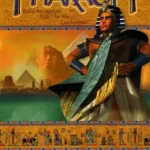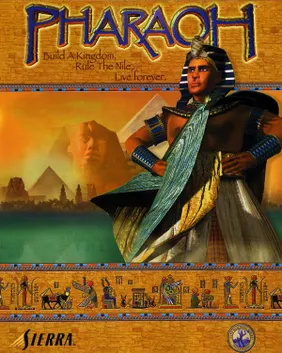
Pharaoh
 PC
PC
 Activision,
  Sierra


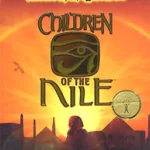
Pharaoh (1999) stands as one of the most critical turning points in the history of the legendary isometric city-building franchise. Following the massive mainstream success of Caesar III, the future of the series was poised for a monumental leap.
Developer Impressions Games and publisher Sierra On-Line stepped in to completely evolve their strategy engine, moving away from the paved stone roads of Rome to the fertile, sun-drenched banks of ancient Egypt. Faced with the task of expanding a deeply passionate community, the team delivered a stellar, redemptive chapter that bridged classic nostalgic management with revolutionary mechanics that permanently transformed the historical 4X landscape.
The Golden Transition: A Dynastic Universe
Pharaoh completely severed ties with the classic European architectures of the past. Instead, it established a fresh, tightly constructed historical campaign continuity: The Lifeline of the Nile Valley.
The game’s economic landscapes, religious architecture, and provincial alignments are strictly governed by a shifting timeline spanning five thousand years of Egyptian history. The massive, narrative-driven campaign plays out across dozens of interconnected scenarios, tracking your family bloodline from a humble nomadic chieftain through the Old, Middle, and New Kingdoms. Players manage volatile trade networks, satisfy imperial demands, and outmaneuver foreign armies to cement their status as an immortal living god.
The Core Evolution: Logistical Mastery & Polished Roots
Impressions Games deliberately looked back at Caesar III as its mechanical anchor, retaining the beautiful 2D isometric grid viewport and the core loop of urban optimization. However, they heavily evolved the engine:
- The Floodplain Harvest: The economic grid completely abandoned traditional farming on generic green meadows. Pharaoh decoupled agriculture from static soil, introducing a dynamic seasonal cycle called the Nile Inundation. Cultivation was restricted entirely to the dark floodplains along the river banks. Rulers utilize the Nilometer to predict the height of the incoming flood; an insufficient flood brings widespread city famine, while an excessive flood completely drowns your production lines.
- The Roadblock Filter: The pathfinding model received a massive quality-of-life upgrade to tackle the franchise’s longest-standing paint point. Pharaoh natively implemented the Roadblock structure, granting players surgical control over citizen navigation. Placing a roadblock completely blocks “Roaming Walkers” (Priests, Physicians, Prefects) from wandering mindlessly down random intersections, trapping them in perfect efficiency loops. Meanwhile, “Destination Walkers” (Cart-pushers and immigrants) ignore the barrier to keep trade flowing.
- The Monument Engine: Wonders of the ancient world were entirely freed from single-click instant gold purchases. Commencing a project like a Great Pyramid, a Sphinx, or an obelisk initiates a massive, multi-decade macro-engineering project. Rulers must construct specialized Artisan Guilds and maintain physical supply pipelines of limestone, granite, and clay bricks, watching the structures rise physically, layer-by-layer, over thousands of game turns.
The Deep Meta: Pantheonic Alignment & The Housing Ladder
To maximize mechanical complexity, Pharaoh implemented a volatile domestic layer driven by religious appeasement and rigid social stratification.Rulers must manage five temperamental Egyptian Deities through active temples, massive temple complexes, and frequent city-wide festivals.
Progression was also governed by a massive, intricately complex 20-tier Housing Evolution Ladder. To morph crude plebeian tents into tax-heavy luxury estates, players must systematically satisfy a dense checklist of infrastructure demands—scaling a neighborhood’s access from simple wells to grand fountains, introducing dietary diversity across multiple food webs, and blanketing districts with advanced entertainment, high education, and refined luxury goods.
The Expansions and Modern Alternatives
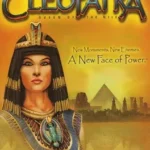
1. Cleopatra: Queen of the Nile (2000)
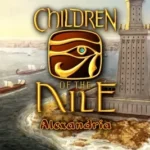
The first official expansion introduced the final, high-stakes eras of Egyptian sovereignty, bringing the Hellenistic and Roman periods into the campaign matrix. Operating on an expanded economic footprint, the expansion added specialized new industries like paint and oil lamps, introduced deadly tomb-robbing scenarios, and unlocked monumental new projects including the Pharos Lighthouse and the Tomb of Alexander the Great.
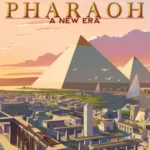
2. Pharaoh: A New Era (2023 Remake)
Developed by Triskell Interactive and published by Dotemu, this comprehensive modern remake completely reconstructed the classic client within a modern Unity engine shell. It permanently replaced the 90s pixel art with gorgeous, hand-drawn 4K vector assets and a fully re-recorded orchestral soundtrack. More importantly, A New Era introduced a toggle to enable a modern Global Labor Pool system, completely removing the requirement for industrial workers to physically walk past housing blocks to find employment.
The table below demonstrates how the core alignment of the divine pantheon dictates the absolute mechanical strategy and risk management of your city:
| Core Deity | Primary Blessing (Appeased) | Targeted Divine Wrath (Neglected) |
|---|---|---|
| Osiris (Agriculture) | Multiplies floodplain crop yields and guarantees a flawless seasonal inundation. | Permanently drops the Nile’s flood level, rotting crops and inducing massive starvation. |
| Ra (Kingdom & Trade) | Smooths international diplomacy and dynamically inflates maximum export trade caps. | Tanks your global Kingdom rating and completely freezes cross-border commerce. |
| Ptah (Industry & Crafts) | Floods storage yards with immediate, free surpluses of manufactured pottery, beer, and weapons. | Triggers catastrophic industrial fires that rapidly level your weaving mills and foundries. |
| Bast (Health & Home) | Spreads deep happiness across housing blocks and drops disease risks to absolute zero. | Inflicts a sudden, devastating plague that rapidly empties out high-tier residential zones. |
| Anubis (The Dead & Crime) | Safeguards your embalming mortuaries and completely suppresses local thievery. | Prompts immediate, synchronized neighborhood riots and targeted thefts on your treasury. |
Export to Sheets
The Modern Standard: The 2026 Optimization Era
While the official lifecycle of the original client concluded in 2000, Pharaoh experiences an incredible casual and archival renaissance today. For purists running the 1999 classic, contemporary gameplay relies heavily on community widescreen executables and custom wrappers available via fan communities to prevent graphical flickering on modern operating systems.
For players utilizing the 2023 remake, the modern 2026 standard utilizes the community-driven Essential Bug Fix Mod Pack hosted via Nexus Mods. This community-maintained overhaul fully patches leftover AI pathfinding glitches in the Unity engine, balances the auto-resolve mechanics for military invasions, and unifies classic scenario parameters into a singular, flawlessly polished modern gameplay client.
Release History
- Pharaoh (Base Game): October 31, 1999 (North America / Europe)
- Cleopatra: Queen of the Nile (Expansion): July 11, 2000 (North America / Europe)
- Pharaoh: A New Era (Modern Remake): February 15, 2023 (Global Digital Release)
Modern Packaging: Natively bundled together as a definitive digital package, the original 1999 game and its expansion are sold as Pharaoh + Cleopatra on storefronts like Steam and GOG, while the completely overhauled 2023 visual recreation is available standalone as Pharaoh: A New Era.