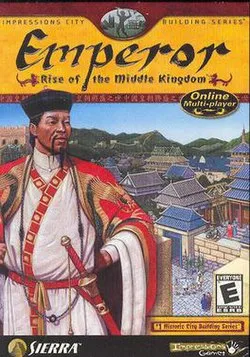
Emperor: Rise of the Middle Kingdom
 77
★ /10
77
★ /10
 PC
PC
 Activision,
  Sierra
Where to buy

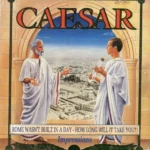
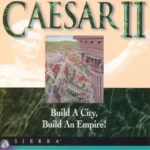
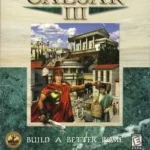
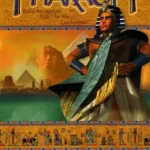
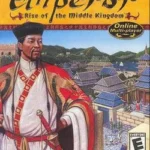
Emperor: Rise of the Middle Kingdom (2002) stands as the ultimate, definitive pinnacle and the glorious swan song of the classic 2D isometric city-building era. Released on September 10, 2002, by BreakAway Games and Impressions Games, and published by Sierra Entertainment, the title took a decade’s worth of engine refinements from Caesar, Pharaoh, and Zeus and polished them to an absolute mirror sheen.
Plunging players into the sprawling, multi-millennium history of ancient and medieval China, Emperor is widely celebrated by strategy purists for introducing the revolutionary concept of Feng Shui to urban planning, implementing the most sophisticated macro-economy in the franchise’s history, and being the first and only entry to feature native multiplayer lobbies.
The Dynastic Canvas: 3,000 Years of Imperial History
Emperor completely blew open the chronological boundaries of previous games. Instead of isolating the player to a single kingdom, the massive historical campaign sweeps through thousands of years of dynastic transitions across six distinct historical eras:
- The Xia and Shang Dynasties (The Dawn of Empire): Players manage early bronze-age farming communities, transitioning from primitive mud huts to fortified earthen settlements.
- The Zhou Dynasty (The Warring States Period): Focuses heavily on tactical warfare, shifting alliances, and constructing massive defensive border walls to ward off aggressive rival factions.
- The Qin and Han Dynasties (The First Unification): Shifting to mega-scale imperial logistics, standardization of trade currencies, and commencing the earliest iterations of the Great Wall of China.
- The Tang, Song, and Sui Dynasties (The Golden Ages): The absolute peak of wealth, high-tier culture, and advanced industrial supply chains—tasking players with constructing the Grand Canal and managing global silk routes.
The Ultimate Architectural Revolution: Feng Shui
The absolute defining mechanic of Emperor is Feng Shui (The Way of Wind and Water). Every single building, road, and decoration tile is bound to an elemental matrix (Earth, Fire, Water, Metal, Wood) and a structural alignment with the local geography.
City planning is no longer just about squeezing structures into a tight grid. Players must balance the physical terrain with the architectural properties of their buildings:
- Constructing a wooden kiln directly on an earthen hillside yields Auspicious Feng Shui, drastically boosting the building’s production speed and worker efficiency.
- Plonking an earth-aligned structure next to an opposing elemental asset results in Inauspicious Feng Shui. This dark cosmic alignment causes the building’s structure to dynamically warp—spiking local crime rates, triggering spontaneous fires, and inducing rapid architectural collapse regardless of how many maintenance patrols walk past its front doors.
The Ancestral Pantheon: Sages, Heroes, and Emperors
Instead of traditional, distant deities walking your streets, Emperor introduces twelve of China’s most legendary historical, spiritual, and mythical figures. Rulers must appease four distinct factions of Sages and Ancestors through luxurious offerings of food, silk, and ceramics, alongside dynamic seasonal New Year festivals.
| Ancestral Tier | Legendary Sages / Heroes | Divine Blessings (Appeased) | Imperial Wrath (Neglected) |
| The Ancestors | Nu Wa, Shen Nong, Huang Di | Accelerates the growth of all local crops, fills granaries with free meat, and instantly reveals hidden underground clay and metal deposits. | Triggers catastrophic earthquakes that violently rip open the earth, swallowing entire city blocks and destroying infrastructure. |
| The Daoists | Xi Wang Mu, Lao Tzu, Sun Wu (Sun Tzu) | Converts raw herbs into life-saving medicines, permanently drops city-wide crime rates, and personally marches into battle to annihilate invading armies. | Spreads terrible droughts across the province, drying up industrial water wells and causing crops to wither before harvest. |
| The Buddhists | Bodhidharma, Guanyin, Mencius | Drastically increases the maximum housing capacity of all residential zones, spreads high citizen happiness, and doubles trade caravan speeds. | Sparks spontaneous, widespread workers’ strikes, completely freezing production lines and halting tax revenue collection. |
| The Confucianists | Confucius, Sun Bin, Han Fei Zi | Drastically lowers the operational costs of all civic administrative buildings, fills treasuries with massive tax surpluses, and trains elite shock infantry. | Ruins international diplomacy, prompting neighboring kingdoms to completely freeze trade networks and launch surprise invasions. |
Advanced Imperial Supply Chains & Masterworks
The macro-economy of Emperor was elevated to a hyper-complex art form. Housing evolution—split into Common Housing for the industrial blue-collar workforce and Elite Housing for tax-heavy noble warriors—requires weaving together intricate production networks. Raw materials like hemp, silk cocoons, clay, and iron ore must be funneled into specialized craft houses to create high-value luxury commodities like lacquerware, carved jade trinkets, bronzeware, premium tea, and fine silk clothing.
This advanced economy is weaponized to construct the most physically massive Monuments ever rendered in the 2D isometric engine. Rulers do not just build a single wonder; they coordinate multi-stage engineering projects that alter the macro-map layer completely:
- The Great Wall of China: Built segment-by-segment along the northern borders of the map, requiring thousands of laborers to quarry stone and bake bricks to repel nomadic invasions.
- The Terracotta Army: Constructing a massive underground burial vault, requiring the manufacturing of thousands of individual clay soldiers and bronze weapons to accompany an emperor into the afterlife.
- The Grand Canal: A monumental hydrological feat, allowing players to carve massive artificial shipping lanes directly through dry land to link their city’s industries straight to international maritime trade networks.
Modern 2026 Storefront Status & Archival Preservation
Twenty-four years after its initial release, Emperor: Rise of the Middle Kingdom remains fully preserved, deeply respected, and completely active. The game is readily and legally available as a digital download on PC via both GOG and Steam (published under the Activision-Blizzard catalog).
The digital version comes pre-wrapped inside a contemporary software compatibility container, allowing the bright, stunningly detailed 2D hand-painted Chinese architectures, beautiful traditional fluted soundtracks, and intricate Feng Shui simulation vectors to run flawlessly out-of-the-box on modern Windows 10 and Windows 11 desktop environments. To achieve absolute perfection on 2026 ultra-wide rigs, the community highly recommends applying a simple open-source widescreen wrapper patch, allowing you to view your sprawling imperial capital in glorious high-definition without stretching the classic artwork.