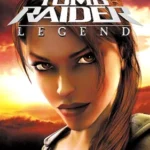
Tomb Raider: Legend
 80
★ /10
80
★ /10
 Game Boy Advance,
  Ninitendo GameCube,
  Nintendo DS,
  PC,
PC,  PS 2,
PS 2,  PS 3,
PS 3,  PSP,
PSP,  Xbox,
Xbox,  Xbox 360
 ND Games


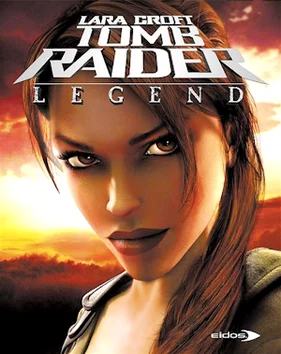
Tomb Raider: Legend is a 2006 action-adventure game developed by Crystal Dynamics and published by Eidos Interactive. Serving as the very first complete reboot of the franchise, Legend was a monumental release. Following the catastrophic launch of The Angel of Darkness in 2003, Eidos stripped the Tomb Raider IP away from its original British creators (Core Design) and handed it to the American studio Crystal Dynamics. The result was a massive critical and commercial triumph that successfully saved Lara Croft from the brink of gaming obscurity.
The story wipes the slate clean, establishing a brand-new continuity. It delves deep into Lara’s past, focusing on a tragic plane crash in the Himalayas that left a nine-year-old Lara stranded and resulted in the mysterious disappearance of her mother. Years later, Lara discovers that her mother’s vanishing is directly tied to the myth of King Arthur and the shattered fragments of the legendary sword, Excalibur. To reforge the blade and uncover the truth, Lara embarks on a high-octane, globe-trotting adventure across the cliffs of Bolivia, the rooftops of Tokyo, a lush rainforest in Ghana, a frozen Soviet installation in Kazakhstan, and the tombs beneath King Arthur’s Cornwall. Along the way, she discovers that her former friend, Amanda Evert—who was presumed dead in a cave-in years ago—is alive, deeply corrupted by dark magic, and hunting for the sword herself.
Gameplay
Legend completely abandoned the rigid, grid-based “tank controls” of the 1990s games. Instead, it introduced a highly fluid, modern 3D movement system built around momentum and realistic physics.
Key gameplay mechanics and additions include:
- Fluid Acrobatics: Lara is faster, more responsive, and more agile than ever before. Players can effortlessly chain together jumps, swings, and ledge-grabs. If Lara barely catches a ledge, a warning icon prompts the player to quickly press a button to help her regain her grip, making platforming feel kinetic and exciting.
- The Magnetic Grapple: The most defining new tool in Lara’s arsenal is a multi-purpose magnetic grappling hook attached to her belt. She can use it to swing across massive chasms, pull distant metal objects toward her, or yank enemies off their feet during combat.
- Physics-Based Puzzles: Powered by a modern physics engine, the game heavily features puzzles that require the player to manipulate weight and momentum. Lara must stack crates on pressure plates, use seesaws to launch objects, and manipulate water currents to progress.
- Modernized Combat: Gunplay was heavily streamlined into a fast, acrobatic lock-on system. Lara can slide-tackle enemies, vault off their chests to launch herself into the air in slow-motion, and rain down dual-pistol fire from above.
- Interactive Cinematics: Embracing a major trend of the mid-2000s, Legend features “Quick Time Events” (QTEs) during cutscenes, requiring players to hit specific buttons at exactly the right moment to survive deadly traps or ambushes.
- The Comms Earpiece: Lara is no longer entirely isolated. Throughout the game, she is in constant radio contact with two new supporting characters back at Croft Manor: Zip (her tech specialist) and Alister (her research historian). They provide hints, banter, and heavily lighten the tone of the game.
Development and Legacy
Knowing the immense pressure they were under to revitalize a dying brand, Crystal Dynamics made a brilliant strategic move: they hired Toby Gard, the original creator of Lara Croft who had left Core Design back in 1997, to serve as a senior designer and consultant.
Together, they redesigned Lara for a modern era. They softened her exaggerated 90s proportions, gave her a warmer, more charismatic personality, and grounded her equipment. She was given a spectacular new voice actress, Keeley Hawes, whose elegant, witty delivery became the definitive voice of the character for many fans.
Released in the spring of 2006, Tomb Raider: Legend was universally praised. Critics lauded its breathtaking environments, superb pacing, and beautifully intuitive controls. It sold over 4.5 million copies, proving that Lara Croft still had massive mainstream appeal.
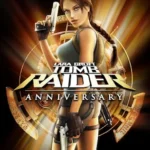
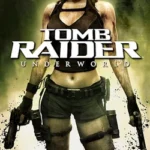
Legend kicked off what fans affectionately call the “LAU Trilogy.” It laid the foundational engine and storyline for its two direct successors: Tomb Raider: Anniversary (2007) and Tomb Raider: Underworld (2008), cementing Crystal Dynamics as the masterful new stewards of the franchise.
Key Features:
- The Great Revival — Experience the brilliant 2006 reboot that saved the franchise, bringing Lara Croft into the modern era of 3D action-adventure gaming.
- The Arthurian Myth — Unravel a deeply personal, cinematic storyline intertwining Lara’s tragic family history with the legend of Excalibur.
- Magnetic Grapple — Swing across deadly drops and solve complex physics puzzles using Lara’s iconic, belt-mounted grappling hook.
- Acrobatic Combat — Dispatch mercenaries and wild animals using a fast, fluid combat system that blends dual-pistol gunplay with melee slide-kicks and slow-motion vaults.
- Globetrotting Glamour — Trade dusty tombs for a highly varied itinerary, including a spectacular sequence where Lara infiltrates a Yakuza corporate party in a Tokyo skyscraper wearing a torn evening gown.
Release Platforms:
- PlayStation 2 — April 7, 2006 (Europe) / April 11, 2006 (NA)
- Xbox — April 7, 2006 (Europe) / April 11, 2006 (NA)
- Xbox 360 — April 7, 2006 (Europe) / April 11, 2006 (NA)
- Microsoft Windows (PC) — April 7, 2006 (Europe) / April 11, 2006 (NA)
- PlayStation Portable (PSP) — June 9, 2006 (Europe) / June 21, 2006 (NA)
- GameCube / Game Boy Advance / Nintendo DS — Fall 2006
- PlayStation 3 (Included in The Tomb Raider Trilogy HD Remaster) — March 2011