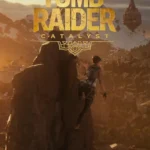
Tomb Raider 2013
 85
★ /10
85
★ /10
 PC
PC PS 3
PS 3 PS4
PS4 Xbox 360
 Xbox One
 Square Enix
Where to buy




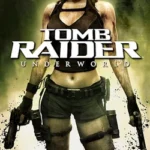
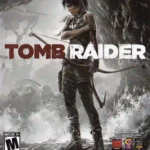
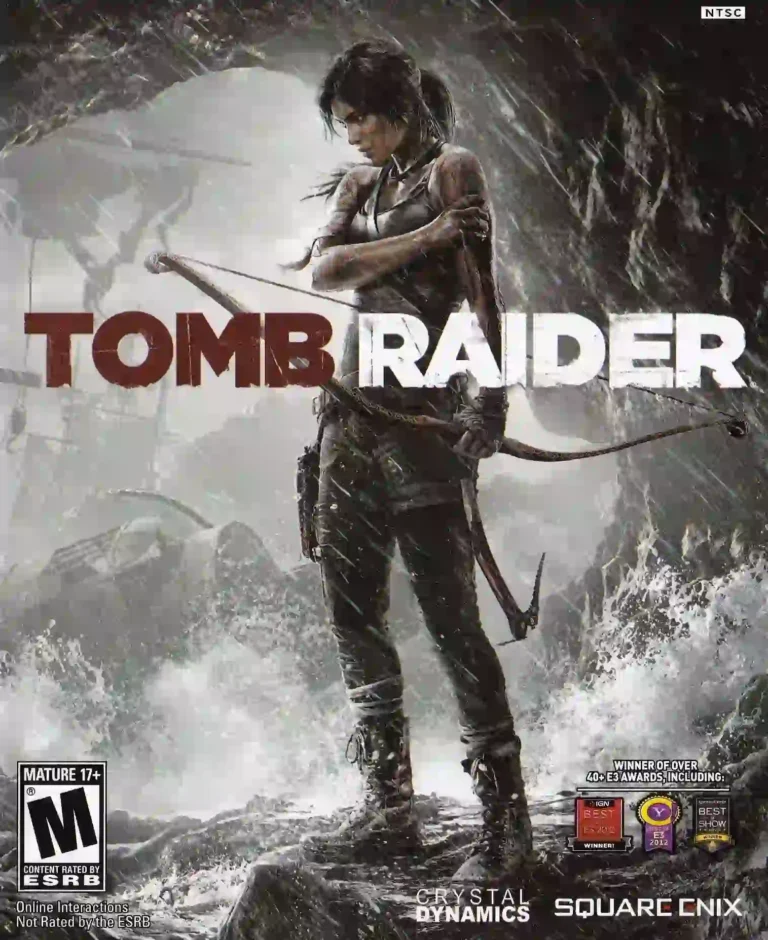
Tomb Raider (widely referred to as Tomb Raider 2013) is a 2013 action-adventure game developed by Crystal Dynamics and published by Square Enix. Following the conclusion of the “LAU Trilogy” (Legend, Anniversary, Underworld), Square Enix recognized that the gaming landscape had shifted heavily toward gritty, cinematic realism (largely popularized by Naughty Dog’s Uncharted series). In response, they completely rebooted the franchise, delivering a brutal, M-rated origin story that stripped Lara Croft of her teflon-coated, superhero persona and rebuilt her as a vulnerable, desperate survivor.
The narrative follows a 21-year-old, freshly graduated Lara Croft on her very first expedition aboard the research vessel Endurance. Searching for the lost kingdom of Yamatai, the ship is torn apart by a violent, unnatural storm in the Dragon’s Triangle (east of Japan). Lara washes ashore on a mysterious island littered with the wrecks of centuries of trapped ships. Separated from her crew, she quickly discovers the island is inhabited by the Solarii Brotherhood—a violent cult of shipwrecked survivors led by the ruthless Mathias, who worship the island’s mythical Sun Queen, Himiko. To save her friends and escape, Lara is forced to kill for the first time, transforming through sheer trauma and willpower into the hardened survivor she was destined to become.
Gameplay
Tomb Raider completely abandoned the grid-based platforming and lock-on dual-pistol combat of the past. It embraced modern third-person shooter mechanics, light RPG elements, and a semi-open world structure.
Key gameplay mechanics and additions include:
- The Bow and Arrow: Replacing the iconic dual pistols, the makeshift longbow becomes Lara’s signature weapon. It can be used for silent stealth kills, distracting enemies, firing flaming arrows to burn obstacles, and eventually shooting zip-lines to traverse the environment.
- Survival Combat: Combat is gritty, visceral, and desperate. The game features a dynamic cover system—Lara automatically crouches behind low walls when enemies are near, without snapping to them magnetically. Players can utilize firearms (a pistol, shotgun, and assault rifle) alongside brutal melee takedowns using an ice axe.
- Metroidvania Hubs: The island of Yamatai is not completely open-world, but rather a series of massive, interconnected hub zones. As Lara finds new gear (like a rope dart, explosive arrows, or a climbing axe), players are encouraged to backtrack to earlier hubs to unlock previously inaccessible areas and hidden tombs.
- Base Camps and Upgrades: Lara can rest at campfires scattered across the island. Here, she can spend Experience Points (XP) earned from hunting and combat to unlock new survival and combat skills. Players also use “Salvage” collected from crates to physically upgrade their weapons.
- Survival Instincts: A new vision mode allows players to highlight enemies, interactable objects, and puzzle elements in a grey-and-gold filter, helping navigate the dense, highly detailed environments.
- Optional Tombs: While the main campaign is heavily action-oriented and cinematic, the game features hidden “Challenge Tombs” that offer physics-based environmental puzzles reminiscent of the classic games.
Development and Legacy
Development of the reboot was a massive undertaking for Crystal Dynamics. To ground the character, they brought on writer Rhianna Pratchett to craft a deeply humanizing script, and cast actress Camilla Luddington to provide the voice and full motion-capture performance for Lara. The motion capture allowed for incredibly expressive, pained, and realistic animations, making the player acutely feel every fall, burn, and wound Lara suffers throughout the grueling campaign.
Upon release in March 2013, the game was a massive critical and commercial success. Reviewers praised its phenomenal pacing, tight combat, and Camilla Luddington’s fantastic performance. However, some critics noted a “ludonarrative dissonance”—a disconnect between cutscenes showing Lara sobbing over having to kill a man, and the gameplay where the player immediately proceeds to mow down hundreds of cultists with an assault rifle. Hardcore fans of the classics also missed the emphasis on complex puzzle-solving, noting that the optional tombs were too short and easy.
Despite a bizarre initial statement from Square Enix claiming the game “failed to meet sales expectations,” Tomb Raider 2013 ultimately sold over 14.5 million copies, making it the best-selling game in the entire history of the franchise.
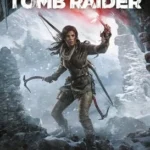
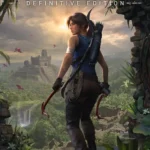
In early 2014, the game was visually overhauled and released as the Definitive Edition for the newly launched PS4 and Xbox One, featuring an entirely rebuilt character model for Lara and enhanced weather effects. Crucially, the game successfully kicked off the critically acclaimed “Survivor Trilogy,” leading directly into Rise of the Tomb Raider (2015) and Shadow of the Tomb Raider (2018).
Key Features:
- A Gritty Origin — Witness the brutal, traumatic events that forged a young, untested archaeologist into a hardened survivor.
- The Iconic Bow — Master stealth and combat with the hunting bow, a versatile weapon that redefined Lara Croft’s arsenal.
- Yamatai Island — Explore a haunting, beautifully realized island featuring lush forests, snowy peaks, and rusted World War II bunkers.
- Visceral Combat — Engage in desperate, dynamic firefights using an adaptive cover system and brutal ice-axe melee finishers.
- Base Camp Progression — Scavenge for parts to upgrade your weapons and unlock new survival skills to turn the tide against the Solarii Brotherhood.
Release Platforms:
- PlayStation 3 — March 5, 2013
- Xbox 360 — March 5, 2013
- Microsoft Windows (PC) — March 5, 2013
- Mac OS X — January 23, 2014
- PlayStation 4 (Definitive Edition) — January 28, 2014
- Xbox One (Definitive Edition) — January 28, 2014
- Linux — April 27, 2016