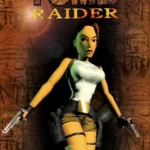
Tomb Raider
 91
★ /10
91
★ /10
 PC,
PC,  PS 1,
PS 1,  Sega Saturn
Where to buy

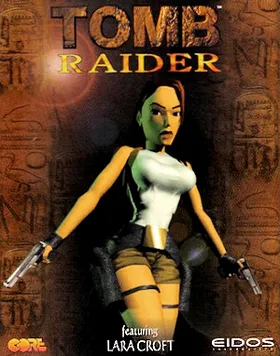
Tomb Raider is a 1996 action-adventure game developed by Core Design and published by Eidos Interactive. Widely regarded as one of the most important and influential video games of all time, it was a groundbreaking pioneer in early 3D game design and introduced the world to Lara Croft—a character who would instantly become a global pop-culture icon and one of the most recognizable figures in gaming history.
The narrative follows Lara Croft, a highly intelligent, aristocratic British archaeologist and adventurer who raids ancient tombs for rare artifacts. She is hired by Jacqueline Natla, a wealthy and mysterious businesswoman, to recover a piece of an ancient artifact known as the Scion of Atlantis from the mountains of Peru. However, after discovering the artifact, Lara is betrayed by Natla’s mercenaries. Realizing the Scion holds apocalyptic power, Lara embarks on a globe-trotting race against Natla’s forces, traveling through the lost ruins of Greece, the temples of Egypt, and finally the mutated, fleshy corridors of the lost continent of Atlantis to destroy the artifact before it can be used.
Gameplay
Tomb Raider was revolutionary for its time, successfully translating the platforming and puzzle-solving of 2D games like Prince of Persia into a fully realized 3D space.
Key gameplay mechanics include:
- Grid-Based 3D Platforming: The entire game is built on a hidden grid system. Because 3D movement was still in its infancy, the game utilizes “tank controls” (pressing ‘up’ always moves Lara forward relative to the direction she is facing). Players must carefully measure their run-ups, calculate jump distances, and meticulously align Lara to vault over pits, grab ledges, and navigate treacherous environmental hazards.
- Acrobatic Traversal: Lara is highly agile. She can perform running jumps, backflips, side-somersaults, swan dives, and hang from ledges. Mastering her moveset is completely mandatory to survive the game’s brutal platforming challenges.
- Auto-Lock Combat: To compensate for the difficulty of aiming in early 3D environments, the game features a generous auto-lock targeting system. Once Lara draws her weapons, she will automatically lock onto the nearest enemy (such as wolves, bears, bats, velociraptors, and human mercenaries), allowing the player to focus on acrobatically dodging out of the way while holding the fire button.
- The Twin Pistols: Lara’s iconic, signature weapons are her dual pistols, which feature infinite ammunition. She can also find and upgrade to shotguns, magnums, and Uzis for tougher encounters.
- Environmental Puzzles: Combat is actually a secondary focus. The bulk of the game is spent exploring massive, lonely, and atmospheric tombs, throwing levers, finding keys, moving blocks, and navigating deadly traps to open the path forward.
Development and Legacy
Development of Tomb Raider took roughly 18 months, spearheaded by a small team at Core Design led by Toby Gard. Gard specifically wanted to create an interactive movie experience featuring a strong female protagonist, a massive rarity in the mid-90s gaming landscape.
Upon its release in late 1996 (initially launching on the Sega Saturn just weeks before hitting the PlayStation and PC), the game was a monumental, industry-shifting success. It sold over 7 million copies and fundamentally altered the trajectory of 3D game design. Lara Croft transcended the medium, appearing on the covers of mainstream magazines like TIME and The Face, touring with U2, and starring in major movie adaptations featuring Angelina Jolie.
The original game spawned an absolutely massive franchise, though Core Design’s grueling mandate to release a new Tomb Raider game every single year eventually led to severe franchise fatigue by the early 2000s. The series has since been successfully rebooted twice (in 2006 by Crystal Dynamics, and again in 2013).
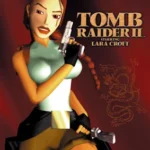
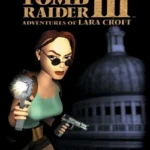
In February 2024, developer Aspyr released Tomb Raider I-III Remastered. This highly acclaimed collection brought the original 1996 game (along with its two direct sequels) to modern platforms, allowing players to instantly toggle between the classic blocky graphics and a beautifully remastered modern visual style, while also offering the choice between classic tank controls and modernized analog movement.
Key Features:
- The Birth of an Icon — Step into the boots of Lara Croft in her very first, groundbreaking adventure that defined a generation of gaming.
- 3D Platforming Pioneer — Master calculated, grid-based acrobatics to navigate massive, ancient environments filled with deadly traps and bottomless pits.
- Globe-Trotting Isolation — Explore lonely, highly atmospheric tombs across Peru, Greece, Egypt, and Atlantis, accompanied by a haunting, minimalist musical score.
- Twin-Pistol Action — Survive encounters with deadly wildlife, mercenaries, and Atlantean mutants using an acrobatic, auto-targeting combat system.
- The 2024 Remaster — Play the definitive modern version (Tomb Raider I-III Remastered), featuring updated graphics, modern control schemes, and all original expansion packs.
Release Platforms:
- Sega Saturn — October 25, 1996 (Europe) / November 14, 1996 (NA)
- MS-DOS (PC) — November 14, 1996 (NA) / November 22, 1996 (Europe)
- PlayStation — November 14, 1996 (NA) / November 22, 1996 (Europe)
- PlayStation 4 / PlayStation 5 / Xbox One / Xbox Series X|S / Nintendo Switch / PC (Tomb Raider I-III Remastered) — February 14, 2024