Tomb Raider: Anniversary
 77
★ /10
77
★ /10
 PC
PC PS 2
PS 2 PSP
PSP Wii
Wii Xbox 360


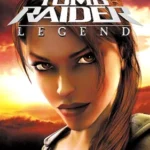
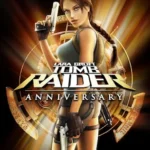
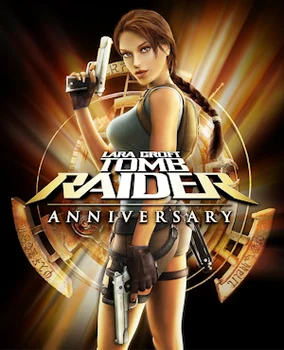
Tomb Raider: Anniversary is a 2007 action-adventure game developed by Crystal Dynamics and published by Eidos Interactive. Created to celebrate the 10th anniversary of the franchise, the game is a spectacular, ground-up remake of the original 1996 Tomb Raider. It bridges the gap between the classic 90s era and the modernized mechanics introduced in 2006’s Tomb Raider: Legend.
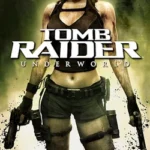
The narrative follows the exact same broad strokes as the 1996 original: Lara Croft is hired by the wealthy, mysterious businesswoman Jacqueline Natla to recover the Scion of Atlantis. The journey takes Lara through the snowy caves of Peru, the ancient monasteries of Greece, the sandy tombs of Egypt, and finally to the fleshy, mutant-filled corridors of the Lost Island. However, Crystal Dynamics subtly tweaked the script to weave the events into their new continuity, explicitly tying Lara’s motivation for finding the Scion to the research of her late father, seamlessly setting up the events of Tomb Raider: Underworld.
Gameplay
Anniversary completely strips away the frustrating, grid-based “tank controls” of the 1996 original, replacing them with the fluid, momentum-based engine created for Tomb Raider: Legend. However, it intentionally slows the pacing back down to focus heavily on the isolation, exploration, and complex puzzle-solving that defined the first game.
Key gameplay mechanics and additions include:
- Modernized Traversal: Lara retains her acrobatic agility from Legend, effortlessly swinging on horizontal bars, leaping across gaps, and balancing on narrow pillars.
- The Grappling Hook (Wall Running): Because Lara didn’t have her high-tech magnetic grapple in the 1990s, Anniversary gives her a classic rope-and-hook. Its primary new use is the “Wall Run,” allowing Lara to swing back and forth across sheer cliff faces to reach distant ledges—a mechanic that requires highly precise timing.
- Physics-Based Puzzles: The massive, multi-level puzzles of the 1996 game (like the colossal St. Francis Folly or the Midas Palace) were completely redesigned. Instead of just pushing square blocks, players must utilize the game’s modern physics engine, using weights, water currents, and momentum to solve environmental riddles.
- The Adrenaline Dodge: Gunplay is much less prominent here than in Legend, but boss fights and animal encounters are far more dangerous. The game introduces the “Adrenaline Dodge,” a system where an enraged enemy charges at Lara in slow-motion. If the player dodges at the very last possible second, a targeting reticle locks on, allowing Lara to execute a massive, one-shot kill.
- Interactive Cutscenes: Like Legend, the game utilizes Quick Time Events (QTEs) during cinematics, requiring rapid button presses to survive surprise attacks.
Development and Legacy
The development of Anniversary is tied to a rather tragic piece of gaming history. Originally, Eidos had tasked Core Design—the British studio that invented Lara Croft but was fired after The Angel of Darkness—with creating the remake. Core Design had a fully playable prototype of Tomb Raider: 10th Anniversary Edition running on PSP. However, Eidos ultimately cancelled Core’s version entirely, opting instead to have Crystal Dynamics build the remake using the highly successful Legend engine. This cancellation was the final nail in the coffin for Core Design, which was subsequently dissolved.
Upon its release in 2007, Tomb Raider: Anniversary was met with glowing reviews. Critics and fans praised how brilliantly Crystal Dynamics managed to capture the quiet, lonely atmosphere of the 1996 classic while bringing the level design and controls up to modern standards. Boss fights that were simple shootouts in 1996 (like the terrifying encounter with the T-Rex) were transformed into epic, multi-stage arena battles.
Despite the high critical praise, Anniversary was a commercial disappointment compared to Legend, selling roughly 1.3 million copies in its initial run. However, its reputation has only grown over time. Today, it stands proudly as the middle child of the beloved “LAU Trilogy” (Legend, Anniversary, Underworld) and is widely considered by the gaming community to be one of the greatest video game remakes ever made.
Key Features:
- A Masterful Remake — Revisit the iconic locations of the 1996 original—Peru, Greece, Egypt, and Atlantis—completely rebuilt from scratch with modern graphics and architecture.
- Classic Isolation — Trade the headset chatter and urban environments of Legend for a quiet, atmospheric dive back into ancient, trap-filled tombs.
- The Adrenaline Dodge — Master a tense, slow-motion combat mechanic to survive encounters with charging bears, raptors, and the legendary T-Rex.
- Wall Running — Utilize Lara’s rope grapple to perform death-defying wall runs across massive subterranean chasms.
- The LAU Connection — Experience a cleverly rewritten script that ties the events of the original game directly into the narrative of Legend and Underworld.
Release Platforms:
- PlayStation 2 — June 1, 2007 (Europe) / June 5, 2007 (NA)
- Microsoft Windows (PC) — June 1, 2007 (Europe) / June 5, 2007 (NA)
- PlayStation Portable (PSP) — August 9, 2007
- Xbox 360 — October 23, 2007
- Wii — November 13, 2007
- Mac OS X — February 2008
- PlayStation 3 (Included in The Tomb Raider Trilogy HD Remaster) — March 2011