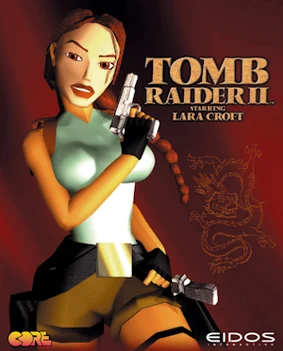
Tomb Raider II
 85
★ /10
85
★ /10
 PC
PC PS 1
PS 1Where to buy

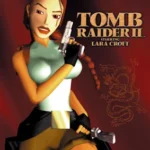
Tomb Raider II (officially stylized as Tomb Raider II: Starring Lara Croft) is a 1997 action-adventure game developed by Core Design and published by Eidos Interactive. Released exactly one year after the monumental success of the original game, the sequel took everything that made the first game a hit and cranked up the scale, delivering a much more action-heavy, blockbuster experience.
The story follows Lara Croft as she hunts for the legendary Dagger of Xian, an ancient Chinese artifact said to grant the bearer the power of a fire-breathing dragon—provided they have the courage to plunge the blade directly into their own heart. Her quest pits her against Marco Bartoli, a ruthless Venetian mafia boss who leads a fanatical cult known as the Fiamma Nera. The globe-trotting adventure takes Lara from the deadly traps of the Great Wall of China to the scenic canals of Venice, a heavily armed offshore oil rig, the haunting, upside-down sunken wreckage of the luxury liner Maria Doria, and the freezing snowy peaks of Tibet.
Gameplay
While Tomb Raider II runs on an upgraded version of the original game’s grid-based engine, it significantly shifted the franchise’s focus. The lonely, quiet isolation of the first game was largely replaced with high-octane combat and human enemies.
Key gameplay mechanics and additions include:
- Expanded Moveset: Lara’s agility received crucial upgrades. She can now climb sheer surfaces like ladders and textured walls, wade through shallow water, and perform a mid-air roll to instantly reverse direction while jumping—a lifesaver during frantic firefights.
- Human Enemies and Heavier Firepower: Unlike the first game, where Lara mostly fought bats, wolves, and dinosaurs, Tomb Raider II is packed with heavily armed human cultists and mafiosos who shoot back. To counter this, Lara’s arsenal is massively upgraded with the M16 Assault Rifle, an automatic pistol, a Grenade Launcher, and a Harpoon Gun for underwater combat.
- Vehicles: For the first time in the series, Lara can pilot vehicles. Players can drive a sleek wooden speedboat through the winding canals of Venice and hijack a snowmobile (complete with mounted machine guns) to jump massive chasms in Tibet.
- Flares and Dynamic Lighting: The engine was updated to support dynamic lighting. Many of the tombs and sunken ships are pitched black, requiring players to throw limited, glowing red flares into the darkness to see the path forward (and spot hidden enemies).
- Save Anywhere: A massive quality-of-life improvement for console players. The punishing “Save Crystal” system of the original PlayStation release was completely scrapped, allowing players to save their progress anywhere, at any time.
- Croft Manor and Winston: The playable tutorial level, Croft Manor, was vastly expanded. It features an outdoor obstacle course and introduces Winston, Lara’s incredibly slow, tea-tray-rattling butler who constantly follows her around. Leading Winston into the walk-in freezer and locking the door behind him remains one of the most famous, universally shared comedic moments in 90s gaming.
Development and Legacy
Following the explosive, industry-shifting success of the first Tomb Raider, Eidos Interactive mandated that a sequel be on store shelves in time for the 1997 holiday season. This gave Core Design an absolutely brutal development cycle of roughly eight months. The team was heavily expanded, but the crunch was intense.
Despite the rushed development, Tomb Raider II was a massive commercial juggernaut, ultimately selling over 8 million copies and surpassing the sales of the original game. It firmly cemented Lara Croft not just as a video game character, but as an undeniable 90s pop-culture icon.
While some purists criticized the game’s heavy reliance on gunfights over the quiet puzzle-solving of the original, it is widely considered by many fans to be the peak of the PS1-era Tomb Raider games. Like its predecessor, Tomb Raider II (along with its PC-exclusive expansion pack, The Golden Mask) was beautifully updated and included in Aspyr’s highly acclaimed Tomb Raider I-III Remastered collection, released in early 2024 for modern platforms.
Key Features:
- Blockbuster Action — Experience a more explosive take on the Tomb Raider formula, trading quiet isolation for intense gunfights against the Venetian mafia.
- New Ways to Traverse — Scale massive vertical environments with the new wall-climbing mechanic, and navigate dark underwater caverns.
- Vehicular Mayhem — Break up the platforming by racing speedboats through Venice and gunning down mercenaries from the back of a Tibetan snowmobile.
- Dynamic Lighting — Toss flares into the inky blackness of the sunken Maria Doria to uncover hidden paths and lurking threats.
- The 2024 Remaster — Play the definitive modern version (Tomb Raider I-III Remastered), featuring upgraded textures, modernized controls, and the Golden Mask expansion levels.
Release Platforms:
- PlayStation — October 31, 1997 (Europe) / November 18, 1997 (North America)
- Microsoft Windows (PC) — October 31, 1997 (Europe) / November 18, 1997 (North America)
- Mac OS — 1998
- PlayStation 4 / PlayStation 5 / Xbox One / Xbox Series X|S / Nintendo Switch / PC (Tomb Raider I-III Remastered) — February 14, 2024