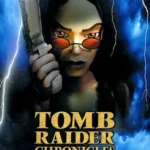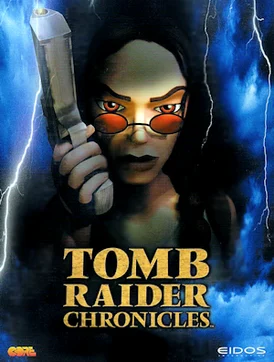
Tomb Raider Chronicles
 63
★ /10
63
★ /10
 Dreamcast
 PC
PC PS 1
PS 1

Tomb Raider Chronicles (often referred to as Tomb Raider V) is a 2000 action-adventure game developed by Core Design and published by Eidos Interactive. Releasing just one year after the developers seemingly killed off the franchise’s heroine in The Last Revelation, the game is effectively an anthology, acting as a bridge to keep the brand alive while a separate team at Core Design struggled to build the next-generation sequel (The Angel of Darkness) for the upcoming PlayStation 2.
The game opens on a rainy, melancholic day at Croft Manor. Following the events of the previous game, Lara is presumed dead, buried under the collapsed Great Pyramid of Giza. Three of her closest confidants—her loyal butler Winston, Father Patrick Dunstan, and Charles Kane—gather by a fireplace to hold a memorial service and reminisce about her past exploits. The game abandons a single overarching narrative, instead allowing players to experience four distinct, completely unconnected flashbacks from different eras of Lara’s life.
Gameplay
Chronicles utilizes the exact same, heavily aging PS1 engine as The Last Revelation, meaning it looks and plays almost identically to its immediate predecessor. However, because it is broken into four distinct chapters, each segment features a slightly different flavor of gameplay.
Key gameplay mechanics and additions include:
- The Four Chapters:
- Rome: A classic, trap-filled tomb raiding experience set in Italy as Lara hunts for the Philosopher’s Stone.
- Russian Submarine: An action-heavy espionage mission where Lara infiltrates a Russian naval base and a sunken U-boat to retrieve the Spear of Destiny.
- The Black Isle (Ireland): A pure survival-horror chapter. Players control a 16-year-old Lara Croft on a haunted Irish island. She has absolutely no weapons and must rely entirely on platforming and puzzle-solving to outsmart demonic imps, changelings, and a terrifying ghost rider.
- VCI Headquarters: A high-tech, Matrix-inspired stealth infiltration. Lara dons a black catsuit and a headset to break into a heavily guarded corporate skyscraper.
- New Acrobatics: Lara was given a few final tweaks to her classic moveset. She can now walk across tightropes, swing forward off horizontal parallel bars, and perform a front flip out of tight crawlspaces.
- Stealth Elements: The VCI chapter introduces rudimentary stealth mechanics. Lara can use a grappling hook gun to swing across elevator shafts, use chloroform on guards for silent takedowns, and use a sniper rifle to shoot out security cameras.
- Searching: Players can now actively open file cabinets, lockers, and drawers to scavenge for medipacks and ammunition.
Development and Legacy
The development of Tomb Raider Chronicles is the ultimate example of franchise fatigue. Core Design had explicitly tried to end the series with The Last Revelation so they could finally work on something else. However, Eidos Interactive demanded another game for the 2000 holiday season to maintain revenue flow. A small team at Core was forced to quickly cobble together Chronicles using leftover ideas and the exact same engine they had been using since 1996.
Upon release, the game received the lowest review scores and the worst sales of the entire PS1 era, moving roughly 1.5 million copies (a massive drop from the 7+ million of earlier titles). Critics and fans felt the engine was completely obsolete compared to 2000-era heavyweights, the stealth mechanics in the VCI levels were incredibly clunky, and the game felt like exactly what it was: a filler episode.
However, Chronicles left behind one absolutely monumental legacy. The PC version of the game shipped with the Tomb Raider Level Editor. This official toolset allowed fans to create their own custom levels using the exact same assets and engine Core Design used. This sparked a massive, incredibly dedicated modding community that is still highly active today, having produced thousands of custom Tomb Raider campaigns over the last two decades.
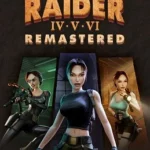
Like the rest of the classic era, the game was beautifully revitalized as part of Aspyr’s Tomb Raider IV-VI Remastered collection (released in February 2025), allowing modern audiences to revisit Lara’s anthology with heavily upgraded visuals and modernized controls.
Key Features:
- Anthology Structure — Play through four distinct, self-contained adventures spanning different eras of Lara Croft’s life.
- Teenage Survival Horror — Survive a terrifying, weaponless encounter with Celtic mythology on a haunted Irish island.
- High-Tech Espionage — Ditch the twin pistols for a grappling hook, chloroform, and a catsuit to pull off a corporate heist at VCI Headquarters.
- Expanded Moveset — Utilize new acrobatic skills, including tightrope walking and horizontal bar swinging, to navigate complex environments.
- The 2025 Remaster — Experience the definitive modern version (Tomb Raider IV-VI Remastered), bringing the classic PS1 engine to current-generation consoles with gorgeous new textures and lighting.
Release Platforms:
- PlayStation — November 17, 2000 (Europe) / November 20, 2000 (North America)
- Microsoft Windows (PC) — November 17, 2000 (Europe) / November 24, 2000 (North America)
- Sega Dreamcast — November 24, 2000 (Europe) / November 26, 2000 (North America)
- Mac OS — 2001
- PlayStation 4 / PlayStation 5 / Xbox One / Xbox Series X|S / Nintendo Switch / PC (Tomb Raider IV-VI Remastered) — February 14, 2025