Tomb Raider: The Last Revelation
 Dreamcast
 PC
PC PS 1
PS 1Where to buy

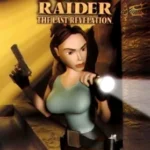
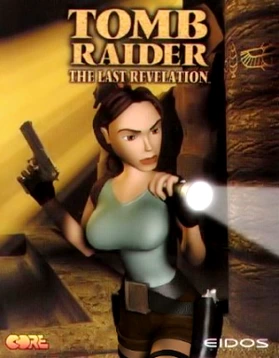
Tomb Raider: The Last Revelation (also commonly known as Tomb Raider IV) is a 1999 action-adventure game developed by Core Design and published by Eidos Interactive. Releasing during a time of intense franchise fatigue for both the developers and the fans, the game represented a massive attempt to return Lara Croft to her roots: fewer gunfights, more tomb raiding, and a return to the quiet, atmospheric isolation of the 1996 original.
The story abandons the globe-trotting nature of the previous sequels, taking place almost entirely within Egypt. The game opens with a playable flashback to 1984 in Cambodia, where a 16-year-old Lara Croft learns the ropes of tomb raiding from her mentor, the arrogant archaeologist Werner Von Croy. The narrative then shifts to present-day Egypt, where Lara accidentally removes an ancient amulet, unwittingly unleashing Set, the Egyptian god of chaos and destruction. Realizing she has triggered the apocalypse, Lara must race across the Egyptian desert, navigating legendary locations like Karnak, Alexandria, and the Great Pyramid of Giza, to re-imprison the dark god—all while being hunted by her former mentor, Von Croy.
Gameplay
The Last Revelation utilized a heavily modified version of the classic PS1 engine, pushing the console to its absolute breaking point with highly detailed textures and seamless level geometry. It fundamentally changed how players interacted with the environment and inventory.
Key gameplay mechanics and additions include:
- The Hub System: Instead of linear, point-A-to-point-B levels, the game features complex, interconnected hub areas. Players frequently have to travel back and forth between different levels (such as moving between the ruins of Karnak and the surrounding desert) using a motorcycle or jeep to solve massive, multi-level puzzles.
- Inventory Combination: The inventory screen was completely overhauled. Lara can now combine different items to solve puzzles or improve her arsenal (e.g., combining a laser sight with her revolver or crossbow to manually snipe distant targets).
- New Acrobatics: Lara was given new, crucial traversal moves to navigate the complex tombs. She can now shimmy around outer corners, climb up and slide down vertical poles, and most notably, grab and swing from hanging ropes to clear massive gaps.
- Targeting Toggle: Addressing a long-standing complaint about the auto-lock combat, the developers added a toggle that allowed players to switch targets mid-firefight, making combat against mythological monsters and desert mercenaries slightly less chaotic.
- Return to Puzzles: Combat is heavily de-emphasized compared to Tomb Raider II and III. The game heavily focuses on intricate, multi-stage environmental puzzles based on real Egyptian mythology, such as playing a game of Senet against an ancient spirit.
Development and Legacy
By 1999, Core Design was exhausted. Eidos Interactive had forced the studio to release a new Tomb Raider game every single year, leading to massive burnout among the developers. Feeling trapped by their own creation, the team made a drastic, highly controversial decision during development: they decided to kill off Lara Croft.
The game’s notoriously bleak ending features Lara attempting to escape the collapsing Great Pyramid. She hangs onto a ledge, refusing to take the hand of her rival Von Croy, and ultimately falls into the darkness as the pyramid seals shut, seemingly burying her alive. The developers hoped this would finally give them a break from the franchise. However, Eidos simply mandated another sequel, leading to Tomb Raider Chronicles (2000), which consisted entirely of flashbacks told by Lara’s friends mourning at her memorial.
Despite the controversy surrounding the ending, The Last Revelation was a massive commercial success and is widely regarded by hardcore fans as the best of the classic PS1 sequels. It perfectly balanced the intricate puzzle design of the original game with the expanded mechanics of the later titles.
Recently, the game was beautifully revived as part of the Tomb Raider IV-VI Remastered collection, which launched in February 2025. This highly anticipated release brought the game to modern consoles with heavily upgraded textures, modernized analog controls, and quality-of-life improvements, allowing a new generation to experience Lara’s darkest adventure.
Key Features:
- Return to the Tombs — Experience a back-to-basics approach that heavily prioritizes isolation, exploration, and complex puzzle-solving over massive gunfights.
- Egyptian Mythology — Explore a single, massive, beautifully realized setting, diving deep into the mythology of ancient Egypt.
- Hub-Based Exploration — Seamlessly backtrack between interconnected levels using a motorcycle and sidecar to solve massive environmental puzzles.
- Expanded Moveset — Swing from ropes, climb poles, and combine items in your inventory to overcome ancient traps.
- The 2025 Remaster — Play the definitive modern version (Tomb Raider IV-VI Remastered), featuring drastically improved graphics, modern control schemes, and the inclusion of a dedicated Photo Mode.
Release Platforms:
- PlayStation — November 24, 1999
- Microsoft Windows (PC) — November 24, 1999
- Sega Dreamcast — March 24, 2000
- Mac OS — 2000
- PlayStation 4 / PlayStation 5 / Xbox One / Xbox Series X|S / Nintendo Switch / PC (Tomb Raider IV-VI Remastered) — February 14, 2025