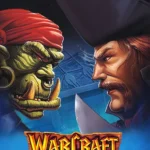
WarCraft: Orcs & Humans
 PC
PC
 Blizzard Entertainment
Blizzard Entertainment
Blizzard Entertainment
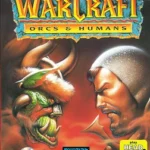
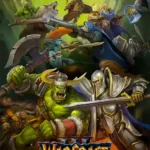
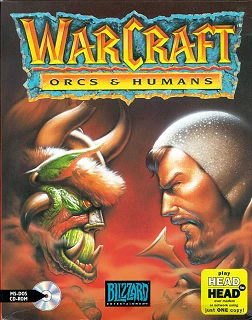
WarCraft: Orcs & Humans is a 1994 real-time strategy (RTS) game developed and published by Blizzard Entertainment (having just changed their name from Silicon & Synapse). Releasing right at the dawn of the RTS genre—heavily inspired by Westwood Studios’ foundational Dune II—Warcraft abandoned the sci-fi deserts of Arrakis for a vibrant, high-fantasy world of magic, swords, and massive green monsters. In doing so, it birthed one of the most lucrative and culturally significant franchises in the entire history of video games.
The narrative establishes the absolute bedrock of the “First War,” a conflict that would eventually be expanded into massive novels, sequels, and a blockbuster Hollywood movie. The peaceful human Kingdom of Azeroth (led by King Llane Wrynn) is suddenly invaded by the Orcish Horde, a bloodthirsty alien army that has crossed dimensions through a magical rift known as the Dark Portal. Players can choose to command the noble Human defenders to repel the invasion, or take control of the savage Orcs to conquer the human capital of Stormwind.
Gameplay
By modern standards, the original 1994 mechanics are incredibly archaic, but at the time, they were highly innovative and laid the direct foundation for everything Blizzard would do in the future.
Key gameplay mechanics include:
- The Dual Economy: Warcraft introduced the specific resource-gathering loop that would define the franchise. Players must assign “Peasants” or “Peons” to harvest Gold from static mines and chop Lumber from surrounding forests to fund their war machine.
- Mirrored Factions: Unlike the wildly asymmetric factions of StarCraft, the Humans and Orcs in Warcraft I are essentially identical palette-swaps of one another. The Human Footman is mechanically identical to the Orc Grunt; the Human Archer mirrors the Orc Spearman. The only true divergence happens in the late game with spellcasters: Humans get Clerics (who can heal), while Orcs get Necromancers (who can summon skeletons).
- Road Building: A highly unique mechanic that was completely abandoned in all subsequent Warcraft games. You could not simply place buildings wherever you wanted; every structure had to be built directly adjacent to a piece of dirt road, which had to connect back to your Town Hall.
- Archaic Limitations: Playing the original 1994 MS-DOS version is a massive test of patience. You could only select a maximum of four units at a time. Furthermore, there was no contextual “right-click” command. To move a unit, you had to explicitly click the “Move” button on the UI (or press ‘M’) and then click the destination.
Development and Legacy
During early development, the team at Blizzard actually wanted to make a game based on the Warhammer Fantasy tabletop universe. However, because they wanted total creative control (and because they had previously suffered through a bad experience developing a licensed DC Comics game), they decided to simply create their own proprietary fantasy universe instead.
Upon its release in late 1994, Warcraft: Orcs & Humans was a massive critical and commercial success. Reviewers praised its vibrant, chunky sprite art, its excellent multiplayer (which allowed two players to battle via a dial-up modem or local network), and the fantastic audio design. The unit voice lines—where grunts would angrily complain or make jokes if you clicked on them too many times—became an instant, beloved Blizzard trademark.
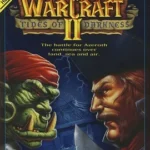
The game’s success instantly put Blizzard on the map as a premier PC developer, directly leading to the spectacular 1995 sequel, Warcraft II: Tides of Darkness, which vastly improved the UI and expanded the scope to naval and aerial warfare.
For decades, the original game remained a difficult-to-play museum piece. However, in November 2024, to celebrate the franchise’s 30th anniversary, Blizzard surprise-released Warcraft 1: Remastered. This massive update completely overhauled the game, adding beautiful, cel-shaded 2D HD graphics (with a seamless toggle to switch back to the original pixels), expanding the unit selection limit to 12, and finally introducing modern right-click movement controls, making the genesis of Azeroth fully playable and enjoyable for modern audiences.
Key Features:
- The Genesis of Azeroth — Experience the foundational “First War” that launched the multi-billion dollar Warcraft and World of Warcraft universes.
- Humans vs. Orcs — Play through two distinct, 12-mission campaigns, defending Stormwind as the human armies or razing it to the ground as the invading Horde.
- Classic Economy — Master the foundational RTS loop of balancing gold mining, lumber harvesting, and strategic base expansion.
- Iconic Audio — Enjoy the legendary MIDI soundtrack and the famously humorous, highly quotable unit voice barks that defined Blizzard’s attitude.
- Warcraft Remastered — Play the beautifully modernized 2024 release, featuring updated HD artwork, quality-of-life UI improvements, and vital modern control schemes.
Release Platforms:
- MS-DOS / Mac OS — November 1994
- Warcraft 1: Remastered (PC) — November 13, 2024 (Currently available via the Battle.net launcher, often bundled in the Warcraft Remastered Battle Chest)
Warcraft news
More news
Blizzard Caps Dungeon XP in WoW: Forever to Keep World Central
WoW: Forever's First Patch Is Adding Intense Weather Effects Back
Blizzard Vows Aggressive Bans for WoW: Forever Gold Buyers
WoW Forever Beta Breaks Servers, Stuns Devs With Record Numbers