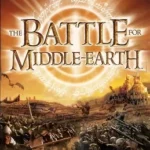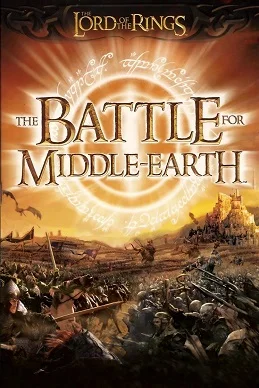
The Lord of the Rings: The Battle for Middle-earth
 82
★ /10
82
★ /10
 PC
PC
 EA Los Angeles
 Electronic Arts
The Lord of the Rings: The Battle for Middle-earth is a 2004 real-time strategy (RTS) masterpiece developed by EA Los Angeles and published by Electronic Arts. Released during the absolute peak of the Peter Jackson film trilogy’s cultural dominance, this game didn’t just slap a movie license onto a generic RTS shell. It utilized the robust SAGE engine (borrowed from Command & Conquer: Generals) to perfectly capture the sweeping, cinematic scale of Middle-earth’s most iconic battles.
Because EA had the official rights to the New Line Cinema films, the game is a masterclass in presentation. It features the actual likenesses of the actors, exclusive voice-over work from stars like Ian McKellen, Elijah Wood, and Christopher Lee, and perfectly integrates Howard Shore’s legendary orchestral score directly into the gameplay.
Gameplay and Tactical Base-Building
The Battle for Middle-earth (often abbreviated as BFME) made several bold mechanical departures from traditional 90s/early-2000s RTS games, primarily to ensure that the massive battles felt like scenes ripped straight from the films.
Key gameplay mechanics include:
- Pre-Defined Base Nodes: This is the game’s most defining and divisive feature. You cannot freely place buildings anywhere on the map. Instead, you capture pre-defined settlements: Camps, Outposts, and Castles. A Camp might only have three physical building slots, while a Castle has seven plus wall defenses. This forced players to make excruciating tactical choices about their economy and army composition, as you physically could not build everything in one base.
- Battalion Combat: To make the armies look massive, standard infantry (like Orcs, Uruk-hai, or Gondor Soldiers) are not trained as individual units. You train them in entire squads or battalions. They move, fight, and gain veterancy together.
- The Evenstar / One Ring Powers: As you defeat enemies, you earn command points to spend on a massive, global spell tree. You can summon giant eagles, call down a blinding beam of sunlight to weaken enemy armor, unleash the Army of the Dead, or summon the Balrog of Morgoth to completely annihilate an enemy fortress.
- Hero Units: The iconic characters from the books and films are deployed as super-units. Heroes like Gandalf, Aragorn, and Lurtz possess unique abilities that unlock as they level up. A high-level Gandalf could single-handedly wipe out entire armies with his “Word of Power” spell.
The Factions
The game features four heavily asymmetrical factions, split perfectly between the forces of Good and Evil:
- Gondor: The ultimate defensive faction. They possess heavily armored infantry, devastating trebuchets, and the strongest castle walls in the game. Their hero roster is stacked with heavy hitters like Gandalf, Boromir, and Faramir.
- Rohan: The masters of the open field. Rohan relies entirely on speed and cavalry. Their peasant infantry is incredibly weak, but when you mass a charge of fully upgraded Rohirrim cavalry led by King Théoden and Éomer, they will instantly trample entire battalions of enemy troops to dust.
- Isengard: The brutal, industrialized war machine. Commanded by Saruman, their economy relies on massive logging camps and furnaces. Their Uruk-hai infantry are incredibly fast, durable, and wield massive pikes to specifically counter Rohan’s cavalry charges.
- Mordor: The overwhelming swarm. Mordor is completely unique because their basic Orc infantry is 100% free to produce; you just have to wait for them to spawn. However, Mordor cannot build walls around their castles. They rely on overwhelming their enemies with endless waves of free orcs, backed up by massive, terrifying siege beasts like Mountain Trolls and colossal Mûmakil (Oliphaunts).
The Dynamic Campaign
Rather than a linear string of missions, the single-player experience features a massive, interactive map of Middle-earth. Players choose to play as either the Forces of Good (following the narrative of the Fellowship) or the Forces of Evil (allowing you to rewrite history and conquer Middle-earth for Sauron).
You physically choose which territories to invade next, earning global bonuses, command points, and resource multipliers for capturing specific regions before eventually tackling the massive, heavily scripted set-piece battles at Helm’s Deep, Minas Tirith, and the Black Gate.
Development and The “Licensing Limbo” Legacy
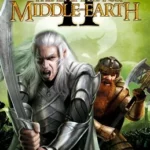
Released in December 2004, BFME was a massive commercial and critical success. It flawlessly translated the cinematic spectacle of the movies into a deeply strategic, highly accessible RTS. It spawned a highly acclaimed sequel in 2006 (The Battle for Middle-earth II), which removed the fixed base-building in favor of traditional, free-form RTS construction and added the Elves, Dwarves, and Goblins as playable factions.
However, the legacy of the BFME franchise is tragic. In 2008/2009, EA’s license to produce Lord of the Rings games expired, and the rights reverted to Warner Bros. Because EA owns the game’s code but Warner Bros owns the IP, the games were trapped in legal limbo. EA was forced to shut down the official multiplayer servers and pull the games from all physical and digital store shelves permanently.
Today, The Battle for Middle-earth is the ultimate definition of abandonware. It is not sold on Steam, GOG, or the EA App. However, the game refuses to die. An incredibly dedicated, massive fan community has kept the game alive for two decades. Through custom launchers (like the BFME All-In-One Launcher), community servers (T3A:Online), and massive, unofficial HD patches, fans continue to play, mod, and completely rebalance this legendary 2004 RTS on modern Windows hardware today.
Key Features:
- Cinematic Warfare — Command massive battalions of iconic units in battles that look and sound exactly like the Peter Jackson film trilogy.
- Fixed Base-Building — Master a unique economy that forces you to fight fiercely for map control and highly limited building slots.
- Global Spells — Rain destruction down upon your enemies by summoning Ents, Eagles, and the Balrog from a massive, global power tree.
- Asymmetrical Armies — Turtle behind the massive stone walls of Gondor, or swarm the map with endless, free hordes of Mordor Orcs.
- Kept Alive by Fans — Experience a legendary piece of abandonware that is still heavily played and supported by a massive community via modern third-party launchers.
Release Platforms:
- Microsoft Windows (PC) — December 6, 2004
- (Currently abandonware; unavailable on digital storefronts but widely accessible via community-driven launchers).