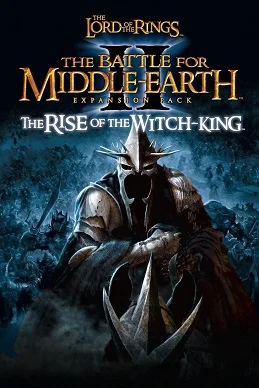
The Lord of the Rings: The Battle for Middle-earth II: The Rise of the Witch-king
Expansion of The Lord of the Rings: The Battle for Middle-earth II 78
★ /10
78
★ /10
 PC
PC Xbox 360
 EA Los Angeles
 Electronic Arts
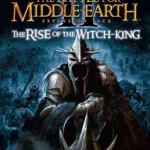
The Lord of the Rings: The Battle for Middle-earth II: The Rise of the Witch-king is the massive 2006 official expansion pack to EA’s critically acclaimed strategy sequel.
Holding the Guinness World Record for the longest title in video game history, this expansion is beloved by hardcore Lord of the Rings fans because it steps completely away from the timeline of the Peter Jackson films. Instead of rehashing the War of the Ring, the developers dove deep into the appendices at the back of The Return of the King to tell a much darker, lesser-known story from Middle-earth’s ancient history.
The Campaign: The Fall of Arnor
The single-player campaign is a prequel set over a thousand years before Frodo Baggins is even born. Following Sauron’s defeat at the hands of the Last Alliance, the great northern kingdom of Men—Arnor—fragments into three squabbling territories: Arthedain, Cardolan, and Rhudaur.
Sensing their weakness, the Lord of the Nazgûl travels north and establishes the frozen, evil realm of Angmar. You play entirely as the bad guys. Over the course of a brutal, 500-year war, you command the Witch-king’s forces as they systematically corrupt the hill-men, unleash devastating plagues, destroy the legendary Tower of Amon Sûl, and ultimately burn the Arnorian capital of Fornost to the ground, effectively erasing the northern kingdom of Men from history.
The New Faction: Angmar
To execute this conquest, the expansion introduces Angmar as a fully playable seventh faction in both the campaign and multiplayer skirmishes. They are an incredibly unique, highly versatile evil faction that relies on a mix of brute force and dark magic.
Key Angmar mechanics and units include:
- The Thrall Masters: Instead of building different production structures for different infantry, Angmar builds a single Hall of the King’s Men and recruits Thrall Masters. Once on the battlefield, the Thrall Master can instantly summon a full battalion of whichever unit you need at that exact moment (Spearmen, Axe-throwers, or Wolf Riders), making Angmar incredibly adaptable.
- Sorcerers and Acolytes: Angmar’s magic system requires micromanagement. Sorcerers are incredibly fragile but can cast devastating spells like “Corpse Rain” or “Well of Souls” by physically sacrificing their own accompanying Acolytes to fuel the dark magic.
- Heavy Hitters: The faction is anchored by terrifying heroes and monsters. The Witch-king himself leads the charge alongside Morgomir (a Black Númenórean and fellow Ringwraith), the treacherous hill-chieftain Hwaldar, and Rogash, a highly intelligent, massive Hill-Troll of unparalleled cruelty.
Global Enhancements and Mechanics
The Rise of the Witch-king didn’t just add a new faction; it heavily expanded the sandbox of the base game.
Key additions include:
- New Units for Existing Factions: Every single base-game faction received powerful new toys. The Elves received elite Noldor Warriors, the Dwarves gained Prince Brand and Dwarven Zealots, Men of the West got Rohan Spearmen, and Mordor could now deploy all six mounted Black Riders as a single, terrifying cavalry unit.
- War of the Ring Overhaul: The Total War-style grand strategy mode received a massive facelift. Most importantly, armies now had persistence. If you built a massive army of Uruk-hai in a real-time skirmish and survived, that exact army would carry over to the world map, allowing you to march them into the next territory.
- Create-A-Hero Upgrades: The beloved custom hero creator was expanded with brand-new weapons, armor sets, and most notably, the ability to create your own custom Troll heroes. Furthermore, the cost of custom heroes was balanced, allowing you to create cheap early-game captains or massively expensive, Sauron-level demigods.
Development and Legacy
Released in November 2006, just months after the base game, The Rise of the Witch-king was highly praised for how seamlessly it integrated obscure Tolkien lore into the established RTS engine. It perfected the Battle for Middle-earth II formula, adding a massive layer of replayability to the multiplayer and grand strategy modes.
Tragically, because it requires the base game to run, the expansion is shackled to the exact same “licensing limbo” fate as the rest of the franchise. Following EA’s loss of the Lord of the Rings license, it was permanently pulled from digital and physical store shelves.
Today, original physical copies of The Rise of the Witch-king are incredibly rare and highly expensive collector’s items. However, the game lives on through the exact same dedicated modding community that preserves the base games, allowing modern players to experience the fall of Arnor via community-hosted patches and third-party launchers.
Key Features:
- A New Era of Lore — Leave the movies behind and explore a 500-year war drawn directly from J.R.R. Tolkien’s appendices.
- Command Angmar — Master a brand-new, highly versatile evil faction that blends disposable thralls with devastating Black Númenórean sorcery.
- Expanded Arsenals — Bolster all six original factions with powerful new units and elite heroes, drastically changing the multiplayer meta.
- Persistent Grand Strategy — Conquer the living map in an upgraded “War of the Ring” mode where your surviving armies carry over from battle to battle.
- The Final Chapter — Experience the absolute peak of the Battle for Middle-earth franchise, preserved today by one of the most dedicated modding communities in PC gaming.
Release Platforms:
- Microsoft Windows (PC) — November 28, 2006
- (Currently abandonware; strictly requires the base game to run).