Warcraft II: Tides of Darkness
 PC,
PC,  PS 1,
PS 1,  Sega Saturn
 Blizzard Entertainment
Blizzard Entertainment
Blizzard Entertainment
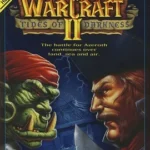
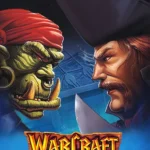
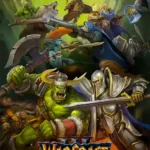
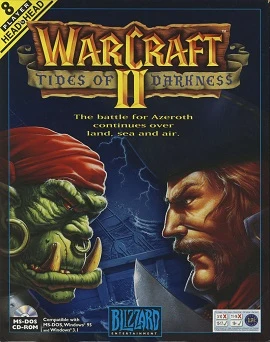
Warcraft II: Tides of Darkness is a 1995 real-time strategy (RTS) game developed and published by Blizzard Entertainment. If the original Warcraft was a successful proof-of-concept for the fantasy RTS genre, Warcraft II was the monumental, blockbuster sequel that officially cemented Blizzard as an unstoppable juggernaut in PC gaming. It vastly expanded the scope of the conflict, introduced groundbreaking multiplayer features, and solidified the art style and lore that would eventually define the most famous MMORPG in history.
The narrative focuses on the “Second War.” Following the destruction of Stormwind in the first game, the human survivors flee north across the Great Sea to the Kingdom of Lordaeron. Knowing the Orcish Horde (now led by Warchief Orgrim Doomhammer) is coming to finish the job, the humans forge the Alliance of Lordaeron, bolstering their ranks with the High Elves of Quel’Thalas and the Dwarves of Khaz Modan. In response, the Horde expands its own forces, bringing in jungle Trolls, massive two-headed Ogres, and cunning Goblins.
Gameplay
Warcraft II took the core MS-DOS mechanics of its predecessor and completely overhauled them, introducing features that would immediately become industry standards for the RTS genre.
Key gameplay mechanics include:
- The Fog of War: Warcraft II was one of the very first games to implement a true “Fog of War.” While exploring removed the black shroud over the map, any area outside of your units’ direct line of sight would be covered in a gray fog. You could still see the terrain, but enemy movements and newly constructed buildings were hidden until you physically scouted the area again.
- Land, Sea, and Air: The battlefield was massively expanded beyond basic ground skirmishes. Players could build Shipyards to construct oil tankers, destroyers, and massive battleships for naval bombardment. Furthermore, aerial units were introduced, allowing players to command Gryphon Riders, Dragons, and scouting Zeppelins.
- The Oil Economy: To support the new naval warfare, a third vital resource was added: Oil. Players had to build offshore Oil Platforms and escort slow-moving tankers back to shipyards to fund their advanced navies.
- Modernized UI: The archaic interface of 1994 was heavily refined. Warcraft II introduced the contextual right-click command (right-clicking an enemy to attack, or right-clicking a tree to harvest lumber). Additionally, the frustrating 4-unit selection limit was increased to a much more manageable 9 units.
- Asymmetrical Casters: While the base footmen and archers were still functionally identical mirrors of each other, the late-game spellcasters and auxiliary units created true faction identities. The Alliance relied on healing Paladins and Mages (who cast devastating Blizzards and Polymorphs), while the Horde utilized Bloodlust-casting Ogre-Magi and Death Knights (who raised the dead and cast Death and Decay).
Development and Legacy
Developed in under a year, Warcraft II: Tides of Darkness was released in December 1995 to universal critical acclaim. It sold millions of copies, dominated PC sales charts for the entirety of 1996, and became a massive cultural phenomenon. It also introduced a highly robust map editor right in the box, allowing the community to create thousands of custom scenarios and multiplayer maps.
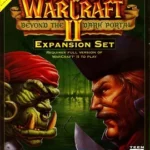
In 1996, Blizzard released a highly praised expansion pack, Warcraft II: Beyond the Dark Portal, which introduced a brutally difficult new campaign taking place on the shattered, alien Orc homeworld of Draenor. It also introduced powerful “Hero” units (like Khadgar, Alleria, and Grom Hellscream) who possessed boosted stats and had to survive for the mission to succeed—a mechanic that would heavily influence the design of Warcraft III.
Recognizing the explosive growth of online multiplayer, Blizzard later re-released the game in 1999 as Warcraft II: Battle.net Edition. This version integrated both the base game and the expansion into the modern Windows architecture and allowed players to seamlessly matchmake over Blizzard’s proprietary Battle.net service, effectively replacing the cumbersome LAN and dial-up mechanics of the 1995 original.
Because of its historical significance, the franchise was given an incredible modernization effort just recently. In November 2024, to celebrate the 30th anniversary of the franchise, Blizzard released Warcraft II: Remastered. This massive update completely redrew the classic 2D pixel art in a gorgeous, high-definition, hand-painted style (allowing players to toggle seamlessly between the new graphics and the 1995 originals). It also expanded the unit selection cap, modernized the control scheme, and ensured the Second War could be enjoyed flawlessly on modern hardware.
Key Features:
- The Second War — Experience the massive, continent-spanning conflict that formally established the iconic Alliance vs. Horde rivalry.
- Combined Arms — Command massive armies across land, sea, and air, utilizing Gryphons, Battleships, and Goblin Zeppelins to dominate the map.
- Fog of War — Master the foundational RTS mechanic of constant scouting, striking enemies from the shadows of unexplored terrain.
- Beyond the Dark Portal — Push into the alien world of Draenor in the legendary expansion that introduced hyper-lethal Hero units to the franchise.
- Warcraft II: Remastered — Play the breathtaking 2024 remaster, featuring fully redrawn HD 2D graphics, modern UI enhancements, and seamless Battle.net multiplayer integration.
Release Platforms:
- MS-DOS / Mac OS — December 1995
- Sega Saturn / PlayStation 1 — August 1997
- Warcraft II: Battle.net Edition (PC) — 1999
- Warcraft II: Remastered (PC) — November 13, 2024 (Currently available via the Battle.net launcher)