 88
88  PC
PC
 Blizzard Entertainment
Blizzard Entertainment
Blizzard Entertainment
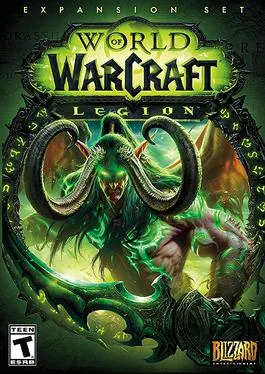
World of Warcraft: Legion is the 2016 expansion pack for Blizzard Entertainment’s MMORPG. If Warlords of Draenor brought the franchise to its lowest, most precarious point, Legion was the glorious, triumphant comeback. Widely regarded alongside Wrath of the Lich King and Mists of Pandaria as one of the absolute greatest eras in WoW history, it delivered an overwhelming amount of content, heavily leaned into deep class fantasy, and introduced dynamic endgame systems that completely forever altered the DNA of the game.
The narrative is an apocalyptic, all-hands-on-deck crisis. Gul’dan, having escaped the alternate timeline of WoD, travels to the Tomb of Sargeras on the Broken Isles and opens a massive portal, triggering the largest, most devastating demonic invasion of Azeroth in history. The expansion begins with the catastrophic Battle for the Broken Shore, resulting in the tragic, shocking deaths of both Alliance King Varian Wrynn and Horde Warchief Vol’jin. Fractured and leaderless, the factions step aside as players take up the mantle of their respective class orders to wield weapons of myth, resurrect the Demon Hunter Illidan Stormrage, and take the fight directly to the Burning Legion.
Gameplay
Legion raised the level cap from 100 to 110 and introduced a suite of deeply engaging, infinitely replayable systems that fundamentally solved the content drought issues of the previous expansion.
Key gameplay mechanics and additions include:
- The Demon Hunter: WoW’s second-ever Hero Class. Restricted to Night Elves and Blood Elves, Demon Hunters offered an incredibly fast-paced, high-mobility playstyle featuring double-jumping, gliding with demonic wings, and firing lasers from their eyes. It remains the only class in the game with just two specializations: Havoc (Melee DPS) and Vengeance (Tank).
- Artifact Weapons: Instead of hoping for weapon drops from bosses, every single one of the game’s 36 specializations was handed a lore-heavy, iconic Artifact Weapon within the first hour of the expansion (such as the Paladin’s Ashbringer or the Shaman’s Doomhammer). Players spent the entire expansion upgrading these weapons via a massive talent tree fueled by “Artifact Power” (AP) gathered from almost every activity in the game.
- Class Order Halls: Solving the isolating nature of WoD‘s Garrisons, Order Halls were shared social hubs exclusive to your specific class. All Death Knights gathered in the floating necropolis of Acherus, while all Rogues met in a secret subterranean vault in Dalaran. Each hall featured a lengthy, highly praised campaign specifically tailored to the fantasy of that class.
- Mythic+ Dungeons: Arguably the most important addition to modern WoW. Building on MoP‘s Challenge Modes, Mythic+ introduced infinitely scaling 5-player dungeons. Players use “Keystones” to increase the health and damage of enemies while adding rotating, weekly “Affixes” (e.g., enemies dropping pools of lava on death). It established a permanent, highly competitive PvE endgame pillar parallel to 20-man raiding.
- World Quests & Emissaries: Replacing the stagnant daily quests of old, World Quests populated the game map with hundreds of rotating, temporary bounties. Completing specific combinations rewarded “Emissary” caches, ensuring the open world remained relevant and highly populated for the entire expansion.
Development and Legacy
Released in August 2016, Blizzard pulled out all the stops for Legion. Desperate to win back the trust of the community, they delivered an absolutely staggering content cadence. The expansion operated on an unprecedented 77-day patch cycle, meaning players were constantly receiving new dungeons, raids, and massive story zones without ever hitting a dry spell.
The storytelling was wildly ambitious. It featured the sprawling, critically acclaimed max-level zone of Suramar (where players spearheaded a guerrilla rebellion in an ancient elven city) and culminated in Patch 7.3 with the game actually leaving Azeroth. Players boarded a massive spaceship and invaded Argus, the demon-infested homeworld of the Eredar, to defeat the dark titan Sargeras—who, in his dying breath, famously plunged a massive, continent-sized sword directly into the planet of Azeroth.
Despite its massive success, Legion did have heavily criticized flaws. The acquisition of expansion-defining “Legendary” items was tied to pure, unadulterated RNG, leading to massive frustration if a player’s first drop was a utility item rather than a massive DPS boost. Additionally, the infinite grind for Artifact Power caused massive burnout among hardcore raiders.
Today, in 2026, Legion is remembered as a monumental masterpiece of MMO design. As the WoW Classic community pushes through the Mists of Pandaria era and debates how to handle the impending awkwardness of Warlords of Draenor, Legion is the glowing beacon on the horizon. It is widely considered the highly anticipated “next golden age” that classic players are desperate to reach.
Key Features:
- The Demon Hunter — Sacrifice everything to master fel magic, utilizing unprecedented mobility, double-jumps, and metamorphosis to annihilate your enemies.
- Wield Artifact Weapons — Claim legendary lore weapons like the Ashbringer or the Scythe of Elune, customizing their appearances and upgrading their unique talent trees.
- Mythic+ Keystones — Master the foundational system of modern 5-player endgame content, battling endlessly scaling dungeon timers and brutal weekly affixes.
- Class Order Halls — Unite with players of your specific class in immersive, lore-rich strongholds to coordinate the war effort against the Legion.
- The Argus Campaign — Take the fight off-world in the expansion’s epic finale, traveling to a demon-corrupted planet to imprison the dark titan Sargeras.
Release Platforms:
- Microsoft Windows (PC) / macOS — August 30, 2016
- (Included in the base retail World of Warcraft subscription).