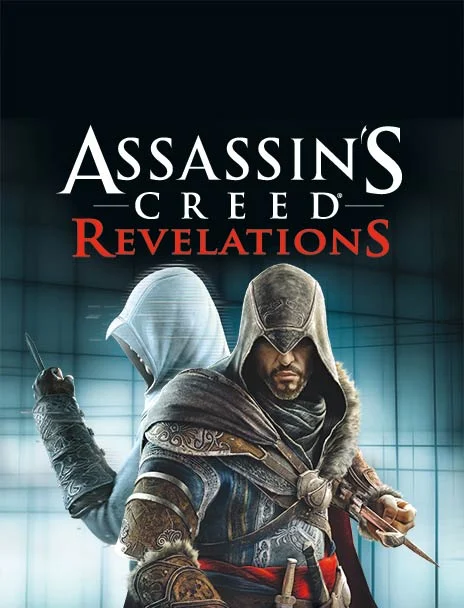
Assassin’s Creed revelations
 80
★ /10
80
★ /10
 PC
PC PS 3
PS 3 Xbox 360
 ak tronic Software & Services GmbH,
  Akella,
  Ubisoft
Where to buy

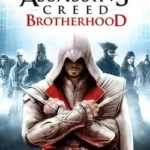
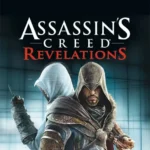
Assassin’s Creed: Revelations is a 2011 action-adventure stealth video game developed by Ubisoft Montreal and published by Ubisoft. Serving as the direct sequel to Assassin’s Creed: Brotherhood (2010), it is the fourth major installment in the series and the epic, emotional conclusion to the beloved “Ezio Trilogy.” The game weaves together the destinies of the franchise’s three primary protagonists—Desmond Miles, Ezio Auditore, and Altaïr Ibn-La’Ahad—bringing their intertwining story arcs to a definitive close.
Following the shocking climax of Brotherhood, Desmond Miles falls into a deep coma and his consciousness becomes trapped in the “Black Room,” a safe mode within the Animus. To repair his fractured mind and wake up, he must completely synchronize his ancestors’ memories until there is nothing left to explore. Within the Animus, players control a weary, 52-year-old Ezio Auditore. Seeking the wisdom of his predecessor, Altaïr, Ezio travels to the ancient Assassin fortress of Masyaf, only to find it overrun by Templars seeking a hidden library. To unlock the library, Ezio must find five ancient keys hidden across the bustling, culturally diverse metropolis of 16th-century Constantinople (modern-day Istanbul) during the height of the Ottoman Empire.
Gameplay
Revelations retains the established open-world parkour and combat mechanics of its predecessors, but introduces several new tools and systems designed to reflect Ezio’s older age and the unique layout of Constantinople.
Key gameplay mechanics include:
- The Hookblade: Early in the game, Ezio is gifted the Hookblade by the Ottoman Assassins. This modification to the Hidden Blade extends Ezio’s climbing reach by roughly 30%, allows him to rapidly slide down the numerous ziplines scattered across the city, and introduces the “hook-and-run” maneuver to gracefully vault over enemies in combat.
- Extensive Bomb Crafting: Moving away from the static inventory of past games, Revelations introduces a robust crafting system. Players can combine different shells, gunpowders, and shrapnel to create hundreds of bomb variations, ranging from lethal explosive and poison bombs to tactical smoke, caltrop, and blood-splatter decoys.
- Den Defense: When Ezio’s Templar awareness (notoriety) reaches maximum, the Templars will attack a captured Assassin Den. This triggers a brand-new tower defense mini-game where Ezio stands on a rooftop, commanding squads of archers, riflemen, and barricades to fend off waves of Templar troops and siege engines.
- Altaïr Memories: Finding one of the hidden keys allows Ezio to relive the memories of Altaïr. In these linear, narrative-focused sequences, players control Altaïr during various critical, previously unseen moments of his life, spanning from his youth to his twilight years.
- Desmond’s Journey: While in the Black Room, players unlock first-person, abstract puzzle-platforming sequences. Navigating surreal geometric environments representing Desmond’s subconscious, players build virtual blocks to cross gaps while listening to audio logs that flesh out Desmond’s backstory prior to his kidnapping in the first game.
Development and Legacy
Developed in less than a year, Revelations required a massive collaborative effort. While Ubisoft Montreal led the project, it was heavily supported by Ubisoft studios in Annecy, Massive, Quebec, Singapore, and Bucharest. The game was directed by Alexandre Amancio, with the narrative spearheaded by lead writer Darby McDevitt, who was tasked with the monumental challenge of tying the disparate threads of Altaïr, Ezio, and Desmond into a satisfying thematic bow.
To bring Constantinople to life, the development team focused on a warmer, more vibrant color palette compared to the Roman setting of Brotherhood. The soundtrack, co-composed by series veteran Jesper Kyd and Lorne Balfe, carried a distinctly more melancholic, Middle Eastern tone, perfectly reflecting Ezio’s introspective journey.
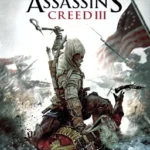
Upon its release in November 2011, Revelations received generally positive reviews, with near-universal praise aimed at its emotional storytelling, the beautifully realized setting of Constantinople, and the respectful, poignant conclusion given to Ezio and Altaïr. However, it was also the first game in the franchise to face significant criticism for “franchise fatigue.” Reviewers noted that the core gameplay loop felt overly familiar, and new additions like the Den Defense mini-game were widely disliked for disrupting the flow of the game. Despite this, it remains a beloved entry for fans, closing the book on the series’ most iconic era before the franchise pivoted to the American Revolution in Assassin’s Creed III.
Key Features:
- The Final Chapter — Experience the twilight years of Ezio Auditore as he searches for answers and peace in a foreign land.
- Constantinople — Explore a stunning, densely populated crossroads of the world, utilizing ziplines and the Hookblade to traverse the Ottoman capital.
- Master the Art of the Bomb — Craft hundreds of custom bomb variations to suit any tactical, stealth, or combat situation.
- Relive the Legend — Play as Altaïr Ibn-La’Ahad once more, uncovering the secret history of the Mentor and the fate of the Masyaf order.
- Refined Multiplayer — The acclaimed competitive multiplayer mode returns with an expanded roster of characters, new modes, and a deeper narrative progression system revealing Templar secrets.
Release Platforms:
- PlayStation 3 — November 15, 2011
- Xbox 360 — November 15, 2011
- Microsoft Windows (PC) — November 29, 2011
- PlayStation 4 / Xbox One (Included in The Ezio Collection) — November 15, 2016
- Nintendo Switch (Included in The Ezio Collection) — February 17, 2022
Assassin’s Creed news
More news
Ubisoft Names Its Generative AI Game Dev Initiative 'Motherbrain'

Ubisoft Games Now Working With Xbox Disc to Digital Program
Assassin's Creed Black Flag Resynced sets sail this July, but throws multiplayer overboard