Warhammer 40,000: Gladius – Relics of War
 71
★ /10
71
★ /10
 PC
PC



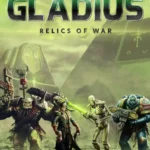
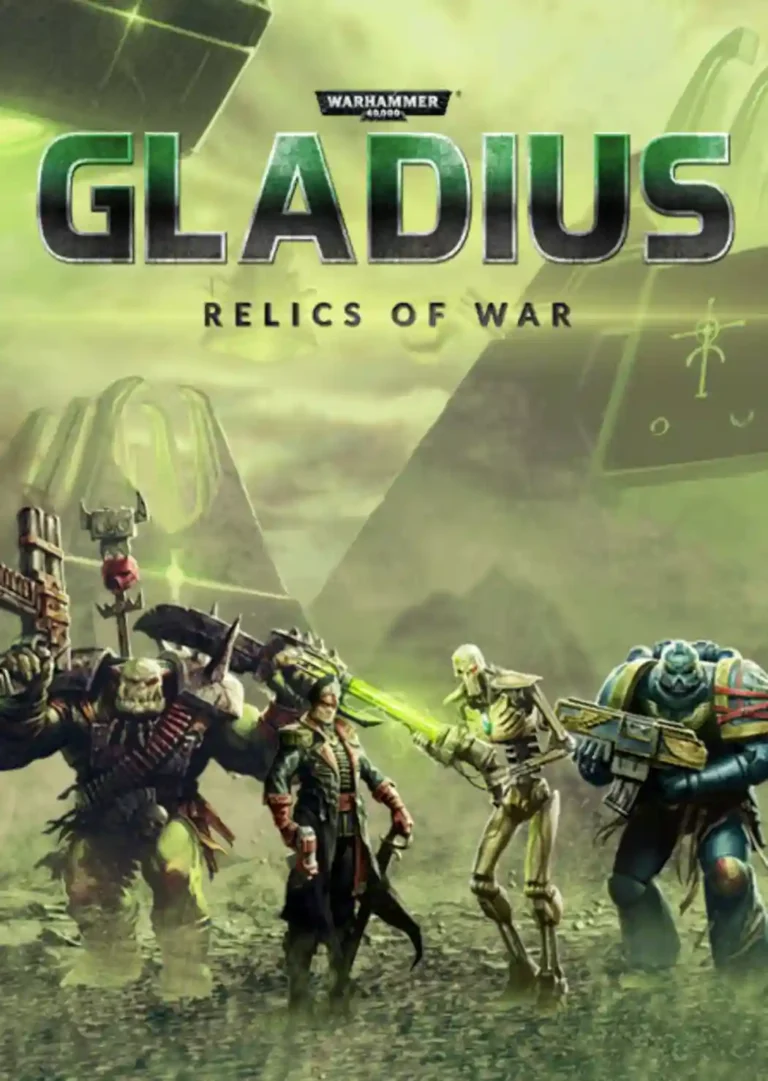
Warhammer 40,000: Gladius – Relics of War (commonly abbreviated as Gladius) is a critically acclaimed turn-based 4X grand strategy video game developed by Proxy Studios and published by Slitherine Ltd. Released on July 12, 2018, for Microsoft Windows and Linux, the title represents a landmark moment for the franchise as the first true turn-based 4X strategy game explicitly set within Games Workshop’s grimdark Warhammer 40,000 universe.
While traditional entries in the 4X genre historically balance military conquests against intricate diplomacy grids, commercial trade agreements, and peaceful cultural victories, Gladius threw out the rulebook.
By completely eliminating peaceful victory tracks to focus entirely on tactical wargaming, introducing extreme faction asymmetry across 11 playable races, and employing a modular system of unit drop expansions spanning nearly a decade, the title successfully turned the 4X genre into an intense, total-war combat puzzle.
Technical Specifications
| Attribute | Details |
| Developer | Proxy Studios |
| Publisher | Slitherine Ltd |
| Engine | Proprietary 64-Bit Multi-threaded Vulkan Native Engine |
| Platform(s) | Microsoft Windows, Linux (Native SteamOS support) |
| Release Date | July 12, 2018 |
| Genre(s) | Turn-based strategy, 4X Grand Strategy, Hex-Grid Wargame |
| Mode(s) | Single-player, Multiplayer (Simultaneous turns, Hotseat, Online cross-play) |
The Core Innovation: “There is Only War”
The defining gameplay pivot of Gladius is its absolute commitment to the core tagline of its intellectual property: “In the grim darkness of the far future, there is only war.” Proxy Studios purposefully stripped away traditional 4X diplomacy matrices. Factions cannot sign non-aggression pacts, broker resource trades, or influence international borders through peaceful means. Every encounter between sovereign civilizations is instantly hostile, treating the hex-grid map as an ongoing wargaming puzzle where every action exists solely to fund and field a more destructive army.
Compounding this threat is the planet itself. The fog of war on Gladius Prime is populated by highly aggressive, terrifying neutral alien fauna—such as mind-controlling Enslavers, psychic Psychneuein, and native feral Orks. These neutral threats relentlessly hunt down scouting squads from turn one, forcing players to play defensively and secure their localized borders before they even make first contact with rival civilizations.
Logistical Architecture: Faction Economies
Domestic city-building relies on a tightly gated, multi-resource economic matrix. Instead of a generic credits pool, empires manage highly specific material lines that dictate exactly what types of military hardware can be sustained:
- Requisition & Ore: The literal building blocks of war. Ore is consumed to establish city districts, fortifications, and basic infantry armor, while Requisition is spent to manufacture standard ballistic armaments, heavy tank hulls, and aircraft carriers.
- Food & Power: Turn-by-turn energy dependencies. Biological infantries require a continuous intake of Food, whereas robotic chassis, mechanical units, plasma weaponry, and energy shields rapidly drain specialized Power reserves.
- Research & Influence: The macro-currencies of power. Research drives progression down a series of highly unique tech tiers, while Influence is expended to level up elite Hero units, purchase powerful combat gear, or invoke faction-wide tactical actions—such as dropping emergency military assets or initiating orbital planetary bombardments.
Massive Faction Asymmetry
Through a extensive post-launch production lifecycle, Gladius has assembled one of the most mechanically diverse rosters in the strategy genre, encompassing 11 fully distinct playable civilizations:
- Base Game Forces: The heavily armored Space Marines (who are hard-locked to a single monolithic capital city but can drop orbital fortresses across the map), the defensive Astra Militarum (relying on massive infantry squads and heavy tank divisions), the chaotic Orks (who generate combat multipliers through continuous fighting), and the robotic Necrons (who rely on self-repair protocols and are restricted to settling ancient tomb grids).
- Roster Expansions: Subsequent standalone faction DLCs introduced the insatiable Tyranids (who completely ignore standard currency to consume tile biomass), the Chaos Space Marines, the technology-synergized T’au Empire, the hyper-agile Craftworld Aeldari, the cybernetic Adeptus Mechanicus, the fanatical Adepta Sororitas, and the slave-reaping Drukhari.
Contemporary Evolution and Status (2026 Perspective)
As of mid-2026, Warhammer 40,000: Gladius – Relics of War stands as a highly polished, fiercely active, and incredibly comprehensive digital wargaming platform. Now entering its eighth year of continuous post-launch development, the strategy sandbox continues to expand. During the annual Warhammer Skulls Festival in May 2026, Proxy Studios and Slitherine officially deployed the Eradication Pack DLC, injecting high-tier endgame capstones—including the Space Marine Thunderhawk Gunship, Necron Seraptek Heavy Construct, and Tyranid Harpy—directly into the tactical meta. This capstone release follows closely behind late-2025 drops like the Onslaught Pack and the Rampage Pack.
Because the game engine was natively built around robust 64-bit multi-threaded architectures and native Vulkan API parameters from day one, the digital client executes flawlessly out-of-the-box on modern Windows 11 configurations and Linux distributions.
The game is exceptionally well-optimized for portable PC play, running beautifully on SteamOS for the Steam Deck. While the complete ecosystem faces ongoing community criticism regarding a steep pricing wall that exceeds 140 euros for the complete DLC catalog, the base game is frequently featured in free-to-keep promotions, maintaining a resilient and deeply competitive global multiplayer scene.
Given how deeply the complete lack of diplomacy turns the traditional 4X formula into a relentless, total-war combat puzzle, what is your preferred doctrine for conquering Gladius Prime—will you deploy the Space Marines to wage a highly mobile, orbital-drop war from a single unassailable capital, or command the Tyranid swarms to completely consume the planet’s biomass hex by hex?
For a deeper look into the game’s current standing, check out the Warhammer 40K Gladius Still Worth In 2026? Analysis. This analytical retrospective provides an in-depth breakdown of how the game plays in 2026, weighing its extreme faction asymmetry and deep modular unit DLC library against its steep collective price barrier.