Diablo Immortal
 67
★ /10
67
★ /10
 Android,
  iOS (iPhone/iPad),
  PC
PC
 Blizzard Entertainment, NetEase Games
Blizzard Entertainment
Blizzard Entertainment, NetEase Games
Blizzard Entertainment
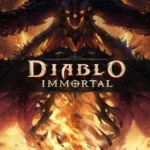
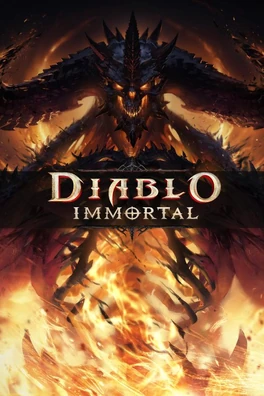
Diablo Immortal is a free-to-play, massively multiplayer online action role-playing video game (MMOARPG) developed co-jointly by Blizzard Entertainment and NetEase Games. Released in most global markets on June 2, 2022, for Android, iOS, and as an open beta for Microsoft Windows, the title represents the franchise’s first installment engineered primarily for touchscreen mobile mechanics with seamless PC cross-play and cross-progression support.
Chronologically, the narrative unfolds during the twenty-year gap bridging the events of Diablo II: Lord of Destruction and Diablo III.
The game’s history is defined by extreme polarization. Its initial reveal at BlizzCon 2018 was met with fierce backlash from core PC strategy and ARPG purists—immortalized by developer Wyatt Cheng’s response, “Do you guys not have phones?” Upon formal deployment in 2022, it was heavily criticized by gaming publications for implementing highly aggressive, multi-layered monetization and pay-to-win microtransaction frameworks, briefly giving it the lowest user score in Metacritic history.
Despite this critical friction, the game achieved immense commercial success, breaking franchise records by generating over 10 million downloads within its first week and scaling past 30 million by the conclusion of its launch month.
Technical Specifications
| Attribute | Details |
| Developer(s) | Blizzard Entertainment, NetEase Games |
| Publisher | Blizzard Entertainment |
| Game Director | Wyatt Cheng |
| Engine | Messiah Engine |
| Platform(s) | Android, iOS, Microsoft Windows |
| Release Date | • NA/EU/Global: June 2, 2022 • China: July 25, 2022 |
| Genre(s) | Massively multiplayer online, Action role-playing |
| Mode | Multiplayer |
Gameplay Architecture: The MMO Grid
Diablo Immortal retains the core high-velocity isometric hack-and-slash loops of the franchise but alters structural navigation to mirror mobile MMORPG conventions. Rather than operating on local, instance-locked maps, the game deploys a global, persistent shared-world Sanctuary. Players seamlessly encounter other active users while executing open-world bounties, raiding dungeons, or gathering items.
Faction Warfare: Shadows vs. Immortals
The endgame revolves around a unique server-wide political struggle known as The Cycle of Strife. The player base is divided into two conflicting factions:
- The Shadows: Underground cells that execute stealth contracts and run localized trial dungeons to build up collective power.
- The Immortals: An elite, server-capped echelon of up to 300 players tasked with defending Sanctuary.
Every few weeks, the top Dark Houses of the Shadows challenge the Immortals in an multi-stage combat event called the Rite of Exile. If the Shadows emerge victorious in these intense PvP gauntlets, the standing Immortal dynasty is systematically dismantled, and the winning Shadow house ascends to claim the eternal crown, resetting the server’s political modifiers.
The Helliquary Raid Core
For cooperative PvE progression, players construct and upgrade a device called the Helliquary. Upgrading this terminal lets groups of 8 players track and challenge colossal raid bosses (such as Lassal the Flame-spun or Vitaath the Shivering Death). Defeating these encounters yields exclusive demonic remains that can be permanently slotted into the Helliquary to grant passive combat attributes and combat rating multipliers.
Evolving Character Classes
The game handles skills through cooldown timers rather than traditional mana expenditure metrics, allowing players to dynamically chain abilities. The roster has grown to include several highly distinct historical classes:
- The Barbarian: A relentless physical powerhouse that generates rage wheels, pulls in enemies using chained hooks, and utilizes undying rage to cheat fatal combat blows.
- The Crusader: A high-speed, holy vanguard who rides a celestial warhorse to gather groups, projecting defensive visual shields over their co-op team.
- The Demon Hunter: A mobile dual-crossbow marksman who utilizes rope swings to reposition while laying down continuous projectile paths.
- The Monk: A high-dexterity martial arts crowd-controller who pulls together packs with atmospheric strikes and teleports across combat lanes.
- The Necromancer: A commander of death who calls skeletons, triggers massive corpse explosions, and isolates spaces using solid bone walls.
- The Wizard: An elemental glass cannon channeling arcane beams, calling down meteors, and applying spatial tracking teleports.
- The Blood Knight: A specialized mid-range hybrid class that manipulates blood siphons, channels dark polearm thrusts, and shapeshifts into an unholy abomination.
- The Tempest / Warlock Classes: Post-launch additions that introduce advanced crowd-control variations, shifting meta-team compositions across top-ranked PvP leaderboards.
Narrative Layout: The Broken Worldstone
The storyline acts as a direct link between Diablo II and Diablo III. Following the destruction of the corrupted Worldstone by the Archangel Tyrael at Mount Arreat, unholy shards of the shattered artifact remain scattered across Sanctuary. These shards retain catastrophic magical forces capable of tearing open dimensional boundaries.
The primary campaign antagonist is Skarn, Herald of Terror, the former premier lieutenant of Diablo. Skarn seeks to gather the scattered shards to resurrect his master and mobilize a fresh siege army to overrun the mortal plane. Guided by Deckard Cain, players explore iconic geographical sectors—ranging from the high-density trading docks of Westmarch to the scorched ruins of Lut Gholein—to locate and purify the stones before the Burning Hells can secure absolute dominance.
Monetization Controversies
The primary point of global criticism directed at Diablo Immortal is its multi-tiered free-to-play economic matrix, which divides item drops across paywalled currencies.
While a player can reach the maximum level cap entirely for free, optimization relies on Legendary Gems. These gems provide massive passive damage multipliers and a stat metric known as Resonance, which boosts the attributes of all equipped gear.
Acquiring top-tier 5-star Legendary Gems requires Legendary Crests to modify Elder Rifts, guaranteeing a high-tier drop upon completion. Because these crests are heavily gated behind real-money cash purchases, computing analysts calculated that fully optimizing a single character’s Resonance parameters to absolute maximum thresholds could cost up to tens of thousands of real-world dollars, causing major player drop-offs among non-paying users.
Current Status & The 2026 Live-Service Roadmap
As of May 2026, Diablo Immortal remains highly active and continuously supported through its partnership between Blizzard and NetEase, functioning as a highly profitable mobile live-service ecosystem.
The Fourfold Revival & Season 53
The game is currently celebrating its fourth anniversary with the Patch 4.3.5 “Fourfold Revival” update, preparing the infrastructure for Battle Pass Season 53. The core progression cap has expanded deep into the high-tier Inferno XII difficulties, managing an automated catching-up system that accelerates experience points for new players.
“A Nation in Agony” Year-Long Saga
The current 2026 campaign roadmap revolves around a year-long story saga titled “A Nation in Agony,” marking the formal return of the Maiden of Anguish, Andariel, who has launched a cataclysmic offensive to overtake her prime demonic brothers, starting in the Lut Gholein and Rocky Waste territories.
High-Profile Pop Culture Crossovers
To retain user metrics, the 2026 live-service schedule has integrated massive limited-time gameplay crossovers:
- The StarCraft Collaboration (May 2026): Invades Sanctuary with an advanced cosmic event featuring Zerg-infested gameplay loops, localized Zerg structures, and custom Terran/Protoss transmogrification skins.
- DOOM: The Dark Ages Crossover (April 2026): Introduced a high-stakes Slayer’s Reign combat arena, dropping players into a reimagined Survivor’s Bane horde challenge to confront the Cyberdemon using heavy weapon powerups.
Fair Play PvP Revisions
Responding directly to persistent community complaints regarding pay-to-win elements ruining the competitive meta-game, modern updates have prioritized structural equality options.
The new tournament system, “Bout of Realms – Challenge of Equals,” operates under an equalized ruleset. In this format, all microtransaction-derived Resonance stat boosts are normalized, giving players access to standardized, elite Slayer Loadouts curated from top-tier competitive builds. This shifts the focus entirely to skill-based execution, physical positioning, and team coordination to preserve the game’s competitive multiplayer longevity.