 83
83  PC,
PC,  PS4,
PS4,  PS5,
PS5,  Xbox One,
  Xbox Series X/S
 Blizzard Entertainment
Blizzard Entertainment
Blizzard Entertainment


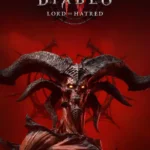
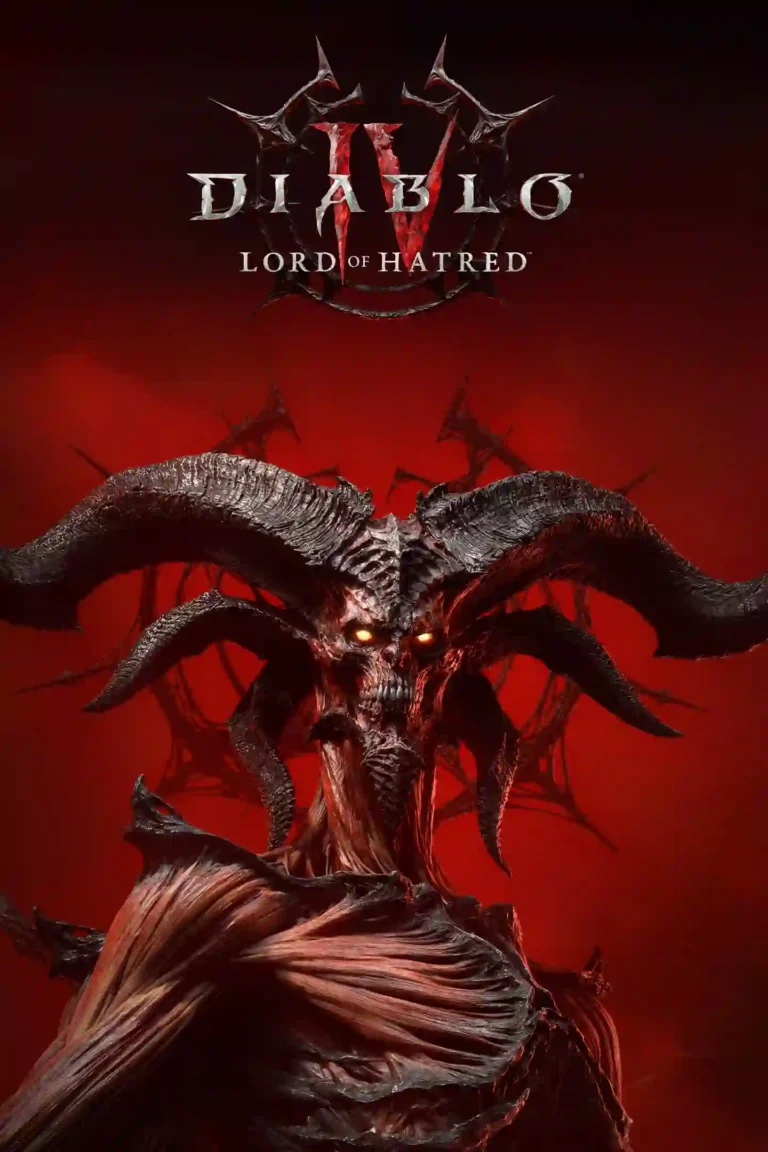
Diablo IV: Lord of Hatred is a major dark-fantasy action role-playing hack-and-slash video game expansion pack developed and published by Blizzard Entertainment. Released on April 28, 2026, for Microsoft Windows, PlayStation 4, PlayStation 5, Xbox One, and Xbox Series X/S, the title is the second mainline expansion pack for 2023’s Diablo IV, following 2024’s Vessel of Hatred.
Announced at The Game Awards on December 11, 2025, Lord of Hatred launches alongside Season 13 (“Season of Reckoning”). The expansion fundamentally transforms the structural baseline of Diablo IV, introducing a massive island setting, an unprecedented dual-class character drop (the Paladin and the Warlock), and a complete overhaul of the endgame loop featuring the iconic Horadric Cube and a long-requested item loot filter.
Technical Specifications
| Attribute | Details |
| Developer(s) | Blizzard Team 3, Blizzard Albany |
| Publisher | Blizzard Entertainment |
| Directors | Brent Gibson, Zaven Haroutunian |
| Composer | Ted Reedy |
| Platform(s) | Microsoft Windows, PlayStation 4, PlayStation 5, Xbox One, Xbox Series X/S |
| Release Date | April 28, 2026 |
| Genre(s) | Action role-playing, Hack and slash, Dungeon crawler |
| Mode | Shared-world Multiplayer (Online Only) |
The Two New Expansion Classes
Breaking franchise traditions that typically limit expansions to a single character addition, Lord of Hatred delivers two distinct hero classes, bringing Diablo IV’s total playable roster up to eight:
1. The Paladin
The Wardens of Light return to the frontline, free from old corruptions and creeds. Functioning as the premier holy vanguard, the Paladin optimizes a heavy hammer-and-shield configuration to unleash divine melee strikes powered by Holy Light.
- The Oath System: The Paladin’s exclusive class mechanic. Players align their character across sacred, path-based branches to inherit passive combat modifiers that heavily define their tactical role.
- Arbiter Form: An ultimate transformation cooldown ability where the Paladin morphs into a glowing avatar of heavenly justice, heavily inspired by the visual design aesthetics of the Archangel Tyrael.
2. The Warlock
Masters of forbidden knowledge who do not serve Hell, but aggressively weaponize its corruption to protect Sanctuary. The Warlock is a dark caster class engineered around heavy risk-reward battlefield parameters.
- Demonic Conscription: The Warlock can tear open reality boundaries to forcefully bind, summon, and command distinct legions of demonic minions to overwhelm enemy positions.
- Infernal Attrition: They deploy decaying curses, siphon target health vitals, and conjure fields of continuous, lingering hellfire to melt armor parameters.
Gameplay Overhauls & New Endgame Systems
Lord of Hatred implements radical quality-of-life overhauls and replaces aging end-game loops with infinitely scaling vertical mechanics:
Level Cap Progression & Loot Filter
The character level cap is officially raised from 60 to 70, launching alongside an extensively reworked Skill Tree that integrates Bonus Skill Variants. This update grants build-defining active traits once a player invests maximum points into a skill.
Furthermore, the patch introduces a native, community-requested Loot Filter system. This utility allows players to program hardcoded text variables to highlight pristine gear drops while automatically hiding sub-par loot from cluttering the display monitor.
The War Plans Framework
This feature overhauls the daily grinding flow. Players construct custom strategic queues inside a Command Table interface, chaining up to 5 separate activities (e.g., matching a Helltide clear directly with an Infernal Horde or a Pit run).
Completing the activities in sequence lets players instantly teleport between destinations with zero downtime while generating Activity Skill Points. These points are spent on specialized, standalone node trees to increase the targeted drop rates and mechanical difficulties of individual game modes.
Echoing Hatred (Endless Survival)
Triggered by finding an exceptionally rare overworld drop called a Trace of Echoes, players gain entry to a dedicated arena challenge. Echoing Hatred functions as a pure test of character optimization, throwing a continuous, endless wave of monsters at the player. The instance forces enemies to scale up in intensity and damage metrics indefinitely per wave until the hero is killed, recording high scores on global registries.
The Horadric Cube & The Talisman
- The Horadric Cube: Restored from legacy lore, the Cube functions as the game’s ultimate crafting bench. Using recipes extracted across the world, players can add, strip, or re-roll specific item affixes, synthesize high-tier flawless gems, and transmute items for elite upgrades.
- The Talisman and Charms: To safely reintroduce set bonuses without breaking standard armor slots, players can discover Set Charms. These tokens are equipped inside a dedicated Talisman interface panel, activating 2-, 3-, and 5-piece armor set interactions through standalone jewelry slots.
Narrative Campaign: The Skovos Reckoning
The campaign serves as an intellectual, psychological political thriller picking up immediately in the wake of Vessel of Hatred.
The Fall of Neyrelle
The storyline launches with a tragic development: the Wanderer and Lorath Nahr arrive at the ancient Yshari Sanctum library to meet with Neyrelle, only to discover the archive burned to ashes and Neyrelle dead.
Her surviving journal logs reveal that the soulstone has failed completely; Mephisto has hollowed out her body, using her flesh to take the shape of Akarat Reborn. Operating under this messianic disguise, the Prime Evil is actively rallying a massive, fanatical army of zealots.
“To defeat the Lord of Hatred, an unthinkable, suicidal pact must be sealed: the resurrection of the Mother of Sanctuary. Lilith is no longer your target—she is your only hope of reaching the Pools of Creation.” — Official Expansion Campaign Prologue
The Amazon Homeland
The campaign charts a maritime voyage to the Skovos Isles, a mysterious, oceanic region that serves as the legendary birthplace of the firstborn civilization and the homeland of the Amazons. Dictated by the rule of the Amazon Queen and The Oracle, the islands are plunging into absolute madness. A dark celestial eclipse hangs permanently over the territory, corrupting the local populace and mutating marine life into aquatic horrors.
Guided by a resurrected Lilith and the Archangel Tyrael, the player must retrieve a forgotten, primordial blade engineered by Lilith to breach the ancient Pools of Creation. The narrative reaches its peak at the heart of Skovos, where the player must plunge the blade into Akarat’s vessel, forces Mephisto to shed his human disguise and manifest his true Prime Evil form in a catastrophic final duel.
Reception and Live-Service Context (2026)
Upon its April 2026 deployment, Diablo IV: Lord of Hatred received highly favorable reviews from strategy and gaming publications, tracking an aggregate score of 84/100 on Metacritic and a 90% recommendation metric on OpenCritic.
Critics heavily commended the immense mechanical variety injected by the Paladin and Warlock classes, and widely praised the implementation of the Loot Filter and Horadric Cube for alleviating inventory exhaustion. Minor points of criticism targeted the abrupt difficulty spikes encountered when jumping between high-tier Torment difficulty bands.
As of May 2026, the expansion operates as the definitive standard for the title, fully synchronized across Season 13: Season of Reckoning. Backed by automated cross-platform party finders and performance optimization under Windows 11 desktops, Lord of Hatred represents a major peak for the modern action RPG landscape.
Trailer
View on Videos
Diablo IV: Lord of Hatred Expansion
Diablo news
More news
Diablo 5 Announced: Release Window, Story, and What We Know

World of Warcraft: Forever Previewed Alongside BlizzCon 2026 News
Diablo Animated Series in Development at Netflix
BlizzCon 2026 Opening Ceremony: Every Major Announcement