 87
87  PC
PC
 Blizzard Entertainment
,
Blizzard Entertainment
Blizzard Entertainment,  Sierra,
  Softclub
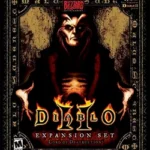
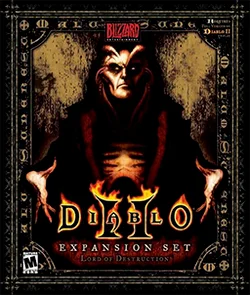
Diablo II: Lord of Destruction (commonly abbreviated as LoD) is a dark-fantasy action role-playing hack-and-slash video game expansion pack developed by Blizzard North and published by Blizzard Entertainment. Released on June 29, 2001, for Microsoft Windows and Classic Mac OS, it is the official expansion to the genre-defining 2000 title Diablo II.
The expansion represents an unprecedented mechanical transformation, fundamentally overhauling the base game’s itemization math, resolution matrices, and class systems. Alongside a massive narrative expansion set in the frozen northern highlands, Lord of Destruction introduced two entirely new character classes—the Assassin and the Druid—while adding systems like Runewords, Charms, and a completely re-engineered mercenary hiring framework.
Technical Specifications
| Attribute | Details |
| Developer | Blizzard North |
| Publisher | Blizzard Entertainment |
| Platform(s) | Microsoft Windows, Classic Mac OS, OS X |
| Release Date | June 29, 2001 |
| Genre(s) | Action role-playing, Hack and slash, Dungeon crawler |
| Engine | Custom 2D Pseudo-3D Isometric Engine (Upgraded to 800 × 600 resolution) |
| Mode(s) | Single-player, Multiplayer (LAN / Battle.net) |
Game-Altering Mechanics & Itemization Overhaul
Lord of Destruction did not merely append an extra chapter onto the campaign; it drastically altered the mathematical baseline of the global loot economy.
Runes and Runewords
The expansion introduced Runes—33 distinct stone tokens etched with mystical characters that function as custom alternative socket inserts. While standard gems (Rubies, Topazes, Diamonds) grant predictable static attributes, Runes offer specialized properties like granting physical damage reduction, boosting mana regeneration velocity, or adding passive life-leech metrics.
Crucially, socketing a strict, hardcoded alphabetical sequence of specific Runes into an item that possesses the exact corresponding number of empty sockets creates a Runeword. Completing a Runeword wipes away the standard item parameters, transforming a mundane grey base into an elite weapon or piece of armor embedded with exceptional, build-defining modifiers—such as granting a different class’s signature spells to the wearer.
The Expansion Arsenal
- Charms: Specialized magical items that provide passive stat-boosting modifiers simply by being carried inside the player’s primary inventory grid. Players must balance the trade-off between maximizing combat damage via Charms and preserving inventory space for standard loot.
- Jewels: Unique socketable objects that can be dropped into weapons or shields. Unlike gems, Jewels spawn with randomized magical properties, meaning a rare Jewel can combine multiple disparate modifiers into a single slot.
- Ethereal Items: Highly powerful item variants that boast significantly lower strength requirements and majorly amplified damage or defense statistics. However, Ethereal items cannot be physically repaired, meaning they will permanently break once their durability pool reaches absolute zero.
- Class-Specific Items: Specialized weapon and armor configurations restricted strictly to individual character archetypes—such as specific animal pelts for the Druid, weighted claws for the Assassin, or custom shields for the Paladin.
Interface and Inventory Upgrades
Addressing major quality-of-life constraints from the 2000 release, the expansion integrated three core engine updates:
- 800 × 600 Resolution Support: Doubled the pixel matrix of the original game’s locked 640 × 480 boundary, greatly expanding the player’s tactical line-of-sight during hectic combat engagements.
- Expanded Private Stash: Permanently doubled the private storage chest capacity inside towns, giving completionist players breathing room to hoard item sets.
- Weapon Swapping: Introduced a secondary hotkey-bound weapon and shield slot array, allowing characters to immediately alternate between two separate active loadouts mid-combat without opening inventory screens.
The Persistent Hireling Framework
Lord of Destruction systematically revolutionized the Mercenary (Hireling) System. In the base game, hirelings functioned as fragile, temporary tools that could not cross territorial boundaries and vanished permanently upon character death. The expansion redefined them into persistent, co-adventuring companions:
“Hirelings are no longer cheap meat shields to be discarded. Equipping a mercenary with high-end Runewords allows them to project powerful defensive auras that fundamentally transform your character’s combat output.” — Legacy Strategy Analysis Archive
- Global Portability: Hirelings follow the player seamlessly across all five Acts and through all difficulty thresholds (Normal, Nightmare, Hell).
- Independent Statistics: Mercenaries accumulate their own experience from monster kills, leveling up dynamically to expand their strength, dexterity, and elemental resistance attributes.
- Mercenary Armory: Players can physically equip their hirelings with armor, helms, and compatible weapon profiles. Ethereal gear equipped by a mercenary does not lose durability points, turning a mechanical liability into a major tactical advantage.
- Direct Field Management: Players can directly heal their companion mid-combat by dragging potions onto their gold-bordered portrait interface or utilizing quick-belt hotkey bindings. If killed, they can be resurrected at any local mercenary captain for a flat gold fee with all experience and gear perfectly preserved.
The Two Character Classes
The expansion added two highly versatile classes to the character selection pool, each managing 30 unique, branch-based skills and active spells:
1. The Assassin
A master of stealth, physical martial arts, and defensive dirty fighting designed by the Mage Clans to hunt down corrupt spellcasters. Her mechanics balance two primary combat loops:
- Martial Arts: Operates on a unique Charge-Up and Finishing Move cycle. The Assassin unleashes continuous striking sequences (like Cobra Strike or Blades of Ice) to accumulate up to three glowing power charges, which are violently released via a finishing blow to inflict immense physical or elemental area-of-effect explosions.
- Traps: Mechanical devices tossed onto the map grid that function like static sentry gun nodes. Traps independently target and fire lightning coils, fire waves, or blade paths at surrounding monster waves until their charges deplete.
2. The Druid
A rugged, nomadic nature-shaman who wields raw elemental magic, commands a pack of forest beasts, and physically warps his flesh into monstrous forms. His progression divides into three trees:
- Elemental Magic: Differs from the Sorceress by focusing on earthly ballistics and ambient weather storms. The Druid casts shifting Tornados and fissures, or triggers a moving Hurricane aura that circles his body to freeze nearby targets.
- Shapeshifting: Allows the Druid to physically transform his character model into a high-speed Werewolf or a heavy, armored Werebear. Each form blocks access to human spellcasting but replaces standard physical attacks with elite feral strikes that spike physical attack velocity and life-stealing metrics.
- Summoning: Calls upon natural allies, ranging from spirit ravens and grizzly bears to mystical, glowing spirits that emit passive Paladin-style aura bubbles to augment the life attributes of the entire multiplayer party.
Act V: The Barbarian Highlands & Plot Synopsis
The narrative campaign launches immediately following the defeat of Diablo inside the Chaos Sanctuary. Though the Lord of Terror has fallen, the final Prime Evil, Baal (The Lord of Destruction), has successfully raised an immense, corrupt siege army to invade the northern Barbarian territories flanking the frozen peak of Mount Arreat.
Baal’s ultimate objective is to reach the deep inner sanctum of the mountain to forcefully corrupt the Worldstone—the cosmic, mystical anchor that shields the mortal plane of Sanctuary from the direct armies of Heaven and Hell.
The player’s hero journeys to the fortress city of Harrogath, the final surviving defensive bastion holding the mountain lines. The 6-mission campaign maps a vertical military trek across brutal siege battlements, high-altitude frozen plateaus, and ancient underground crystalline caverns.
Along their path, the hero must destroy Baal’s automated siege engines, liberate trapped Barbarian soldiers, and complete the legendary Rite of Passage by defeating the physical spirits of the three Ancient Barbarian Guardians in open combat on the mountain summit. The story culminates in a subterranean descent into the Worldstone Chamber to destroy Baal, leading to a bittersweet ending where the archangel Tyrael must forcefully shatter the corrupted stone to prevent Sanctuary’s immediate collapse.
History and Modern Status (2026)
Critical Legacy
Upon its summer 2001 launch, Diablo II: Lord of Destruction achieved near-universal critical acclaim, cementing its position on “Greatest Expansions of All Time” historical registers across publications like IGN and GameSpot. It was heavily commended for setting a fresh industry benchmark for how post-launch content packs should be handled, proving that an expansion could completely revitalize a title’s endgame loop rather than merely padding out quest counts.
The 2021 Remaster Standard
On September 23, 2021, Blizzard Entertainment released Diablo II: Resurrected—a high-fidelity 3D remaster created in tandem with Vicarious Visions. Resurrected natively packages the entire contents, class balances, item drop mechanics, and systems of Lord of Destruction directly inside its core installation shell out-of-the-box.
As of 2026, the Resurrected launcher functions as the primary vehicle for modern audiences to experience Act V and the Mount Arreat campaign, running smoothly at 4K resolution timelines across Windows 10, Windows 11, and modern home consoles with full cross-progression support.
Legacy Preservation and Modding
Parallel to the modern remaster, the original 2001 Lord of Destruction client remains commercially active and fully distributed as a classic legacy standalone option via the Battle.net Shop for $9.99. This original version is fiercely preserved by the ARPG purist community due to its open engine architecture.
The legacy client functions as the mandatory foundational shell required to launch massive community-driven live-service total-conversion modifications—such as Project Diablo 2 and Median XL—which continue to execute fresh seasonal ladder refreshes, introduce highly difficult mapping systems, and host active online item trading networks up through 2026.
Diablo news
More news
Diablo 5 Announced: Release Window, Story, and What We Know

World of Warcraft: Forever Previewed Alongside BlizzCon 2026 News
Diablo Animated Series in Development at Netflix
BlizzCon 2026 Opening Ceremony: Every Major Announcement