Diablo IV
 86
★ /10
86
★ /10
 PC,
PC,  PS4,
PS4,  PS5,
PS5,  Xbox One,
  Xbox Series X/S
 Blizzard Entertainment
Blizzard Entertainment
Blizzard Entertainment


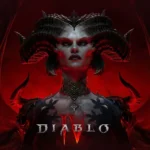
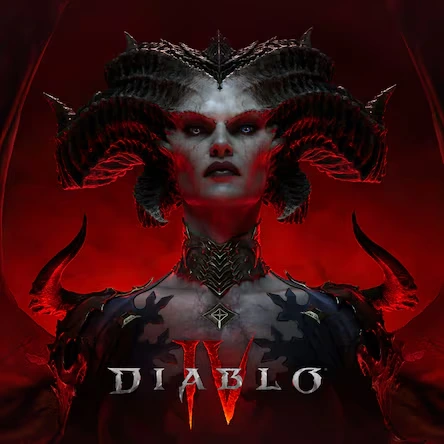
Diablo IV is an online dark-fantasy action role-playing hack-and-slash video game developed and published by Blizzard Entertainment. Initially released on June 6, 2023, for Microsoft Windows, PlayStation 4, PlayStation 5, Xbox One, and Xbox Series X/S, it is the fourth mainline installment in the Diablo franchise.
Following a launch that was highly praised for its atmospheric “Return to Darkness” visual aesthetic but critiqued for early endgame progression friction, the game underwent an extensive live-service mechanical evolution. Key overhauls include Patch 1.4.0 (Loot Reborn), the October 2024 expansion Vessel of Hatred, and the massive *April 2026 expansion Lord of Hatred. This latest expansion fundamentally re-engineered the character progression caps, added multiple classes, and fully integrated the title into a highly acclaimed live-service ecosystem.
Technical Specifications
| Attribute | Details |
| Developer(s) | Blizzard Team 3, Blizzard Albany |
| Publisher | Blizzard Entertainment |
| Directors | Brent Gibson, Zaven Haroutunian |
| Engine | Proprietary 3D Engine (Featuring physically-based rendering and dynamic weather mapping) |
| Platform(s) | PC, PlayStation 4, PlayStation 5, Xbox One, Xbox Series X/S |
| Release Date(s) | • Base Game: June 6, 2023 • Vessel of Hatred: October 8, 2024 • Lord of Hatred: April 28, 2026 |
| Genre(s) | Action role-playing, Hack and slash, Dungeon crawler |
| Mode | Shared-world Multiplayer (Online Only, cross-platform) |
Gameplay Architecture & Structural Overhauls
Diablo IV combines high-velocity click combat with a massive, seamlessly connected shared overworld known as Sanctuary. Players traverse vast geographic zones—including the Fractured Peaks, Scosglen, Dry Steppes, Hawezar, Kehjistan, and the expansion-added regions of Nahantu and the Skovos Isles—to clear hostile Strongholds, execute open-world events, and challenge colossal world bosses.
Chronological Engine Upgrades (2024–2026)
The mechanical depth of the game’s core progression systems has been entirely rewritten across several key operational milestones:
- The Loot Reborn Meta (2024): Completely streamlined gear itemization by stripping away redundant, convoluted item affixes. It introduced Tempering (permitting players to forge custom utility modifiers onto gear using found manuals) and Masterworking (an endgame vertical optimization crafting track that multiplies gear stats via high-tier materials).
- The 2026 Progression Rebalance: Launched alongside the Lord of Hatred patch infrastructure, the base character level cap was officially raised from 60 to 70. Concurrently, difficulty tuning was expanded from the old 4-tier model up to 12 Torment difficulty tiers to provide a brutal scaling gauntlet for top-tier endgame builds.
- The Talisman and Charm Matrix: Re-engineered the classic Diablo II item set philosophy. Rather than locking up armor slots with unyielding set gear, players collect Charms to slot inside a specialized Talisman screen. This triggers custom 2-, 3-, and 5-piece set modifiers that fundamentally alter skill behaviors.
- The Horadric Cube Crafting Bench: Re-introduced in 2026, the Cube acts as a dedicated hub bench that permits players to extract, swap, or re-roll specific item affixes while upgrading low-tier gear rarities cleanly.
Expanding Character Class Roster (2026)
As of mid-2026, the selection pool features eight highly distinct playable classes, bridging the vanilla launch and two major expansion cycles:
Core Roster
- The Barbarian: A physical powerhouse utilizing the Arsenal System to map up to four separate weapons simultaneously, swapping weapons dynamically based on skill priorities.
- The Sorcerer: An elemental spellcaster using an Enchantment Slot system to convert active skills into passive, automated background spell triggers.
- The Rogue: A high-dexterity hybrid fighter alternating between rapid-fire bows and close-quarters daggers, using Imbue skills to infuse attacks with shadow, cold, or poison properties.
- The Druid: A shapeshifting nature-shaman who transforms into a Werebear or Werewolf while calling upon Spirit Animals to inherit passive defensive buffs.
- The Necromancer: A commander of death who manages the Book of the Dead to customize skeletal skirmishers, mages, and golems, or sacrifice them entirely for raw stat boosts.
Expansion Additions
- The Spiritborn (Vessel of Hatred, 2024): An agile, martial-arts jungle warrior unique to the Nahantu region. They channel the ethereal powers of four distinct Guardian Spirits (The Jaguar, Eagle, Gorilla, and Centipede) to deliver high-velocity kinetic combos and toxic area-of-effect damage.
- The Paladin (Lord of Hatred, 2026): The holy vanguard returning to the front lines. Wielding a signature heavy hammer and shield loadout, they channel Holy Light to execute crushing physical strikes while projecting localized protective aura zones over co-op party members.
- The Warlock (Lord of Hatred, 2026): A dark controller class that tears open cosmic spatial veils. They conjure lingering hellfire, drain enemy vitals, and actively bind and command distinct legions of demonic minions to overrun combat grids.
Narrative Evolution & Campaigns
The narrative campaign plays out across two overarching story arcs, shifting focus from cosmic internal warfare to the corruption of humanity’s ancestors:
The Daughter of Hatred (Base Game)
The core storyline details the catastrophic return of Lilith (The Mother of Sanctuary) and her eternal blood feud against her former lover, the archangel Inarius. Seeking to shield her mortal children from the impending judgment of both Heaven and Hell, Lilith orchestrates a brutal psychological crusade across Sanctuary. The player’s Wanderer tracks her path of destruction, culminating in an intense clash that shatters the local geopolitical power balances.
The Skovos Reckoning (Vessel of Hatred & Lord of Hatred)
Following the conclusion of the base narrative, the young Horadrim disciple Neyrelle flees into the southern jungles of Nahantu with the soulstone of Mephisto (The Lord of Hatred).
The story takes a dark political turn in the 2026 Lord of Hatred campaign. Following Neyrelle’s tragic demise inside the ruined library of the Yshari Sanctum, the Wanderer and the archangel Tyrael trace Mephisto’s creeping corruption to the Skovos Isles—the ancient, mythical birthplace of humanity and homeland of the Amazons.
Operating from the new central hub city of Temis, players must weaponize a forgotten blade created by Lilith to strike down Mephisto before his faithful zealots can execute a ritual at the Pools of Creation to bathe the mortal world in total hatred.
Modern Endgame Ecosystem & Warplans
The current 2026 endgame framework abandons linear grinding loops, spreading activities across interconnected dynamic talent systems:
                          [Endgame Priority Matrix]
                                      |
         +----------------------------+----------------------------+
         |                            |                            |
   [The Warplans]             [The Artificer's Pit]       [Echoing Hatred]
 • Chain 4-5 Custom Tasks   • Infinite Tier Sprints     • Escalating Survival Waves
 • Earn Activity Experience   • Target Masterworking Mats • Rare Triggered Drops
 • Level Up Node Talent Trees • Overworld Construct Elites• World-Tier Rewards
- The Warplans Network: Introduced in 2026, players build a custom strategic queue linking 4 to 5 macro-activities (e.g., combining a Helltide zone clear with a specific Nightmare Dungeon run). Completing the queue awards massive bonus caches. Crucially, executing activities awards Activity-Specific Experience, leveling up independent progress trees that allow players to deeply customize the loot and mechanic rulesets of Helltides, the Pit, and dungeons separately.
- The Artificer’s Pit & Dungeon Delves: High-density, timed challenge instances. Updates in 2026 drastically spiked monster density and introduced roaming Construct Champions. Clearing deep tiers rewards pristine materials spent on Masterworking loops.
- Echoing Hatred: A highly competitive survival mode triggered by a rare overworld drop. Players enter an arena where the engine scales combat difficulty continuously; teams survive as long as possible against escalating waves of Lesser Evils to log positions on a global registry and secure world-tier items.
Current Live-Service State (May 2026)
As of May 2026, Diablo IV is operating under the management of Season 13: Season of Reckoning, which officially launched alongside the Lord of Hatred patch infrastructure. The seasonal loop requires players to initialize a fresh character on the Seasonal Realm, leveling up from scratch to interact with custom mechanical themes:
“The Season of Reckoning expands the overworld threat vectors significantly. Lesser Evils dynamically break out of containment zones to roam standard public maps, forcing players to track roaming packs while deploying custom Divine Gifts—three-tiered modular seasonal buffs composed of a baseline reward, a Corrupted Gift debuff, and a Purified Gift active power.” — Maxroll.gg Seasonal System Guide
Supported by integrated Party Finder menus, full Steam Deck verification, and smooth multi-core rendering optimizations under Windows 11 and current home consoles, the Season of Reckoning and Lord of Hatred expansions represent a major peak for the franchise, keeping the battle for Sanctuary fresh and competitive for strategy historians.