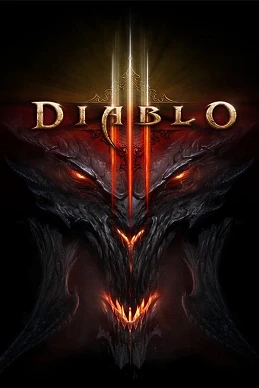
Diablo III
 88
★ /10
88
★ /10
 Nintendo Switch
 PC
PC PS 3
PS 3 PS4
PS4 Xbox 360
 Xbox One
 Blizzard Entertainment
 1C-SoftClub

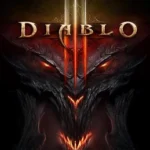
Diablo III is a dark-fantasy action role-playing hack-and-slash video game developed and published by Blizzard Entertainment. Released on May 15, 2012, for Microsoft Windows and OS X, the title is the third mainline installment in the Diablo franchise, arriving 12 years after the launch of Diablo II.
The game experienced one of the most volatile lifecycles in modern gaming history. At launch, it was heavily criticized for its controversial “always-on” digital rights management (DRM) which triggered massive server overloads, a polarizing visual art direction, and a real-money auction house that severely compromised the core loot economy.
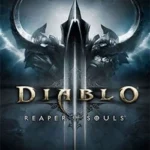
However, under the direction of Josh Mosqueira, the game underwent an extensive structural overhaul. The permanent closure of the auction houses, the rollout of the 2014 expansion Reaper of Souls, and the introduction of “Loot 2.0” successfully rehabilitated the game, transforming it into a massive critical and commercial milestone that sold over 30 million copies.
Technical Specifications
| Attribute | Details |
| Developer | Blizzard Entertainment |
| Publisher | Blizzard Entertainment |
| Game Directors | Jay Wilson (2006–2013), Josh Mosqueira (2013–2016) |
| Composer(s) | Russell Brower, Derek Duke, Glenn Stafford, Joseph Lawrence |
| Engine | Custom 3D Engine (Featuring full physics models and destructible environments) |
| Platform(s) | Microsoft Windows, OS X, PlayStation 3, Xbox 360, PlayStation 4, Xbox One, Nintendo Switch |
| Release Date | May 15, 2012 (Windows/OS X) |
| Genre(s) | Action role-playing, Hack and slash, Dungeon crawler |
| Modes | Single-player, Multiplayer (Online Only) |
Gameplay Architecture & Skill Customization
Diablo III preserves the core isometric action framework of its predecessors but dramatically overhauls character progression. Rather than locking players into rigid, branch-based skill trees where points cannot be undone without penalty, the game introduces a highly fluid Freely Swappable Skill Matrix.
Active Slots and Skill Runes
Characters unlock abilities automatically as they level up, filling out up to six active combat slots alongside three passive slots. Each active skill features five distinct Skill Runes that unlock progressively. Runes completely alter the elemental damage typing, behavior, and tactical utility of a skill. For instance, a Wizard’s basic Magic Missile can be runed to fire a single high-damage piercing ice blast, track multiple homing targets simultaneously, or ignite foes with persistent fire damage. This framework allows players to dynamically change their entire character build mid-session to adapt to specific combat encounters.
Always-On DRM and “Error 37”
To support its global infrastructure and deter item duplication exploits, Blizzard mandated that Diablo III maintain a continuous, uninterrupted connection to Battle.net servers—even for players running strictly solo, single-player campaigns.
On launch night (May 15, 2012), millions of concurrent connections instantly crashed Blizzard’s central authentication servers. Legitimate retail consumers were met with the infamous “Error 37” message screen, which locked them out of launching the application for days. The incident sparked fierce industry-wide debates regarding the consumer cost of modern anti-piracy tools and strict cloud-tethered single-player applications.
Playable Character Roster
The overarching game features seven playable character classes, compiled across the vanilla game, the mainline expansion, and post-launch character packs:
- The Barbarian: A returning physical powerhouse utilizing Fury as an operational resource pool. They dual-wield heavy weapons and execute ground slams to dictate close-quarters combat lanes.
- The Monk: A sacred holy warrior driven by Spirit. They combine fast-tracking, multi-stage martial arts strikes with defensive mantras that shield multiplayer allies.
- The Wizard: A tactical elemental spellcaster driven by Arcane Power. They project disintegrate beams, summon localized meteors, and manipulate spatial layout tracking via instant teleportation.
- The Demon Hunter: A dual-resource rogue combining Hatred (for firing rapid-velocity crossbow volleys) and Discipline (for dropping traps, caltrops, and executing evasive acrobatic tumbles).
- The Witch Doctor: A bizarre spiritual shaman utilizing Mana. They command packs of zombie dogs, cast psychological hexes to turn enemies into chickens, and drop toxic cloud pools.
- The Crusader: Added in the Reaper of Souls expansion. An unyielding holy tank using Wrath to wield massive shields alongside giant two-handed flails, calling down orbital sky beams to break crowds.
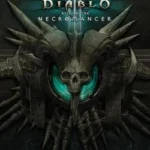
- The Necromancer: Added in the 2017 Rise of the Necromancer pack. A dark commander expending Essence and physical Corpses to raise skeletal legions and detonate bodies mid-combat.
The Real-Money Auction House Controversy
One of the most radical design choices in vanilla Diablo III was the implementation of the centralized Auction House system. The interface was partitioned into two distinct variants:
The Gold Auction House: Allowed players to trade collected items anonymously using in-game gold currency.
The Real-Money Auction House (RMAH): Authorized players to list weapon drops and armor pieces for actual, real-world fiat currency (capped up to $250 USD per transaction), with Blizzard skimming processing fees from every individual sale.
The RMAH severely compromised the core game loop. Because high-end gear could be instantly bought via a credit card, the development team intentionally reduced the standard drop rates of top-tier items in the actual game world to balance the global supply web. Consequently, players found that the most efficient way to progress was no longer fighting demons, but endlessly scrolling through marketplace menus.
Recognizing that the system had ruined the structural identity of the franchise, Game Director Josh Mosqueira made the bold decision to permanently shut down all Auction Houses on March 18, 2014, completely removing real-world financial commerce from the ecosystem.
Content Expansions & The Global Overhaul
The removal of the Auction House was followed immediately by the release of The Reaper of Souls expansion pack on March 25, 2014, which completely rewrote the endgame loop.
Loot 2.0 (The Smart Drop System)
The expansion replaced the game’s old reward tables with Loot 2.0. This overhaul radically minimized the quantity of garbage drops filling the screen while vastly increasing item quality. It introduced Smart Drop mechanics, ensuring that found weapons automatically roll primary stats optimized for the specific class currently being played (e.g., dropping Strength attributes for a Barbarian or Intelligence for a Wizard).
Adventure Mode and Rift Infrastructure
The expansion abandoned the archaic requirement of repeating the core narrative campaign across escalating difficulty tiers (Normal, Nightmare, Hell, Inferno). It introduced Adventure Mode, an open-world sandbox unlocking all regional Waypoints globally from level 1. Players navigate this space via two primary loops:
- Bounties: Specialized regional objectives tasking players with clearing specific map zones or hunting down elite bosses to earn Horadric Caches filled with exclusive crafting materials.
- Nephalem Rifts: Alternate-dimension dungeons generated via randomized environmental tile assets and enemy rosters. Defeating hordes fills a progress bar to summon a Rift Guardian, which drops Greater Rift Keystones and specialized Blood Shards spent to gamble for gear at the merchant Kadala.
- Greater Rifts (GRs): High-stakes, infinitely scaling endgame challenge instances locked to a strict 15-minute running timer. GRs strip out standard item loot drops during the run, dropping all rewards entirely upon the death of the Guardian to maximize focus on combat velocity. Completing high-tier GRs serves as the primary metric for global competitive leaderboard tracking.
Current Status & The Maintenance Era (2026)
Following the 2023 global rollout of Diablo IV, Blizzard officially transitioned Diablo III into its long-term automated Maintenance Mode, initializing with Season 30 in early 2024. The game no longer receives brand-new mechanical asset patches or fresh balance overhauls, but its legacy servers remain fully supported.
The Season 38 Lifecycle
As of May 2026, Diablo III is actively running Season 38: Season of Ethereal Memory, which launched globally on March 27, 2026. This seasonal framework operates on a fixed quarterly schedule, utilizing a rotation pool composed of six of the community’s favorite legacy themes:
- Ethereal Memory (Current): Reintroduces hyper-powerful, class-specific Ethereal Weapons modeled directly on iconic Diablo II legacy shapes.
- The Lords of Hell: Drops powerful Soul Shards into weapon sockets to grant catastrophic demonic passives.
- The Forbidden Archives: Completely opens Kanai’s Cube, allowing players to slot any extracted legendary power into any of the three slots simultaneously.
- Shades of the Nephalem: Activating a pylon automatically summons a localized shadow clone of the player’s class to fight alongside them.
- Light’s Calling: Introduces Angelic Crucibles to sanctify standard items, instantly reforging them with perfect stats and unique class powers.
- The Eternal Conflict: Builds dynamic combat streak meters that trigger elemental explosions and map-wide effects as kill counts climb.
To maximize character power during this maintenance cycle, all automated seasons permanently integrate the late-game Altar of Rites progression tree and random Visions of Enmity world portals directly into the core sandbox by default. The game scales flawlessly into native 4K ultra-widescreen resolutions across modern multi-core Windows 11 PCs and home consoles, preserving the ultimate redemption arc of the Nephalem for strategy and ARPG purists.