 PC
PC
 ak tronic Software & Services GmbH,
  ND Games,
  Ubisoft
Where to buy

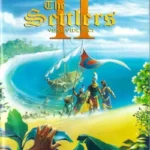
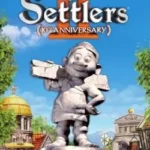
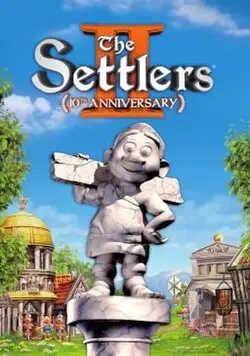
The Settlers II (10th Anniversary) (originally released in German-speaking territories as Die Siedler II: Die nächste Generation) is a city-building and real-time strategy video game developed by Blue Byte and Funatics Software, and published by Ubisoft. Released in September 2006 for Microsoft Windows, the title serves as a modernized, full 3D remake of the critically acclaimed 1996 classic The Settlers II: Veni, Vidi, Vici.
The game preserves the core “German-style” economic simulation rules and flag-to-flag transport logistics of the original 1996 client while migrating the codebase onto an updated, fully rotatable three-dimensional graphics engine. It further integrates several mechanical overhauls, including localized faction visual identities, building refund matrices, and a comprehensive online multiplayer matchmaking component.
Technical Specifications
| Attribute | Details |
| Developer(s) | Blue Byte, Funatics Software |
| Publisher | Ubisoft |
| Producer | Thomas Friedmann |
| Composer | Aaron Marks |
| Engine | Custom 3D Engine (Derived from The Settlers: Heritage of Kings framework) |
| Platform | Microsoft Windows |
| Release Date(s) | • DE: September 7, 2006 • UK: October 6, 2006 • NA: September 16, 2006 |
| Genre(s) | City-building, Real-time strategy |
| Modes | Single-player, Multiplayer (LAN / Online) |
Gameplay Mechanics and Modern Updates
The core gameplay loop of The Settlers II (10th Anniversary) remains mathematically identical to its 1996 predecessor, operating as a macroeconomics-focused strategy simulator where the player designs supply networks for an autonomous civilian workforce.
Flag-and-Road Logistics Architecture
Civilian subjects cannot be directly commanded by the user. Instead, resource logistics are governed by the placement of walking paths across a visible grid node layer. Every road must be divided by Flags, with a singular autonomous carrier assigned to patrol the exact lane between two flags, passing goods along like a bucket brigade. Donkeys can be bred and allocated to thoroughly congested road nodes to automatically double transport volume.
Structural Quality-of-Life Additions
While retaining the exact item conversion chains of the original (e.g., harvesting coal and gold ore to produce gold coins to level up military units), the 10th Anniversary edition introduces critical mechanical balances:
- The 50% Deconstruction Refund: Unlike the 1996 game where demolishing an existing building resulted in a total loss of materials, dismantling a structure in the remake instantly returns half of its original construction cost back to the storehouse.
- Military Upgrades and Evacuation: Players can manually upgrade existing low-tier outposts (such as converting a Barracks into a Guardhouse or Watchtower) directly without needing to demolish the foundation. Furthermore, commanders can issue an Evacuation Command to forcefully empty an outpost of soldiers at any millisecond, allowing veteran generals to be instantly redirected to hot active combat fronts.
- Aesthetic Visual Asymmetry: In the original game, all civilizations shared identical building sprites. The remake features completely unique, custom architecture designs for every playable race.
- The Map Import Utility: The game shipped with an integrated Map Editor that allowed the community to natively parse and import old
.mapconfiguration files directly from the original 1996 MS-DOS release into the modern 3D game client.
Narrative and Campaign Layout
The single-player campaign consists of 10 linear missions following the Roman civilization. The plot plays out like a fantasy political thriller, beginning after a series of sudden natural disasters ravage Rome, coinciding with the mysterious, simultaneous disappearance of every Roman woman.
Commanded by Captain Octavius, a band of survivors takes to the seas to establish a sanctuary. Stranded on an unfamiliar archipelago, they discover ancient, magical portals that bridge different landmasses. As Octavius guides his people through the network to trace their missing population, they enter into territorial resource wars with foreign empires who have suffered an identical loss, forcing a grand struggle for civil survival.
Playable Factions
The base release features three distinct factions available for custom Freeplay skirmishes and online multiplayer networks:
- The Romans: Utilizing clean, classical white marble columns, traditional terracotta roofing tiles, and heavy legionary equipment. Their military path focuses on standard balanced frontline pushes.
- The Nubians: Characterized by smooth North African sandstone architecture, intricate clay ovens, and light linen garbs. They feature high-visibility structures optimized for desert map profiles.
- The Chinese: Representing traditional Feudal Asian design principles, featuring complex multi-tiered pagoda roof profiles, dark lacquered wood trims, and samurai-style lamellar armor plating.
The Vikings Expansion
In February 2007, Blue Byte and Funatics released a major standalone expansion titled The Settlers II (10th Anniversary): Vikings (German: Die Siedler II: Die nächste Generation – Wikinger).
The expansion features a brand-new single-player narrative campaign consisting of 12 distinct missions. Set centuries after the original campaign, the narrative details a global crisis where a pirate faction led by a warlord known as “The Wolf” sabotages the master trans-dimensional portal network, causing trade to freeze across the globe. Players can control all three original factions alongside a fourth new civilization:
- The Vikings: A rugged Nordic culture featuring dark timber halls, heavy blockwood storage yards, and animal-pelt defenses. The expansion also introduced a dynamic Day/Night Cycle which actively altered the visual lighting filters of the maps mid-combat.
Reception and Preservation
The Settlers II (10th Anniversary) received generally positive reviews, particularly in continental Europe where it tracked high sales volumes. Critics highly praised the developer’s decision to leave the original 1996 flag-and-road mechanical systems untouched, stating it successfully captured the nostalgic charm of the original game while removing the archaic limitations of MS-DOS resolution barriers. However, mainstream reviewers outside of Europe noted that the rigid dedication to classic mechanics left the pacing feeling slow compared to contemporary fast-click RTS titles like Company of Heroes.
Modern Digital Standard (2026)
Following its retail lifecycle, the game was distributed digitally via platforms like GOG.com. As of 2026, the 10th Anniversary client is natively preserved and fully optimized for contemporary desktop environments.
Running smoothly under modern 64-bit multi-core configurations on Windows 10 and Windows 11, the title incorporates official API wrappers that eliminate the display errors and widescreen stretching that plagued older 3D strategy transitions. This allows the game to scale seamlessly into sharp 1080p and 1440p resolution profiles out-of-the-box, ensuring the stylized aesthetic remains a clean benchmark for city-builder historians.