 55
55  PC
PC PS 3
PS 3 Xbox 360
 ND Games

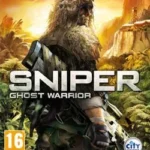
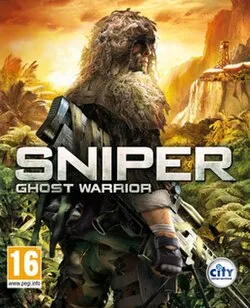
Sniper: Ghost Warrior is a 2010 tactical shooter developed and published by City Interactive — a Polish studio, later renamed CI Games — and released for PC and Xbox 360 on June 29, 2010, with a PlayStation 3 version following in June 2011. It is the first mainline entry in the Sniper: Ghost Warrior franchise, which has gone on to sell over 13 million copies across five installments through 2022.
The game received poor critical reviews across all platforms. It sold 1.5 million copies in its first year regardless.
Technical Specifications
| Attribute | Details |
|---|---|
| Developer | City Interactive (later CI Games) |
| Publisher | City Interactive |
| Director | Michał Sokolski |
| Composers | Max Lade, Matias Puumala, Gerhard Daum |
| Engine | Chrome Engine 4 |
| Platform(s) | Microsoft Windows, Xbox 360, PlayStation 3 |
| Release Date(s) | PC / Xbox 360: Jun 29, 2010 · PS3: Jun 28, 2011 (NA) |
| Genre | Tactical shooter, Stealth |
| Mode(s) | Single-player, Multiplayer |
Setting: Isla Trueno
The game is set in the fictional Latin American island nation of Isla Trueno, where a military regime has overthrown the democratic government. The player takes on the role of an elite special operations sniper deployed to support local rebel forces and destabilize the ruling junta.
The narrative is thin and largely functional — a delivery mechanism for placing the player in a series of jungle environments with high-value targets at range. The game does not attempt the political ambiguity of its setting and has no ambitions beyond its genre premise. The campaign runs approximately four to five hours.
Sniping: The One Thing That Worked
What Sniper: Ghost Warrior does unusually well for a budget production of its era is model the physics of long-range shooting. Bullet drop — the effect of gravity pulling a projectile down over distance — is simulated, requiring the player to aim above a distant target to compensate. Wind drift affects shots at range. Breathing has to be controlled before a clean shot can land.
For a player primarily interested in the act of sniping, these mechanics provide a satisfaction loop that the rest of the game doesn’t support — the AI is limited, the close-quarters combat sections are weak, and the level design is aggressively linear. But the moment a long-distance shot lands as intended is genuinely rewarding, and that moment is what the game was built around. Critics noted it; they just noted everything else as well.
The Chrome Engine 4 — City Interactive’s proprietary engine — produced decent jungle environments for the budget, though texture detail and animation quality fell short of contemporary releases at full price points.
Reception: Critics vs. Players
Sniper: Ghost Warrior received a Metacritic score of 55 on PC, 45 on Xbox 360, and 53 on PS3. Zero out of 23 critics gave the PC version a positive score; reviewers consistently criticized the short campaign, weak AI, poor storytelling, and inconsistent gunplay outside of the sniping sequences. IGN gave it 5/10 on PC, GameRevolution 0.5/5, VideoGamer 3/10.
The player response was different. The game sold 1.5 million copies in its first year — a result that surprised City Interactive and most observers, and that the studio has repeatedly cited as the commercial foundation that allowed the franchise to continue. The gap between critical and player reception points to a specific audience the reviewers weren’t representing: players who wanted a sniping game, found the sniping worked, and considered that sufficient. At the budget price point the game launched at, that calculus was apparently sound.
The Steam version currently holds a “Mixed” aggregate from around 2,000 reviews, with 53% positive — a player consensus that maps closely to the critical one, fifteen years later.
DLC and Gold Edition
Two pieces of downloadable content were released post-launch. Map Pack (September 2010) added multiplayer maps. Second Strike (September 2011) added a short additional single-player campaign titled “Unfinished Business,” a new multiplayer mode (Capture the Flag), and three new sniper rifles. Both are included in the Gold Edition, which is the version sold on Steam.
The Series
The commercial performance of the first game established City Interactive’s direction for the following decade. The franchise evolved substantially across its run:
Sniper: Ghost Warrior 2 (2013) moved to CryEngine 3, expanded the location variety to include the Philippines, Bosnia, and Tibet, and tightened the campaign structure. It sold over one million copies and is generally considered an improvement over the original.
Sniper Ghost Warrior 3 (2017) was the studio’s first attempt at a AAA budget, introducing an open world set in the Republic of Georgia near the Russian border. It received similar mixed reviews but crossed one million sales and marked the point at which City Interactive publicly committed to building the franchise at a higher production level.
Sniper Ghost Warrior: Contracts (2019) and Contracts 2 (2021) stepped back from the open world to focus on tighter, objective-driven sniper sandbox maps. Contracts 2 added extreme long-range missions — one exceeding 1,000 metres — that represented the most technically realized version of the sniping mechanics the series started with in 2010. It became the highest-rated entry in the franchise and crossed one million sales in under a year.
The franchise has no announced next entry as of mid-2026. CI Games, now publicly listed on the Warsaw Stock Exchange, has shifted additional resources toward its Lords of the Fallen action RPG line.