 71
71  PC
PC PS4
PS4 Xbox One
Where to buy




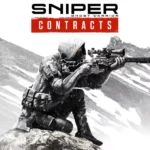
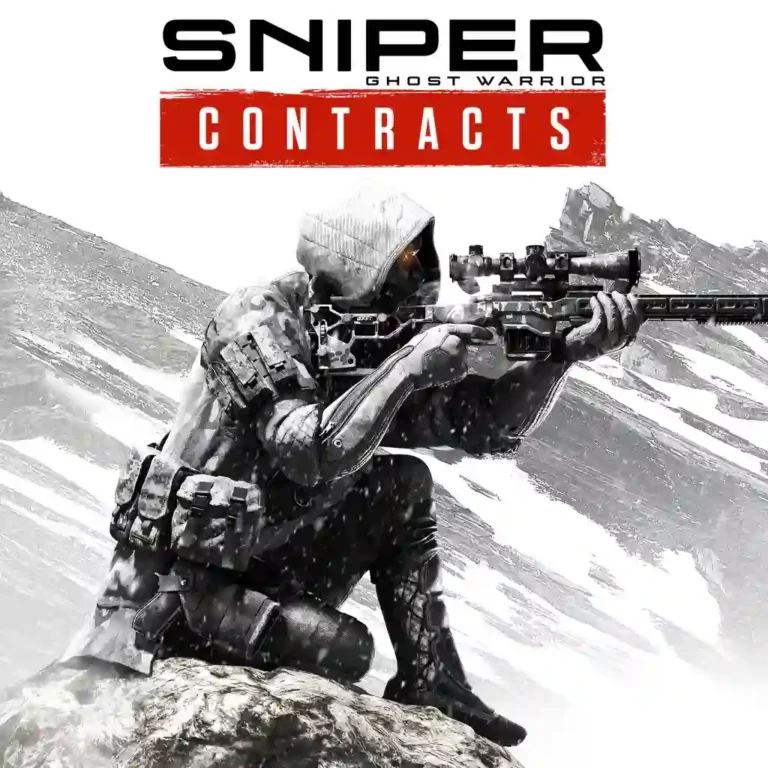
Sniper Ghost Warrior: Contracts is a 2019 tactical shooter developed and published by CI Games, released worldwide on November 22, 2019, for PC, PlayStation 4, and Xbox One. It is the fourth entry in the Sniper Ghost Warrior franchise and the first to operate under a deliberately reduced scope — a direct structural response to the overreach of Ghost Warrior 3.
CI Games publicly acknowledged before release that Ghost Warrior 3 had been “too ambitious” for the studio’s team size. Contracts was built on the same CryEngine codebase and shares many assets with its predecessor, but trades the sprawling open world for five contained sandbox maps, a faceless mercenary protagonist, and a design philosophy borrowed more from Hitman than from Far Cry. The result earned the franchise its best Metacritic scores to date — 71 on PC, 67 on Xbox One, 65 on PS4 — and crossed one million sales.
Technical Specifications
| Attribute | Details |
|---|---|
| Developer | CI Games |
| Publisher | CI Games |
| Director | Martin Mark |
| Composer | Mikołaj Stroiński |
| Engine | CryEngine |
| Platform(s) | Microsoft Windows, PlayStation 4, Xbox One |
| Release Date | November 22, 2019 |
| Genre | Tactical shooter, Stealth |
| Mode(s) | Single-player, Multiplayer (added via patch, March 2020) |
The Siberian Republic: Setting and Premise
Contracts takes place in the Siberian Republic, a fictional newly-independent nation that has broken away from Russia in the near-future. The political situation is unstable from the start: the republic’s leadership — centred on Prime Minister Nergui Kurchatov and his inner circle of oligarchs, crime bosses, and military figures — is corrupt, ruthless, and operating with impunity in a region the international community is watching but not intervening in.
An unnamed organisation, communicating through an intermediary known only as the Handler, has decided that intervention is needed. They contract the Seeker — a professional assassin — to dismantle Kurchatov’s power structure by eliminating its members one by one. The Seeker moves across five regions of Siberia, working outward from individual targets to the network they belong to.
The story is minimal and largely functional. Reviews described it consistently as clichéd and forgettable — the same assessment that has applied to every entry in the franchise since the first game — and equally consistently noted that it doesn’t matter, because the story is not what anyone is here for.
The Seeker and the AR Mask
The departure from named military protagonists (Cole Anderson, Jonathan North) to a codename-only operative was deliberate. The Seeker has no backstory, no family, and no personal stakes in anything that happens in Siberia. He kills because he is contracted to. The Handler provides targets and context; the Seeker provides the bullet.
This anonymity is supported by the character’s most distinctive feature: an AR Mask — a futuristic face covering with a geometric, angular aesthetic — that narratively justifies every piece of heads-up display information the game provides. Enemy positions, distance readings, points of interest, objective markers, environmental hazards — all are explained as data routed through the mask’s augmented reality system rather than arbitrary interface elements floating in the air. The mask also absorbs fall damage and regenerates the Seeker’s health, allowing CI Games to streamline the survival loop without breaking the fiction.
It is a small but effective piece of design: a single prop that does narrative, aesthetic, and mechanical work simultaneously.
Five Sandboxes Instead of One Open World
The most structurally important decision in Contracts is the replacement of Ghost Warrior 3‘s single sprawling open world with five separate sandbox maps. Each map represents a distinct region of Siberia — a glacier, a harbour, an oil field, a mountain military complex, and a forest installation — and each is sized to contain multiple contracts, patrol routes, secondary objectives, and environmental opportunities without the dead space that made Ghost Warrior 3‘s open world feel empty.
The design is closer in spirit to Hitman‘s level philosophy: a self-contained location with a target embedded in it, surrounded by a system of guards, cameras, and environmental elements that the player learns and exploits over multiple attempts. Each map contains around five contracts, plus bonus challenges that layer additional objectives onto completed missions and pay out additional in-game currency for completion. A player who finishes every contract on every map in a single approach will have a shorter experience than one who revisits maps on higher difficulties or with self-imposed constraints.
CI Games was explicit about the influence: they described Contracts as an attempt to offer “tailor-made contract missions that offer a clear main objective” — a direct quote from their announcement communications positioning the game against Ghost Warrior 3.
The Dynamic Reticle System
The central mechanical addition in Contracts is the Dynamic Reticle System (DRS). Rather than presenting the player with a static crosshair and expecting them to manually account for bullet drop and wind drift through experience, the DRS displays these factors visually within the scope: the reticle itself shifts and drifts to indicate the corrected aim point for current conditions, giving the player a visible target to match rather than an abstract calculation to perform.
The system was designed to make long-range shooting accessible without removing its complexity — a first-time player can follow the reticle and land shots; an experienced player can interpret what the reticle is doing and learn the underlying physics. Reviews praised it as the most significant improvement to the sniping mechanics the franchise had produced, and it carried forward into Contracts 2.
Standard ballistic variables remain: distance, wind speed, wind direction, bullet drop, and heartbeat-controlled breathing all apply. The Seeker’s rifle selection covers multiple calibres with meaningfully different characteristics, and a gadget system adds remote sniper turrets (deployed, then triggered remotely), drones for reconnaissance and marking, gas grenades for silent area denial, and rock-throwing as a basic distraction tool.
Rival Snipers
Contracts introduces rival snipers as a persistent threat across its maps — enemy marksmen embedded in the environment who are actively hunting the Seeker. Unlike standard guards who react to gunfire and investigate, rival snipers scan areas independently, hold positions that cover likely approach routes, and can engage the Seeker from distances that make them difficult to locate before they’ve already fired. Completing a contract cleanly becomes significantly harder when a rival sniper has a line of sight on the only viable firing position.
The addition gives the player-versus-environment dynamic a genuine tension it had previously lacked. In earlier entries, the main threat to the player came from alerting guards who then swarmed. In Contracts, a perfectly silent approach can still end with a long-range round from a sniper who spotted the scope glint.
Reception: A Return to Form
Contracts was received as a meaningful course correction for the franchise. Critics who had given up on the series after Ghost Warrior 3 noted that the sandbox structure worked, that the DRS made the sniping feel immediately satisfying, and that the reduced scope had produced a more consistently enjoyable experience than the studio’s AAA ambitions. IGN gave it 7.3/10 — the highest score any Ghost Warrior game had received from a major outlet at that point. OpenCritic’s aggregate of 67 and Metacritic’s 71 on PC represented the best scores in the series.
The persistent criticisms — AI inconsistency, visual fidelity borrowed from a two-year-old CryEngine build, an unmemorable narrative, and some performance issues on console — reflected the franchise’s ongoing structural limits more than failures specific to this entry. Steam reviews settled at 74% positive, and the game passed one million sales, contributing to CI Games’ confidence to greenlight Contracts 2 on an expanded budget.
Multiplayer, unlike Ghost Warrior 3‘s delayed delivery, arrived via patch in March 2020 — roughly four months after launch.