 52
52  PC
PC PS 3
PS 3 Xbox 360
 ND Games

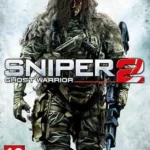
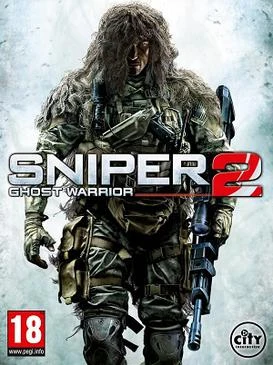
Sniper: Ghost Warrior 2 is a 2013 tactical shooter developed and published by City Interactive — rebranded as CI Games that same year — and released for PC, PlayStation 3, and Xbox 360 in March 2013. It is the second mainline entry in the Sniper: Ghost Warrior franchise and the first to use a licensed third-party engine, CryEngine 3, in place of the studio’s proprietary Chrome Engine.
The game received a Metacritic score of 52 across all three platforms — an improvement on its predecessor’s 45–55 range, but still firmly in “mixed or average” territory — and sold over one million copies, contributing to a cumulative franchise total that would eventually exceed 13 million across all entries.
Technical Specifications
| Attribute | Details |
|---|---|
| Developer | City Interactive (CI Games) |
| Publisher | City Interactive (CI Games) |
| Engine | CryEngine 3 |
| Platform(s) | Microsoft Windows, PlayStation 3, Xbox 360 |
| Release Date(s) | NA: Mar 12, 2013 · EU: Mar 15, 2013 · AU: Mar 19, 2013 |
| Genre | Tactical shooter, Stealth |
| Mode(s) | Single-player, Multiplayer |
Story: Three Theatres, One Soldier
Ghost Warrior 2 returns the player to Captain Cole Anderson, the U.S. Marine protagonist of the first game, and structures its campaign across three distinct locations and time periods.
Act I — The Philippines (present day): Anderson and CIA operative Diaz are sent to the Philippine jungle to destroy a Russian radar installation and monitor a mercenary deal involving a biological weapon. The operation unravels when the bioweapon is lost and the team is ambushed; Anderson defies orders to rescue captured squad members, landing in the brig as a result.
Act II — Sarajevo, 1993 (flashback): Confined to the brig, Anderson flashes back to a covert mission during the Bosnian War, where he and his spotter Maddox were tasked with photographing atrocities committed by Serbian forces under a warlord named Marko Vladić. The mission goes off-script when Maddox, unable to watch the killings continue, breaks orders to intervene. The Bosnia chapters give the game its most narratively grounded section, providing the emotional backstory that the present-day missions use as their fuel.
Act III — Tibet (present day): Anderson is redeployed to stop the biological agent from being sold to a militant warlord whose success would trigger a regional war between Pakistan and India. The third act closes the loop on the mercenary and bioweapon threads from Act I.
An additional Siberian Strike campaign, released as post-launch DLC, follows Anderson on a black operation into Russia to locate a CIA mole embedded in a classified research facility.
CryEngine 3: Potential and Its Limits
The decision to license CryEngine 3 — the same engine powering Crysis 3 and Far Cry 3 — was the most visible departure from Ghost Warrior 1‘s Chrome Engine approach, and the game’s most debated aspect. The engine’s rendering capabilities gave environments in the Philippines chapters a lush visual quality that the first game couldn’t match, and the Sarajevo flashback sequences benefited from the atmospheric lighting CryEngine 3 handles particularly well.
Reviewers were divided on whether City Interactive used the engine effectively. GameSpot, which gave the game its highest major-outlet score (7/10), specifically praised the visuals and sound as giving the game an “action-movie vibe” comparable to a well-produced military thriller. Most other reviewers found the implementation underwhelming — textures inconsistent, enemy character models noticeably rougher than the environments around them, and none of the engine’s physics and destruction capabilities put to meaningful use. The console versions in particular drew criticism for visual quality that several reviewers considered embarrassingly below the standard CryEngine 3 had set elsewhere.
Cole Anderson and the Voice Cast
Where the protagonist of Ghost Warrior 1 was an anonymous operative defined entirely by his function, Ghost Warrior 2 gives Cole Anderson a backstory, a moral position, and a voice. The character is voiced by Troy Baker — recorded in the same year Baker also voiced Joel in The Last of Us, Booker DeWitt in BioShock Infinite, and several other high-profile roles that would collectively make 2013 one of his most celebrated years in the industry.
Baker’s work is one of the consistently noted positives in even the more negative reviews of the game. The Bosnia flashback chapters in particular give Anderson’s relationship with Maddox enough emotional grounding to function as a genuine character study in miniature, even as the gameplay surrounding it remains utilitarian. The spotter mechanic — in which Maddox calls targets, provides wind readings, and reacts to the player’s shots — is handled with more care in the script than in most sniping games of its era.
Sniping Mechanics
The core sniping system is an incremental refinement of Ghost Warrior 1‘s foundation. Bullet drop, wind drift, and breathing control all remain present; the implementation is generally described as more consistent than the original but still prone to the occasional inconsistency that undercuts the satisfaction of a clean long shot. A bullet-cam effect — slow-motion tracking of a projectile toward its target — was added and praised as a visual reward for precision hits, though reviewers noted it triggered less often than they would have liked.
The difficulty spike between the sniping sections and close-quarters segments, which the first game made more brutal than necessary, was somewhat smoothed in Ghost Warrior 2. The fundamental structural problem remained: missions that required players to put down the sniper rifle and navigate corridors under direct fire were consistently the weakest parts of the game, exposing AI behaviour that one reviewer diplomatically described as “unrealistic.”
Reception
Sniper: Ghost Warrior 2 holds a Metacritic score of 52 across PC, PS3, and Xbox 360 — an unusual uniformity that reflected broadly consistent critical consensus rather than platform-specific differences. Reviews clustered around a “mediocre, acceptable for genre enthusiasts on sale” verdict, with GameSpot (7/10) on the generous end and Destructoid (3/10) and VideoGamer (3/10) on the other. The recurring criticisms — short campaign, weak AI, underused engine, multiplayer limited to two maps — mirrored those from the first game closely enough that several reviewers questioned whether the years of delays had produced any meaningful course correction.
Player response was warmer. User scores on Metacritic averaged around 6/10, and Steam reviews settled at “Mostly Positive” on the back of a player base that bought the game cheap, expected a functional sniping experience, and got one. The franchise’s commercial track record — and the critical distance between what reviewers wanted and what the game’s audience was actually looking for — remained as pronounced as it had been three years earlier.