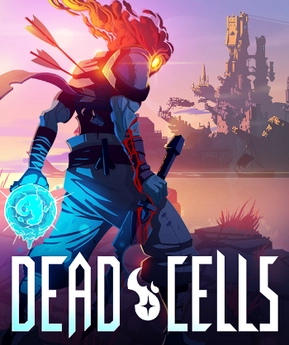
Dead Cells
 89
★ /10
89
★ /10
 Android,
  iOS (iPhone/iPad),
  Nintendo Switch,
  PC,
PC,  PS4,
PS4,  PS5,
PS5,  Xbox One
Where to buy




Dead Cells is a 2018 roguelite Metroidvania developed by Motion Twin, released into Early Access on May 10, 2017 and reaching full release on August 7, 2018 for PC, PlayStation 4, Xbox One, and Nintendo Switch. It holds a Metacritic score in the high 80s to low 90s depending on platform and has sold more than 11 million copies, making it one of the best-selling and most critically acclaimed indie games of its decade. Development officially concluded in 2024, after nearly seven years of almost uninterrupted content support — a run long enough, and generous enough, that its ending became gaming news in its own right.
It’s also, less visibly, a genuine curiosity in how it was made: Motion Twin operated as a worker cooperative, where every member of the studio held equal pay and an equal vote in decisions, an unusually flat structure for a game that went on to become a commercial phenomenon.
Technical Specifications
| Attribute | Details |
|---|---|
| Developer | Motion Twin (base game, free updates) · Evil Empire (co-developer, paid expansions) |
| Publisher | Motion Twin |
| Studio Structure | Worker cooperative (founded 2001, equal pay and vote among members) |
| Early Access | May 10, 2017 |
| Full Release | August 7, 2018 (PC, PS4, Xbox One, Switch) |
| Also released on | iOS, Android (2019) · Netflix Games edition (2023, includes all DLC) |
| Metacritic | 91 (Xbox One) · 89 (PC, Switch) · 87 (PS4) |
| Sales | 11+ million copies |
| Genre | Roguelite, Metroidvania |
| Mode(s) | Single-player |
A Video Game Made by a Worker Cooperative
Motion Twin was founded in 2001 in Bordeaux, France, and spent well over a decade making more than 150 small browser games with modest success before attempting its first real PC release. The studio’s governance structure was unusual for the industry: rather than a traditional hierarchy, Motion Twin operated as a co-op where members shared equal pay and an equal say in creative and business decisions. Dead Cells entered Early Access in May 2017 and spent over a year in public development before its full 2018 launch — success that reportedly surprised even the studio itself, and success significant enough that several members of its marketing and programming team spun off during development to found a second studio, Evil Empire, which would go on to co-develop most of the game’s later paid content.
Permadeath Meets Metroidvania
The game’s core pitch is a genre fusion that’s since been widely imitated: procedurally arranged levels and roguelike permadeath, layered onto persistent, Metroidvania-style unlocks that carry between runs — new weapons, abilities, and shortcuts that permanently open up more of the map even after a character death resets the run itself. A tiered difficulty system, Boss Cells, lets players ramp challenge up incrementally after finishing the base game, giving the loop a long tail of increasingly demanding runs rather than a hard difficulty wall.
The Beheaded and the Island
Narrative is deliberately minimal: the player controls a reanimated, headless corpse — known to the community simply as the Beheaded — that possesses a series of bodies scattered across a cursed, ever-shifting island, fighting through its dungeons and castle in an endless cycle. Story exists mostly as flavor and environmental hints rather than a driving structure, in keeping with the genre’s typical approach to narrative.
Six Years of Free and Paid Content
What set Dead Cells apart from most of its contemporaries was the sheer duration and consistency of its post-launch support. Free updates added new biomes, weapons, and balance changes for years after launch, while paid expansions — The Bad Seed, Fatal Falls, and The Queen and the Sea among them — expanded the map and boss roster considerably beyond the original release. The game also became something of a crossover hub within the indie scene, adding cosmetic skins and, in some cases, referential mechanics tied to other acclaimed indie titles like Hyper Light Drifter and Hollow Knight.
Return to Castlevania
The biggest of these expansions, and the one that generated headlines well outside the game’s existing audience, was Return to Castlevania, released March 2023 in partnership with Konami. It added a full new biome, storyline, and boss encounters built around Richter Belmont, Alucard, and Dracula himself — Dead Cells‘ own take on the vampire-hunting universe that had directly inspired its combat and level design in the first place. It holds a Metacritic score of 88, and several outlets went further, describing it in outright terms as the best Castlevania content released in years, at a time when Konami’s own mainline series had gone dormant following series architect Koji Igarashi’s departure.
The End of Active Development
In February 2024, Motion Twin announced that Update 35: The End is Near would be the game’s final content update, closing out nearly seven years of continuous support. The studio was explicit about its reasoning: rather than risk diluting what made the game distinctive by continuing to extend it indefinitely, both Motion Twin and Evil Empire chose to end on their own terms and move to new projects — Motion Twin to a new cooperative game called Windblown, and Evil Empire to The Rogue Prince of Persia. The final update itself was substantial rather than a token send-off, adding new Curse-related content, 18 legendary item affixes, expanded head customization, and further accessibility options built with input from AbleGamers and the game’s own community.
Beyond the Game
Even with active updates finished, Motion Twin signaled the Dead Cells world wasn’t entirely done: an animated series and a board game were both teased as being in development at the time of the studio’s farewell announcement, extending the property beyond the original game itself rather than closing it out completely.
Reception and Sales
Critical reception was strong and consistent across every platform, with reviewers repeatedly praising the tightness of its combat and the rare success of blending roguelike structure with Metroidvania progression without either system undermining the other. Commercially, the game became one of the defining indie success stories of its generation, crossing 11 million copies sold across all its platforms and editions — a scale few Early Access projects from a small, cooperative-structured studio ever reach.
Where to Play It Today
Dead Cells is available on Steam, GOG, PlayStation, Xbox, and Nintendo Switch, as well as iOS and Android. Netflix subscribers can also play a Dead Cells: Netflix Edition on mobile at no extra cost, which — unusually — bundles the base game together with every major paid expansion, including Return to Castlevania, ad-free and without in-app purchases.