 36
36  PC
PC ND Games
Where to buy

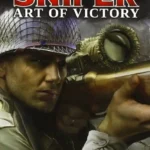
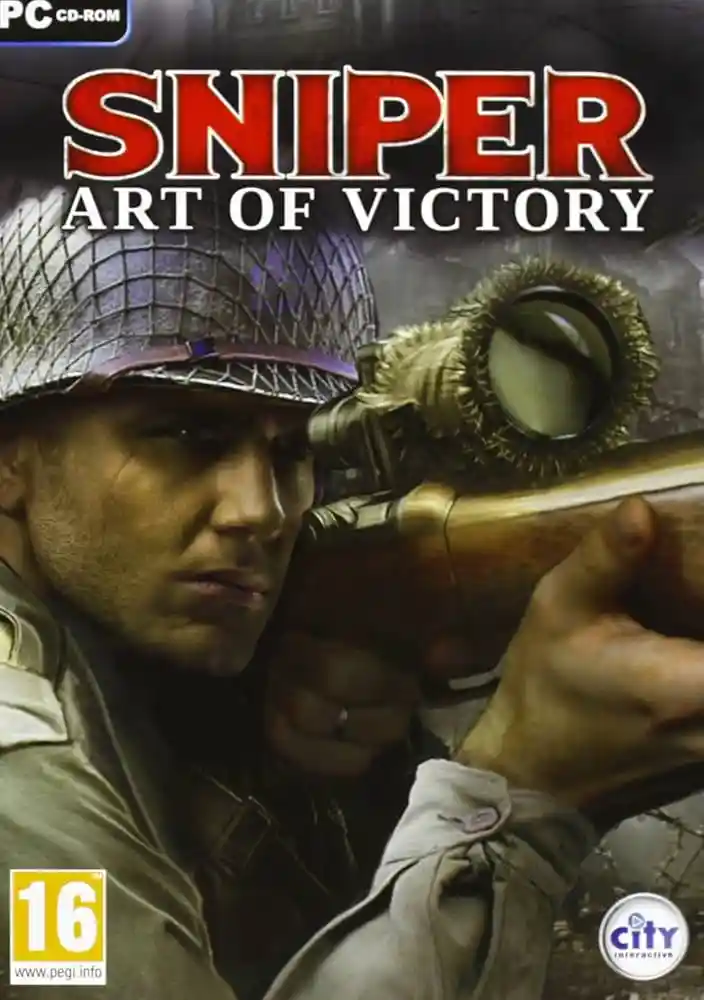
Sniper: Art of Victory (Polish: Snajper: Sztuka Zwyciężania) is a 2008 budget tactical shooter developed and published by City Interactive, released for PC in Europe on June 13, 2008, and in North America on October 3, 2008. It is a PC-exclusive with no console release and no multiplayer component.
The game holds a Metacritic score of 36 — the lowest in what would become the Sniper: Ghost Warrior franchise — and was directed by Michał Sokolski, who would go on to direct Sniper: Ghost Warrior two years later. It is understood primarily as the rough prototype from which that franchise grew.
Technical Specifications
| Attribute | Details |
|---|---|
| Developer | City Interactive |
| Publisher | City Interactive |
| Director | Michał Sokolski |
| Engine | Chrome Engine 2 |
| Platform | Microsoft Windows |
| Release Date | PL: Nov 29, 2007 · EU: Jun 13, 2008 · NA: Oct 3, 2008 |
| Genre | Tactical shooter |
| Mode | Single-player |
Setting: World War II, Eastern Front and Italy
Art of Victory places the player in the role of a WWII sniper operating across two theatres of the war. The campaign begins on the Eastern Front during the battle for Stalingrad, where the player is tasked with eliminating a German general sent to reinforce the siege. Subsequent missions move to the Italian Peninsula, supporting Allied forces during their northward offensive against a retreating Wehrmacht.
The historical framing is loose. Critics noted that City Interactive’s recreation of Stalingrad amounted to a handful of enemy soldiers patrolling an oversized, mostly empty map hemmed in by minefields — a design choice described charitably as a logistical solution to the studio’s limitations, and less charitably as baffling. The game’s missions are short and disconnected, providing context enough to position the player in front of a target but little else.
Gameplay: Sniping That Did Not Yet Work
The central ambition of Art of Victory — recreating the experience of a WWII precision marksman — runs into consistent problems of execution. The sniping mechanic includes a slow-motion bullet-time effect inherited from Sniper Elite (2005), but reviewers found the underlying ballistics inconsistent and the scoping controls difficult to work with reliably. AI behaviour was widely described as absent or incoherent: enemies did not react credibly to shots, flanked erratically, and in some cases failed to register the player’s presence at all.
Close-quarters sections, which break up the sniping between objectives, drew the most negative attention. The Chrome Engine 2 — an earlier iteration of the proprietary engine City Interactive would refine for Ghost Warrior — produced environments that reviewers placed well below the visual standard of contemporaries at any price point.
The campaign can be completed in roughly three to four hours. There are no difficulty options, no side content, and no multiplayer.
Reception
Sniper: Art of Victory received a Metacritic score of 36, with reviews uniformly negative. The kinder assessments acknowledged that for a budget release priced at roughly £5 at launch, some of its shortcomings could be excused — before concluding that the core failures were too fundamental for the price to cover. One critic summarised the experience as “a unique compilation of short dull and stupid missions filled with bugs presented in shameful graphics and abominable sounds.” Another noted that “this leads me onto the AI, of which I’m not sure there actually is any.”
The game is currently available on Steam for under a dollar. Its Steam reviews are predictably mixed, with players divided between those who bought it as a curiosity for pennies and those who found it unredeemable even at that price.
Context: The Step Before Ghost Warrior
The game’s primary significance is archival. It represents City Interactive’s first attempt to build a sniping-focused game under the Chrome Engine, and the lessons drawn from its failures are visible in the improvements Sniper: Ghost Warrior made two years later: a more modern engine (Chrome 4 vs Chrome 2), more responsive ballistics, a wider variety of environments, and a campaign roughly twice as long.
The same director helmed both projects. That continuity, and the directness of the thematic and mechanical line between them, makes Art of Victory the clearest available evidence of what the Ghost Warrior series learned in its formation — even if the game itself offers little reason to play it outside that historical context.