 73
73  PC
PC PS4
PS4 PS5
PS5 Xbox One
 Xbox Series X/S
Where to buy




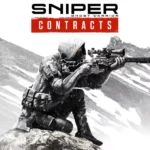
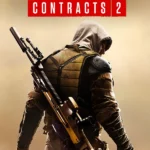
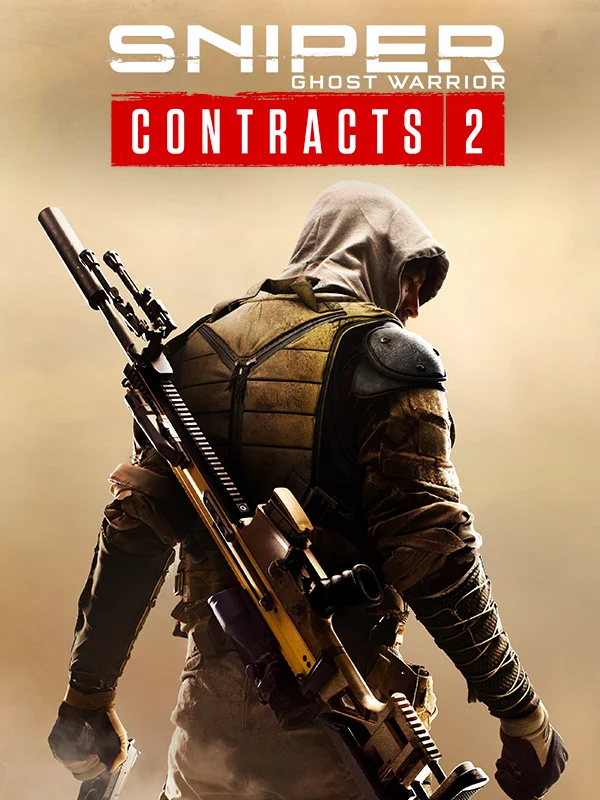
Sniper Ghost Warrior Contracts 2 is a 2021 tactical shooter developed and published by CI Games, released for PC, PlayStation 4, Xbox One, and Xbox Series X/S on June 4, 2021, with a PlayStation 5 version following on August 24, 2021. It is the sixth and currently final entry in the Sniper Ghost Warrior franchise, and the direct sequel to Sniper Ghost Warrior: Contracts (2019).
The game received Metacritic scores of 73 on PC, 74 on Xbox Series X, and 81 on PS5 — the highest the franchise has ever achieved — and crossed one million sales in under a year. Its defining addition over the previous entry is a dedicated Long-Shot Contract mission type that places targets over a kilometre away from the player’s position, making travel time, moving-target compensation, and environmental interaction the primary challenges rather than infiltration.
Technical Specifications
| Attribute | Details |
|---|---|
| Developer | CI Games |
| Publisher | CI Games |
| Director | Martin Mark |
| Composer | Gustavo Coutinho |
| Engine | CryEngine |
| Platform(s) | Microsoft Windows · PlayStation 4 · Xbox One · Xbox Series X/S (Jun 4, 2021) · PlayStation 5 (Aug 24, 2021) |
| Release Date | Jun 4, 2021 (PC, PS4, Xbox) · Aug 24, 2021 (PS5) |
| Genre | Tactical shooter, Stealth |
| Mode(s) | Single-player, Multiplayer |
Kuamar: Setting and the Criminal Syndicate
Contracts 2 leaves Siberia behind for Kuamar, a fictional Middle Eastern country situated along a border analogous to the Lebanese-Syrian frontier. The country is governed by a criminal syndicate under the leadership of Rashida al-Amer, whose network of operatives, oligarchs, and technical specialists constitutes the game’s target list. An unknown organisation, operating again through a Handler figure, contracts Raven — a new codename-only protagonist distinct from Contracts 1‘s Seeker — to dismantle the organisation from its edges inward and ultimately eliminate Rashida herself.
The shift to a desert and mountain environment, after two games in heavily forested or snowy terrain, gives Contracts 2 a visual character that immediately distinguishes it from its predecessors. The open sky, pale rock, and long sightlines of the Kuamar maps are not just aesthetically different — they are mechanically consequential, because they enable the extreme-range shooting that defines the game’s most significant design addition.
As in previous entries, the story is framing rather than substance. Reviews described Rashida as a broadly drawn villain and the surrounding narrative as a succession of military thriller clichés. The distinction from Ghost Warrior 3, where a similarly thin story was delivered with leaden self-seriousness, is that Contracts 2 makes no particular claim on the player’s emotional investment in its characters — the missions stand on their own.
Two Mission Types: Classic and Long-Shot
Contracts 2 divides its campaign across two explicitly labelled mission structures, each built around a different range of engagement.
Classic Contracts function like the entirety of Contracts 1: the player moves through a sandbox environment, infiltrating positions, tagging and eliminating targets, completing secondary objectives, and navigating in and out. Engagement ranges in classic missions stay below roughly 400 metres. Stealth, gadget use, and route planning determine the outcome more than raw marksmanship.
Long-Shot Contracts are new to the franchise. The player is inserted at a fixed elevated position — a clifftop, a ridge, the roof of a structure — overlooking a large, inaccessible target area that may be a kilometre or more away. The mission objective is to eliminate targets within that area without ever entering it, operating entirely through the scope. The target area is populated with guards, cameras, alarm systems, and environmental objects that can be interacted with remotely: shooting a fuel tank, destroying a communication array, triggering a vehicle to roll — all at a distance that may take three seconds of bullet travel time to cover.
The PC Gamer review described the long-shot approach as “almost puzzle games at times”: figuring out how to lure a target into position, which environmental object to shoot first to disable an alarm before the sniper shot is taken, and how to sequence eliminations without triggering a response that moves surviving targets to cover. The range creates a kind of strategic remove — the player can watch a situation develop through the scope and plan responses in real time without being physically present in the consequence.
Extreme Range: What 1,000+ Metres Feels Like
The practical experience of shooting at targets beyond a kilometre is qualitatively different from anything in the earlier games. At 1,000 metres, a bullet from a standard calibre rifle takes approximately two seconds to arrive. At 1,500 metres — a range that several missions require — it takes closer to three. A target walking at a normal pace will move roughly four to five metres in that time.
The DRS (Dynamic Reticle System, carried forward from Contracts 1) accounts for bullet drop and wind drift. Moving targets require the player to lead the shot by estimating where the target will be when the bullet arrives. Crosswind at that range can shift a shot by a metre or more if unaccounted for. The combination of factors turns a single long-range kill into a deliberate, multi-variable calculation — the antithesis of the reflex-based shooting that defines most military FPS games.
Reviews from players who engaged with the system on its own terms described it as uniquely satisfying. One critic noted that “headshots on moving targets from 1,500 metres are awesome” in a review that also criticised the AI. Another called it “an intensely satisfying sniper experience” while noting the budget was too low to polish surrounding details. The gap between what the sniping delivers and what the rest of the game offers remained consistent with every prior entry in the franchise.
PS5 Version: DualSense and the Series at Its Best
The PlayStation 5 version of Contracts 2, released two and a half months after the base launch, represents the most technically complete version of any Ghost Warrior game to date. Native PS5 features include 4K resolution, significantly reduced loading times compared to previous-generation hardware, and DualSense haptic feedback — specifically, resistance and vibration mapped to the trigger pull of individual weapons, so that a bolt-action sniper rifle and a semi-automatic pistol feel mechanically distinct in the hands before the shot is fired.
Reviews of the PS5 version were noticeably warmer than those of the PS4 and PC releases. The 81/100 Metacritic score for PS5 — nine points above the PC version and thirteen above PS4 — reflects both the technical improvements and the cumulative benefit of arriving after patches had addressed launch-window issues on the earlier platforms. One PS5 reviewer described it as “not only the definitive version of CI Games’ latest effort, but also one of the better sniper offerings on the market.”
Reception: The Franchise at Its Peak
Contracts 2 is the highest-rated entry in the Sniper Ghost Warrior franchise by every available metric: Metacritic scores across platforms, OpenCritic aggregate (74, with 50% of critics recommending it — up from 29% for Contracts 1), and Steam user score (around 85% positive at the time of the one-million-sales milestone).
It sold one million copies in under a year — faster than any previous entry — and pushed the cumulative franchise total past 13 million. The commercial success enabled CI Games to describe the series as a viable long-term franchise property rather than a perpetually underperforming experiment.
Critical consensus settled around a consistent characterisation: a game that does what it sets out to do with increasing competence, still constrained by a low budget that limits AI quality and production finish, but genuinely good at the thing that matters most to its audience. Whether that audience finds long-range marksmanship under environmental variables rewarding is the determining factor. For players who do, Contracts 2 is the clearest realisation of what the franchise has been building toward since Art of Victory in 2007.
No sequel or follow-up entry has been announced as of mid-2026. CI Games has focused subsequent development resources on Lords of the Fallen and its sequels.