 59
59  PC
PC PS4
PS4 Xbox One


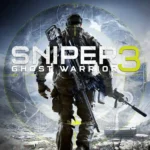
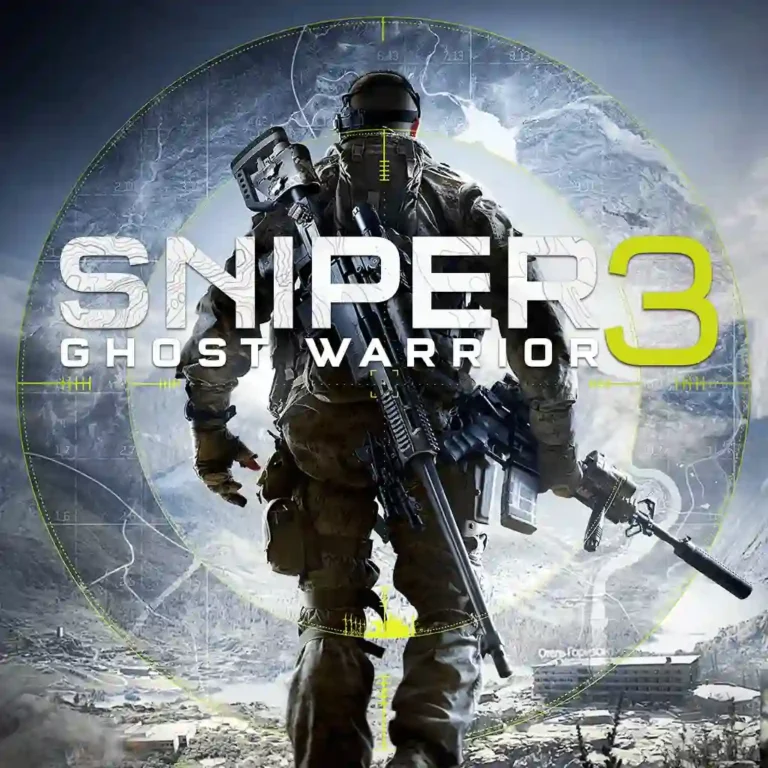
Sniper Ghost Warrior 3 is a 2017 tactical shooter developed and published by CI Games for PC, PlayStation 4, and Xbox One, released worldwide on April 25, 2017. It is the third mainline entry in the Sniper Ghost Warrior franchise and the studio’s most ambitious project to date — the first to feature an open world, the first built to a AAA production budget, and the first to strip the Ghost Warrior label from its title.
The game sold over one million copies and generated CI Games’ first profitable year in recent history. It also shipped with five-minute loading times on PS4, no multiplayer at launch, rampant bugs, and reviews that described it as a promising framework delivered in an unfinished state.
Technical Specifications
| Attribute | Details |
|---|---|
| Developer | CI Games |
| Publisher | CI Games |
| Director | Paul B. Robinson |
| Composer | Mikołaj Stroiński |
| Engine | CryEngine |
| Platform(s) | Microsoft Windows, PlayStation 4, Xbox One |
| Release Date | April 25, 2017 |
| Genre | Tactical shooter, Stealth |
| Mode(s) | Single-player, Multiplayer (delayed post-launch) |
Story: Brothers, Georgia, and the 23 Society
The story begins before the game’s events. US Marine Captain Jonathan “Jon” North and his brother Robert are sent to the Russian-Ukrainian border to destroy a cache of abandoned Soviet bio-weapons. The mission succeeds, but the brothers are ambushed by a mysterious special forces unit led by a man named Vasilisk, who plays a game of Russian roulette with Jon before knocking him unconscious and taking Robert captive.
Two years later, Jon is deployed to the Republic of Georgia — explicitly the Caucasian country, not the American state, a distinction the game flags in its promotional material — where Georgian separatists are receiving unusually sophisticated funding and military equipment from unknown sources. Jon accepts the assignment with a personal agenda: intelligence chatter has placed Robert somewhere in the region, and he intends to find him.
The investigation leads Jon to the 23 Society, a shadowy international conspiracy with access to experimental technology and a near-superhuman field operative known as Armazi. The story’s central twist — that Armazi is Robert, who has been subjected to genetic engineering and brainwashing to transform him into a supersoldier — is telegraphed early enough that it lands less as a revelation than a confirmation. Reviews consistently described the narrative as a collage of action-movie tropes assembled without conviction, comparing it unfavourably to a rejected Call of Duty plot.
Three Pillars: Sniper, Ghost, Warrior
Ghost Warrior 3 formalised the three approaches the franchise had implicitly offered since the first game into a named system that also organises the skill tree:
Sniper covers long-range marksmanship — the franchise’s core mechanic, further refined here with bullet drop, wind compensation, and a heartbeat-sync breathing mechanic for stabilising the scope. Equipment upgrades and special ammunition types (armour-piercing, explosive-tip) expand the toolkit available at distance.
Ghost covers stealth — silent takedowns, crouch movement, enemy-detection awareness, and the ability to use environmental cover to move through objectives without firing. This playstyle benefits the most from the open world’s navigational flexibility, which allows approach vectors the linear structure of earlier games couldn’t offer.
Warrior covers direct combat — assault weapons, explosives, and the kind of forward engagement that the franchise had previously treated as a failure state. Ghost Warrior 3 was the first entry in the series to build direct combat as a genuinely viable approach rather than an emergency fallback.
A drone was added as a cross-pillar tool: deployed from Jon’s position, it can survey an area before engagement, tag enemies for tracking, and identify targets and patrol routes without alerting anyone. The drone became one of the more praised additions to the game and was retained in subsequent entries.
The Open World: Georgia as Setting and Problem
The Republic of Georgia — and specifically the mountainous, conflict-scarred territories between the Black Sea coast and the Russian border — provides the game’s four open-world maps. The setting is visually distinctive within the military shooter genre, and the combination of dense forest, abandoned Soviet infrastructure, and high-altitude terrain gives the landscape a character that reviewers noted even when dismissing everything else.
The open world itself was the most divisive design decision. CI Games modelled the structure on games like Far Cry and Ghost Recon: Wildlands — a base of operations (a safehouse in a converted building), side activities to complete between story missions, and the freedom to approach any target from any direction. In execution, the space between objectives was criticised as sparse and purposeless, offering neither the density of content that makes open worlds engaging to explore nor the focused design that made the earlier games’ corridors coherent. One review described it as “a pointless open world” that worked against the game’s strengths; another noted that the game “thrives during missions, but suffers when you’re exploring its open world.”
The Five-Minute Load Screen
The most widely reported technical issue at launch was the PlayStation 4 initial load time: 4 minutes and 50 seconds from the main menu to the game itself. This was not an exaggeration by frustrated players but a verified figure confirmed by multiple publications who measured it with stopwatches.
CI Games addressed the issue publicly before launch, acknowledging the load time but framing it as a deliberate trade-off: the long initial load was meant to pre-cache enough data to keep in-mission loads, respawns, and fast-travel short (estimated at 4–15 seconds for fast-travel, 15–30 seconds for checkpoint reloads). The studio described the delay as an “inconvenience” that was “rewarded with a comfortable experience once the game is loaded.”
Players did not broadly accept this framing. Combined with the game’s tendency to freeze and crash — which forced repeated cold starts and thus repeated five-minute waits — the loading problem became a defining feature of the launch experience, particularly on PS4.
Multiplayer Delayed
Ghost Warrior 3 was promoted as including multiplayer. At launch, the multiplayer component was absent, with CI Games announcing that it would be delivered as a patch in Q3 2017. The delayed arrival of a feature advertised as part of the package added to the criticism of the game’s unfinished shipping condition.
Mikołaj Stroiński
The game’s score was composed by Mikołaj Stroiński, a Polish composer previously known for contributing additional music to The Witcher 3: Wild Hunt alongside Marcin Przybyłowicz and Piotr Musial, and for composing the full soundtrack to The Vanishing of Ethan Carter (2014). His work on Ghost Warrior 3 — atmospheric, grounded in Eastern European folk tonality, and attentive to the Georgian landscape’s particular qualities — was one of the few aspects of the production that critics mentioned positively without reservation.
Reception and the Pivot to Contracts
Ghost Warrior 3 received mixed-to-negative reviews across all platforms. Critics broadly agreed that the sniping core remained functional and occasionally satisfying, that the Georgian setting was visually interesting, and that the open-world framework had potential. They equally agreed that the technical state at launch was unacceptable, the story was inert, the AI remained deficient, and the open world didn’t deliver on its structural promise.
For CI Games, the game represented a financial turning point — the studio reported its first profitable fiscal year largely on Ghost Warrior 3‘s revenue — while also serving as a clear signal that the series’ direction needed adjustment. The lesson CI Games drew from the game’s reception was not that the open world was wrong in principle, but that the series needed to return to smaller, more focused maps with tighter design and an explicit sniping identity. That pivot produced Sniper Ghost Warrior: Contracts in 2019, which CI Games built as a direct corrective to everything Ghost Warrior 3 had been criticised for.
The Sabotage story DLC, released post-launch, follows Robert North’s perspective during the events of the main campaign, giving additional context to the game’s central antagonist from the inside.