 89
89  PC
PC Sierra
Where to buy

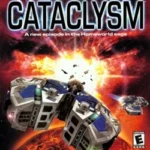
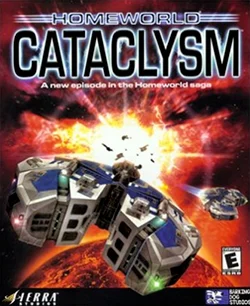
Homeworld: Cataclysm is a 2000 standalone expansion to the groundbreaking 3D RTS masterpiece, Homeworld. However, it was not developed by the original creators at Relic Entertainment. Instead, the reins were handed to Barking Dog Studios, who took the sweeping, majestic space opera of the 1999 original and brilliantly twisted it into a desperate, claustrophobic tale of cosmic survival horror.
The narrative is set 15 years after the exiles reclaimed their homeworld of Hiigara. You do not play as the grand Hiigaran navy. Instead, you command Kiith Somtaaw, a humble, lower-class clan of miners operating on the absolute fringes of known space. While investigating a distress signal, your massive mining vessel, the Kuun-Lan, inadvertently recovers an ancient alien artifact. Inside is The Beast—a terrifying, highly contagious techno-organic virus. The Beast does not just destroy ships; it infects them, painfully mutating the crews and physically rewriting the ship’s architecture into grotesque, fleshy abominations. With the main Hiigaran fleet too far away to help, the lowly miners of Somtaaw must desperately bolt weapons and armor onto their mining ship to stop a galactic extinction event.
Gameplay and Mechanical Overhauls
Barking Dog Studios used the exact same 3D engine as the 1999 original but made massive, highly requested quality-of-life improvements that fundamentally sped up the pacing of the game.
Key gameplay mechanics and historical innovations include:
- Time Compression: This was a massive godsend for the franchise. Cataclysm introduced a fast-forward button. Instead of waiting ten real-time minutes for your slow resource collectors to cross a massive map, players could accelerate time up to 8x speed during the quiet moments of base building and harvesting.
- No More Fuel: The original game’s strict fuel mechanic for strike craft was entirely removed. Fighters and bombers no longer needed to constantly dock with carriers to refuel, vastly simplifying micromanagement and allowing for continuous, aggressive dogfighting.
- The Modular Mothership: Because the Kuun-Lan is a mining vessel, it wasn’t built to construct warships. To unlock new tech tiers, you must physically attach massive modules (like hangar bays and advanced research labs) to the exterior of the Kuun-Lan. As the campaign progresses, you physically watch your ship transform from a utilitarian mining rig into a heavily armored dreadnought.
- Transforming Units: Somtaaw engineers were highly resourceful. Their basic fighter, the Acolyte, was highly agile. However, if two Acolytes met on the battlefield, they could physically link together to form an ACV (Acolyte Corvette), trading speed for heavier armor and firepower on the fly.
The Factions
The conflict in Cataclysm is a desperate fight for survival between two highly unconventional forces:
- Kiith Somtaaw: A scrappy, industrial faction. Because they are miners fighting a virus that eats biological matter, they rely heavily on robotic drones, holographic decoys, and energy-based repulsor weapons to keep the enemy at a distance. Their signature unit is the Multi-Beam Frigate, a ship that physically spins to fire independent lasers in a spherical radius.
- The Beast: A horrifying, biological nightmare. The Beast does not build ships from scratch; it steals yours. Their primary weapon is the Infection Beam. If a Beast ship hits one of your capital ships with this beam, the virus physically consumes the vessel, instantly turning your own heavily upgraded ships against you. Fighting The Beast requires extreme caution, as deploying massive, slow-moving armadas just gives the virus more hosts to infect.
Development and Legacy (The Lost Source Code)
Released in September 2000, Cataclysm was highly praised. Many hardcore Homeworld fans actually consider its darker, character-driven story and vastly improved UI to be superior to the 1999 original.
However, the game’s legacy is famously complicated by a tragic technological loss. When Gearbox Software acquired the Homeworld IP to create the spectacular 2015 Remastered Collection, they desperately wanted to include Cataclysm. Unfortunately, the original source code had been entirely lost by the developers over the decades. Without the source code, a proper 4K remaster was physically impossible.
Furthermore, a massive legal hurdle arose: Blizzard Entertainment had trademarked the word “Cataclysm” for their 2010 World of Warcraft expansion.
For years, the game was considered dead abandonware. However, in 2017, the preservationists at GOG.com performed a miracle. Working with Gearbox, they managed to track down a pristine, compiled build of the original game, reverse-engineered it to run flawlessly on modern Windows systems, and released it under a brand-new title: Homeworld: Emergence.
Today, while it lacks the stunning 4K graphical overhaul of its remastered siblings, Emergence remains an incredibly atmospheric, mechanically brilliant must-play for any fan of the franchise.
Key Features:
- Cosmic Horror — Pivot from sweeping space opera to desperate survival horror, fighting a terrifying techno-organic virus that infects and mutates your own ships.
- Miners to Soldiers — Physically upgrade your massive mining vessel, the Kuun-Lan, bolting on weapons and modules to turn it into a dreadnought.
- Quality of Life Upgrades — Enjoy massive UI improvements over the 1999 original, including the removal of the fuel mechanic and the brilliant addition of time-acceleration.
- Transforming Fleet — Utilize scrappy mining tech, linking agile fighters together to form heavy corvettes in the heat of battle.
- Rescued from Obscurity — Experience the legendary “lost” chapter of the Homeworld saga, beautifully preserved and playable on modern hardware as Homeworld: Emergence.
Release Platforms:
- Microsoft Windows (PC) — September 1, 2000 (Original Release as Homeworld: Cataclysm)
- Microsoft Windows (PC) — June 22, 2017 (Digitally preserved and re-released strictly via GOG.com as Homeworld: Emergence).