 83
83  PC
PC Relic Entertainment
 Sierra

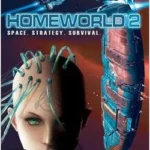
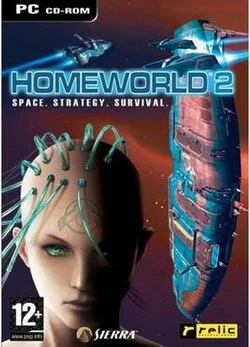
Homeworld 2 is a 2003 real-time strategy (RTS) epic developed by Relic Entertainment and published by Sierra Entertainment. Serving as the highly anticipated direct sequel to the 1999 3D masterpiece, it took the sweeping, melancholic space opera of the original game and injected it with a massively upgraded graphics engine, streamlined mechanics, and a heavy focus on massive, late-game capital ship warfare.
The narrative leaps forward 115 years after the exiles successfully reclaimed their ancestral homeworld of Hiigara. Peace is violently shattered by the emergence of the Vaygr, a brutal, nomadic warrior empire from the eastern fringes of the galaxy. They are united by a terrifying warlord named Makaan, who claims to be the Sajuuk-Khar (the Chosen One). Makaan possesses one of the three ancient, god-like Hyperspace Cores. The Hiigarans possess the second. Desperate to save her people from extinction a second time, Karan S’jet returns to permanently plug herself into a massive new flagship, the Pride of Hiigara. She must lead the fleet to find the third Core, awaken the ancient Progenitor dreadnought known as Sajuuk, and defeat the Vaygr armada.
Gameplay and Mechanical Overhauls
Homeworld 2 ran on a spectacularly upgraded 3D engine that featured some of the most beautiful deep-space environments ever rendered, filled with swirling, highly detailed gas nebulas and massive asteroid fields.
Key gameplay mechanics and historical innovations include:
- Squadrons: Micro-managing individual fighters in the 1999 original was often tedious. Homeworld 2 completely revamped light combat by training strike craft in full squadrons (usually groups of 3 to 5 ships). If a squadron took casualties but survived a dogfight, it could dock with a carrier and instantly replace the lost ships for free, making strike craft significantly more durable.
- Capital Ship Sub-Systems: This was the most massive tactical addition to the game. Capital ships and Carriers were no longer just massive health bars. You could physically build external modules onto them—like Fighter Facilities, Hyperspace Sensors, or advanced engines. Crucially, these modules could be targeted and destroyed individually. A brilliant tactical move was to send a bomber wing to specifically blow up an enemy Carrier’s engine module, leaving it stranded and unable to retreat.
- Dynamic Difficulty: Homeworld 2 retained the “Persistent Fleet” mechanic of the first game (ships jump with you from mission to mission), but introduced a highly controversial scaling difficulty. The game’s AI dynamically analyzed the size of the fleet you brought into a mission and automatically spawned a proportionately sized Vaygr fleet to fight you. This meant that if you hoarded too many ships, the game would ruthlessly punish you with massive, screen-filling enemy armadas.
- Streamlined UI: The complex movement discs and sensor managers of the 1999 original were heavily refined, making it much easier to command massive fleets across the Z-axis without losing track of your strike groups.
The Factions
The sequel completely abandoned the mechanically identical factions of the first game, offering two wildly asymmetrical navies:
- The Hiigarans: The traditionalists. Having lived in peace for a century, their navy is highly specialized, heavily armored, and relies on distinct unit roles. They deploy devastating Torpedo Frigates, heavy Ion Cannon platforms, and utilize pinpoint, surgical strikes.
- The Vaygr: The nomadic swarm. They are fiercely aggressive and rely heavily on overwhelming numbers and missile barrages. Their tech tree is highly adaptable; their Carriers can build any type of ship (if the right module is attached), and their terrifying Laser Corvettes and massive Missile Battlecruisers make them incredibly dangerous in the early-to-mid game.
Development and Legacy
Released in September 2003, Homeworld 2 received widespread critical acclaim for its breathtaking visuals and deep, tactical combat. While some hardcore fans slightly criticized the narrative for leaning too heavily into “prophecy” tropes compared to the grounded survival story of the first game, the gameplay was universally praised.
However, the true legacy of Homeworld 2 lies in its engine. Relic built the game to be incredibly mod-friendly, and it subsequently birthed one of the most legendary modding communities in PC gaming history. For over a decade, massive, total-conversion mods like Point Defense Systems, Complex, and the legendary Star Wars: Warlords kept the Homeworld 2 engine alive, allowing players to recreate massive space battles from other sci-fi franchises.
In 2015, Gearbox Software released the spectacular Homeworld Remastered Collection. Because the Homeworld 2 engine was so advanced, Gearbox actually ported the original 1999 game into the Homeworld 2 engine to unify the multiplayer. This remaster completely modernized the textures, lighting, and audio, ensuring that the Pride of Hiigara continues to fly beautifully on modern PCs today.
Key Features:
- Sub-System Targeting — Surgically dismantle enemy capital ships by individually targeting and destroying their engines, weapon batteries, and production facilities.
- Squad-Based Combat — Command fluid, easily managed squadrons of interceptors and bombers that automatically replace casualties when docked.
- Progenitor Relics — Fight across breathtaking environments littered with the colossal, derelict megastructures of an ancient, god-like alien race.
- Asymmetrical Navies — Master the heavily armored, specialized roles of the Hiigaran fleet or the aggressive, missile-heavy swarms of the Vaygr.
- Flawlessly Remastered — Play the definitive 2015 Remastered Collection, featuring stunning 4K visuals, modernized UI, and cross-game multiplayer.
Release Platforms:
- Microsoft Windows (PC) / macOS — September 16, 2003 (Original Release)
- Microsoft Windows (PC) / macOS — February 25, 2015 (Released as part of the Homeworld Remastered Collection via Steam/GOG/Epic).