 93
93  PC
PC Relic Entertainment
 Sierra

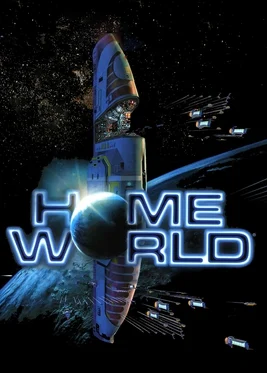
Homeworld is a 1999 real-time strategy (RTS) masterpiece developed by Relic Entertainment and published by Sierra Studios. Releasing during the golden age of PC strategy games, it did something utterly unprecedented: it unchained the RTS genre from the flat, 2D terrain of the era and plunged players into the vast, fully three-dimensional vacuum of deep space. It is widely regarded not just as a mechanical pioneer, but as one of the most atmospheric, emotionally resonant games ever created.
The narrative is a sweeping, melancholic sci-fi epic. The game opens on the desert planet of Kharak, where a fractured society discovers an ancient, buried spaceship housing a single artifact: the “Guidestone,” which points to a distant, forgotten home planet called Hiigara. Realizing they are actually exiles, the people unite to build a colossal, crescent-shaped Mothership over the course of 60 years. However, the moment the Mothership tests its hyperdrive, a tyrannical galactic empire known as the Taiidan detects them and ruthlessly glass-bombs Kharak, exterminating billions. With their planet burning behind them, the 600,000 survivors loaded aboard the Mothership embark on a desperate, hostile journey across the galaxy to reclaim their ancestral home.
Gameplay and Mechanical Overhauls
Homeworld fundamentally rewrote the rulebook for how players interacted with an RTS map. Because the battlefield was outer space, there was no “ground.”
Key gameplay mechanics and historical innovations include:
- True 3D Movement: Players had to master the Z-axis. Using a brilliantly designed sensor manager and movement disc, you could order a squadron of interceptors to fly over an enemy capital ship, or hide bombers below an asteroid field. Combat was entirely spherical, forcing players to think in full three-dimensional space.
- The Persistent Fleet: Unlike traditional RTS games where you start every mission by building a new base, Homeworld featured a persistent fleet. Every single ship that survived a mission jumped through hyperspace with you to the next one. This meant that every casualty was deeply felt, and every victory was hard-earned. If you ended a mission with a crippled, battered fleet, you started the next mission in that exact same desperate state.
- Salvage Corvettes: One of the most legendary units in the game. Rather than just blowing up enemy capital ships, players could deploy highly vulnerable Salvage Corvettes. If enough of them latched onto an enemy frigate or destroyer, they would physically drag the ship back to your Mothership, permanently adding it to your own fleet.
- Space Economy: Resources were gathered by Resource Collectors that mined localized asteroid belts and massive, swirling dust clouds, depositing the raw materials back into the Mothership or mobile carrier vessels.
- Fuel and Ballistics: Small strike craft ran on limited fuel reserves. If fighters engaged in extended dogfights, they had to dock with carriers or repair frigates to refuel, or they would be left drifting and helpless in the void. Furthermore, projectiles were physically simulated; a stray ion beam could miss its target and accidentally strike a friendly vessel behind it.
The Factions
Because the game focuses heavily on an overarching, solitary journey, the two main factions are mechanically identical but visually and philosophically distinct:
- The Kushan: The exiles of Kharak. Their ship designs are utilitarian, blocky, and highly industrial, reflecting a society that had to rapidly build a warfleet out of desperation. Their ships often feature vertical, asymmetrical engine layouts.
- The Taiidan: The tyrannical galactic empire. Their ships are sleek, highly aerodynamic (despite being in space), and heavily painted in aggressive yellows and reds, reflecting a massive, deeply entrenched military-industrial complex.
Development and Legacy
Released in September 1999, Homeworld was an absolute revelation. It won essentially every “Game of the Year” award the PC industry had to offer.
Beyond its mechanics, the game’s atmosphere is legendary. The soundtrack, composed by Paul Ruskay, is a masterclass in ambient audio, blending deep space synth with Middle Eastern tribal vocals. However, the game is most famous for its use of Samuel Barber’s haunting classical piece, Agnus Dei (Adagio for Strings), which plays during the devastating destruction of Kharak, cementing it as one of the most heartbreaking moments in video game history.
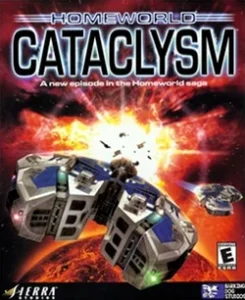
The massive success of Homeworld launched an entire franchise, including a beloved standalone expansion (Cataclysm in 2000), a direct sequel (Homeworld 2 in 2003), a ground-based prequel (Deserts of Kharak in 2016), and the long-awaited Homeworld 3 (released in 2024).
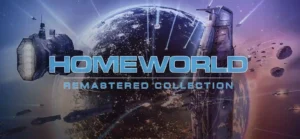
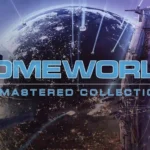
Crucially, in 2015, Gearbox Software (who purchased the IP after THQ’s bankruptcy) released the Homeworld Remastered Collection. They painstakingly upgraded the original game’s engine, adding breathtaking high-resolution textures, modernized lighting, and completely re-recorded audio (bringing back the original voice actors). Today, this collection stands as the definitive way to experience one of the greatest sci-fi epics ever told.
Key Features:
- True 3D Warfare — Master spherical combat in deep space, utilizing the Z-axis to flank enemy capital ships from above, below, and behind.
- A Persistent Journey — Command a fleet that carries over from mission to mission, where every lost fighter and captured frigate permanently impacts your campaign.
- The Mothership — Defend your colossal, hyper-jumping mobile base, the last remaining bastion of your entire civilization.
- Cinematic Atmosphere — Experience a gorgeous, melancholic narrative backed by an unforgettable, award-winning ambient soundtrack.
- Flawlessly Remastered — Play the stunning 2015 Remastered Collection, featuring breathtakingly updated visuals and modernized UI, available on modern hardware.
Release Platforms:
- Microsoft Windows (PC) — September 28, 1999 (Original Release)
- Microsoft Windows / macOS — February 25, 2015 (Released as the Homeworld Remastered Collection via Steam/GOG/Epic).