Empire Earth III
 50
★ /10
50
★ /10
 PC
PC Sierra
 Softclub
Where to buy

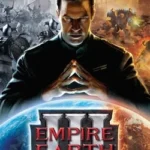
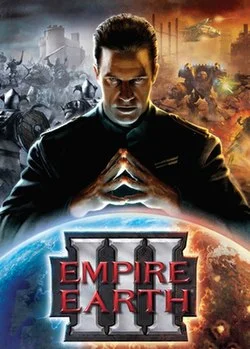
Empire Earth III is the infamous 2007 real-time strategy game developed by Mad Doc Software and published by Sierra Entertainment. If Empire Earth I was a sprawling sandbox of megalomania, and Empire Earth II was a deeply complex, highly analytical macro-strategy masterpiece, then Empire Earth III is the cautionary tale of what happens when a studio attempts to “streamline” a franchise for a broader audience and completely loses its soul in the process.
To be perfectly candid: Empire Earth III is widely considered one of the most disastrous sequels in PC strategy gaming history. It stripped away almost everything that made the franchise unique, suffered from a heavily rushed development cycle, and ultimately served as the final nail in the coffin for the entire Empire Earth IP.
The “Streamlined” Downgrades
In an attempt to make the deeply complex mechanics of the previous games more accessible, Mad Doc Software took a machete to the franchise’s core identity.
Key mechanical changes (and highly criticized downgrades) included:
- The Condensed Epochs: The massive, defining 15-epoch timeline of the previous games was brutally compressed. EE3 only features five ages: Ancient, Medieval, Colonial, Modern, and Future. Players felt this completely ruined the granular, methodical progression of technological history the series was known for.
- Three Generic Factions: Rather than allowing players to command dozens of highly specific historical nations (like the Zulu, Prussians, or Koreans), the game condensed the entire globe into just three homogenized factions: Western, Middle Eastern, and Far Eastern. While they had distinct tech trees, it felt like a massive step backward for historical representation.
- Cartoonish Art Direction: The series had always maintained a relatively grounded, semi-realistic aesthetic. EE3 abruptly pivoted to a chunky, highly stylized, cartoonish art style with massive, oversized weapons and incredibly goofy animations.
- Cringeworthy Voice Acting: The game attempted to inject humor into the combat, but the result was universally panned. Units constantly spouted repetitive, terrible jokes and bizarre voice lines that completely shattered any sense of epic, historical warfare.
World Domination Mode
The one genuinely ambitious idea EE3 attempted was the complete removal of traditional, linear story campaigns. Taking heavy inspiration from the Total War franchise and Rise of Nations, the single-player experience was entirely replaced by the World Domination mode.
Players were presented with a massive, 3D globe divided into 60 distinct provinces. You moved armies across the globe in a turn-based grand strategy layer, researching global technologies and managing provincial borders. When two armies clashed, the game zoomed down into a traditional real-time strategy skirmish.
While the concept was fantastic on paper, the execution was fundamentally broken. Because there were only three factions and five epochs, conquering 60 provinces quickly devolved into playing the exact same, repetitive skirmish match dozens of times against a notoriously brain-dead AI.
Development and The Death of a Franchise
Released in November 2007, Empire Earth III was absolutely eviscerated by critics and hardcore fans alike. Beyond the controversial design choices, the game was a technical disaster at launch. It was plagued by severe memory leaks, constant crashing, and pathfinding AI that was so broken units would frequently get stuck on flat terrain or refuse to attack enemies standing right next to them.
The failure of EE3 had massive consequences. Mad Doc Software was quietly acquired by Rockstar Games a year later (becoming Rockstar New England), and Sierra Entertainment was absorbed into the massive Activision Blizzard merger. The Empire Earth intellectual property was shelved indefinitely.
Today, while the game is technically preserved and available for purchase on digital storefronts, it stands entirely as a morbid curiosity. The vast majority of the community pretends this game simply doesn’t exist, heavily advising newcomers to stick strictly to the 2001 original or the 2005 sequel.
Key Features:
- World Domination — Attempt to conquer a massive 3D globe in a campaign that blends turn-based grand strategy with real-time tactical battles.
- Three Global Factions — Choose between the highly generalized Western, Middle Eastern, and Far Eastern tech trees.
- Five Compressed Ages — Progress through a highly streamlined timeline from the Ancient era to the sci-fi Future.
- Stylized Warfare — Experience a highly controversial, cartoonish art direction and tongue-in-cheek voice acting.
- A Cautionary Tale — Witness the notorious, technically flawed 2007 release that permanently killed one of the most ambitious franchises in RTS history.
Release Platforms:
- Microsoft Windows (PC) — November 6, 2007
- (Currently available on GOG.com, though historically plagued by severe compatibility and stability issues).