 57
57  PC
PC Sierra
 Softclub
Where to buy

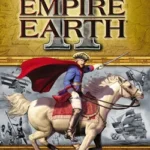
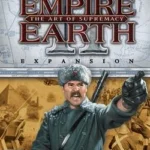
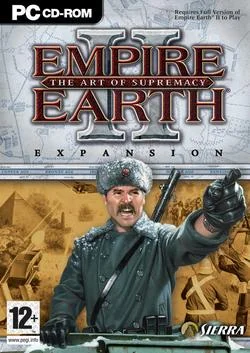
Empire Earth II: The Art of Supremacy is the massive 2006 expansion pack to Mad Doc Software’s highly complex historical RTS. Released less than a year after the critically acclaimed base game, this expansion didn’t attempt to rewrite the core rules of EE2’s “Territory System” or automated citizen management. Instead, it focused entirely on drastically expanding the game’s geographical and historical footprint—most notably by introducing the African continent to the franchise.
While expansions for traditional historical strategy games tend to play it safe, The Art of Supremacy walked a fascinating line between classic European historical warfare and near-future, corporate sci-fi.
The New Civilizations and African Region
The expansion added four brand-new civilizations to the roster, split evenly between traditional European heavyweights and a brand-new cultural region:
- The Western additions: France and Russia were formally added, bringing their iconic military doctrines (like Napoleonic infantry and grueling winter survival tactics) to the existing European theater.
- The African region: For the first time, the franchise introduced an African tech tree, bringing the Zulu and the Maasai into the fold. This allowed players to experience entirely new architectural styles and military units rarely seen in mainstream historical strategy games.
The Three New Campaigns
The single-player component added three new sweeping campaigns, spanning from antiquity all the way into a corporate-dystopian future:
- The Egyptian Campaign (Ancient Era): Set between 2183 and 2152 BC, you play as a trusted general to the Pharaoh. The campaign focuses on unifying the region by crushing bandit tribes, eradicating rogue religious cults, and repelling massive foreign invasions.
- The Russian Campaign (Napoleonic Era): A gritty, grueling campaign set from 1805 to 1813. You follow Tsar Alexander I as he desperately attempts to repel Napoleon Bonaparte’s massive invasion force. The missions heavily encourage players to utilize the infamous “scorched earth” strategy, starving out the French army in the bitter Russian winter.
- The Maasai Campaign (Near-Future): This is where Mad Doc Software flexed their sci-fi muscles. Set in the summer of 2037, the campaign follows the Maasai tribe in a futuristic Kenya. You must fight against massive, heavily armed multinational corporations that are attempting to steal a newly discovered, highly valuable energy resource, ultimately turning Africa into a dominant global superpower.
Deepened Mechanics and Multiplayer Overhauls
Beyond the new units and campaigns, The Art of Supremacy introduced several highly innovative mechanics designed to shake up skirmishes and multiplayer:
- Native Tribes and Assimilation: Maps now featured independent, neutral native tribes (like the Iroquois or Olmec). Rather than just ignoring them, players had to make a choice: you could go to war and wipe them out, or peacefully ally with and assimilate them. Assimilation granted unique, powerful civilization bonuses, such as faster infantry production or accelerated population growth.
- Custom Civilizations: If the massive roster of nations wasn’t enough, the expansion added a “Civilization Editor.” This allowed players to build their own custom empires from scratch by mixing and matching specific tech tree bonuses to perfectly fit their unique playstyle.
- The Fealty System: A brilliant, medieval-inspired mechanic designed to fix the problem of multiplayer players instantly quitting when they started losing. If you were being crushed, you could offer your “Fealty” to the winning player, essentially becoming their vassal. You gave up some autonomy and resources, but were allowed to stay in the game and fight as their underling.
- Tug-of-War Mode: A massive new multiplayer mode that spread a single match across three to nine interconnected maps. Players fought in an episodic push-and-pull, attempting to drive the enemy back map-by-map until they finally conquered their opponent’s homeland.
- Persistent Heroes: Standard soldiers who secured enough kills on the battlefield could organically promote to Hero status. In the campaign, these highly leveled veteran heroes could carry over from one mission to the next.
Development and Legacy
Released in February 2006, The Art of Supremacy received a somewhat mixed but generally positive reception. Critics loved the addition of the African civilizations and the wildly creative near-future Maasai campaign, but felt that adding France and Russia—and focusing on the highly treaded Napoleonic Wars—was a bit too “safe” for an expansion pack.
However, the mechanical additions like Native Tribes and Tug-of-War multiplayer heavily deepened an already incredibly deep game. Today, there is no need to track down the expansion separately; it is completely integrated into the Empire Earth II: Gold Edition, preserving the absolute peak of the franchise for modern Windows systems via GOG.com.
Key Features:
- The African Region — Command the Zulu and Maasai civilizations, introducing brand-new architectural styles and units to the franchise.
- Custom Civilizations — Use the new editor to design your ultimate empire, hand-picking technological bonuses to perfectly match your macro-strategy.
- Assimilate Native Tribes — Interact with neutral factions on the map, forging alliances to absorb their unique economic and military buffs.
- Tug-of-War Warfare — Wage massive, multi-tiered skirmishes that stretch across several interconnected maps.
- The Complete Package — Available today on modern digital storefronts as part of the definitive Empire Earth II: Gold Edition.