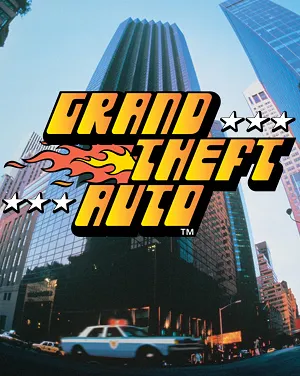
Grand Theft Auto
 Game Boy Color
 PC
PC PS 1
PS 1 Rockstar Games
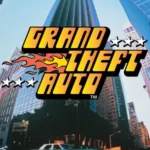
Grand Theft Auto is a 1997 open-world action-adventure game developed by the Scottish studio DMA Design (the company that would eventually become the legendary Rockstar North) and published by BMG Interactive. Released originally for MS-DOS and Windows PC in late 1997 (and later ported to the PlayStation and Game Boy Color), it is the chaotic, highly controversial, and deeply influential genesis of one of the most successful entertainment properties in human history.
Core Concept and Story
The narrative is practically nonexistent, serving purely as an excuse for unhinged arcade destruction. You choose one of eight silent avatars (though they all play exactly the same) and step into the shoes of a low-level criminal looking to make a name for themselves.
The game is famously split across three distinct, fictionalized American cities that would go on to define the franchise’s entire legacy: Liberty City (modeled after New York), San Andreas (which was modeled solely after San Francisco in this original iteration, rather than a whole state), and Vice City (Miami). Your singular goal is to amass a specific, massive target amount of money (points) to “beat” the level and unlock the next city.
Gameplay and Features
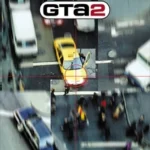
Viewed from a strict top-down, 2D “bird’s-eye” perspective, the original GTA introduced the fundamental sandbox mechanics that the series is still built upon today:
- Total Freedom: Unlike the linear, tightly controlled arcade games of the 90s, you were dropped into a sprawling, living city and could do whatever you wanted. You could patiently follow the rules of traffic, or you could hijack a school bus, run over a line of pedestrians, and start a massive shootout with the local police.
- Payphone Missions: To earn the massive amounts of money required to progress, you answered ringing payphones scattered across the city to take jobs from local crime bosses. These missions ranged from basic getaway driving to assassinations, bank robberies, and bomb disposals.
- The Radio Stations: Even in 1997, DMA Design understood the importance of atmosphere. Stealing a car automatically tuned the radio to one of several stations, featuring original, era-appropriate music spanning hip-hop, country, pop, and techno, giving the game a distinct, cynical personality.
- Kill Frenzies: Hidden across the map in obscure crates were “Kill Frenzies” (which would later be renamed Rampages in the 3D era). These timed challenges tasked you with causing as much chaotic destruction as possible with a specific weapon, like a flamethrower or a rocket launcher.
Reception and The “Bad Press” Strategy
Upon its release, the original Grand Theft Auto received “Mixed” reviews from traditional gaming critics. Many reviewers complained about the crude, heavily pixelated graphics, the unforgiving lack of mid-level save points, and the incredibly slippery, difficult-to-master driving controls.
However, the game became a colossal commercial success thanks to a brilliant, highly deliberate marketing strategy. The publishers famously hired infamous British publicist Max Clifford to intentionally generate moral outrage among politicians and the mainstream media regarding the game’s violence and rewarding of criminal behavior. The resulting pearl-clutching, tabloid headlines, and calls for the game to be banned acted as the ultimate “forbidden fruit” marketing campaign, propelling Grand Theft Auto into a massive, multi-million-selling hit that teenagers everywhere absolutely had to play.
Quick Note
Grand Theft Auto is the messy, brilliant, and violently controversial spark that ignited an empire.
In short: Its top-down camera, brutal lack of saving, and slippery driving make it quite difficult to casually go back to today. But if you want to see exactly where the DNA of carjacking, police chases, satirical radio stations, and open-world freedom began, it is a fascinating and undeniably essential piece of video game history.
Grand Theft Auto news
More news
Fable Dev Welcomes 2027 Delay to Sidestep a Crowded Release Window

GTA 6 Is The Most Visually Advanced Game Ever, But 30FPS Is The Cost

GTA 6 Carjacking Requires Tools and Progression to Unlock Cars

GTA 6 Map Is Three Times Larger Than Red Dead Redemption 2