Grand Theft Auto: Chinatown Wars
 93
★ /10
93
★ /10
 Android,
  iOS (iPhone/iPad),
  Nintendo DS,
  PSP
PSP
 Rockstar Games
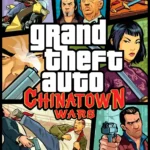
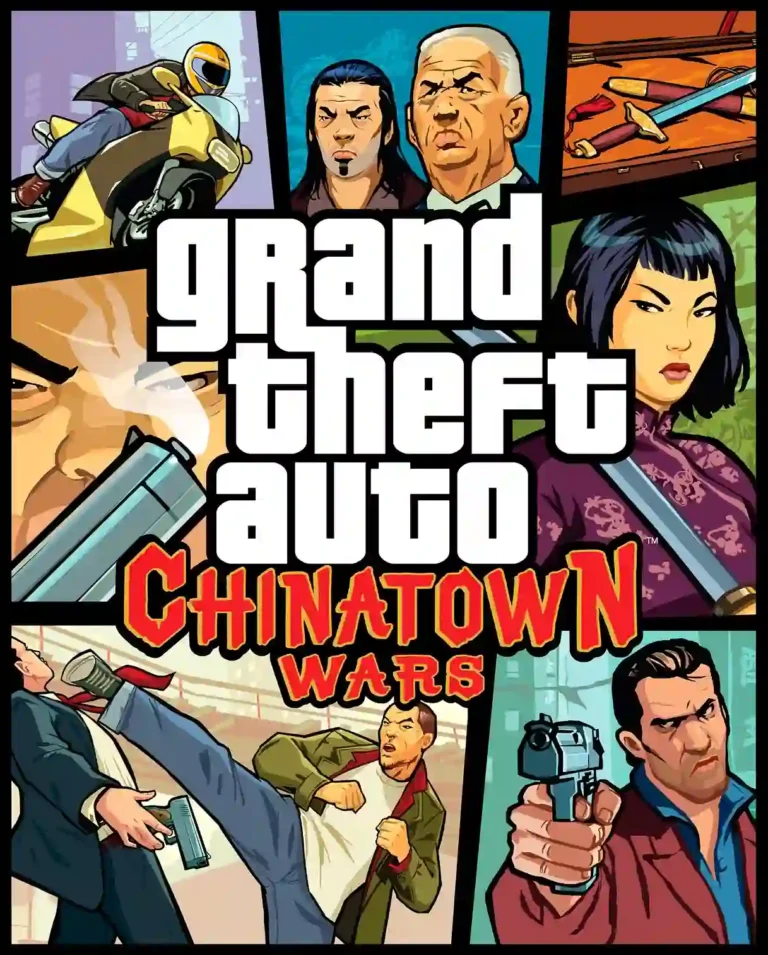
Grand Theft Auto: Chinatown Wars is a 2009 open-world action-adventure game developed by Rockstar Leeds in collaboration with Rockstar North, and published by Rockstar Games. Originally released in March 2009 as a highly ambitious exclusive for the Nintendo DS (and later ported to the PSP, iOS, and Android), it represents a fascinating, critically acclaimed detour for the franchise. It successfully blended the classic, top-down arcade perspective of the original 1990s games with the modern, 3D world-building of the “HD Era.”
Core Concept and Story
Set in a scaled-down, cel-shaded version of the exact same Liberty City map featured in 2008’s massive Grand Theft Auto IV (excluding the island of Alderney), the narrative dives deep into the politics and betrayals of the Liberty City Triads.
You play as Huang Lee, the spoiled, arrogant, and highly sarcastic twenty-five-year-old son of a recently murdered Triad boss. Huang arrives in Liberty City to deliver his family’s sacred heirloom—a supposedly ancient sword known as “Yu Jian”—to his power-hungry uncle, Wu “Kenny” Lee, to ensure their family retains control of the syndicate.
However, within minutes of landing at the airport, Huang is ambushed, shot, robbed of the sword, and thrown into the ocean to drown in the back of a sinking car. After escaping, Huang is forced to start from the absolute bottom, violently navigating rival gang factions, corrupt FIB agents, and his own inept uncle to recover the sword and avenge his father’s death.
Gameplay and Features
Chinatown Wars fundamentally redesigned the GTA formula to take full advantage of the Nintendo DS’s unique dual-screen and touchscreen hardware:
- The Isometric 3D World: The game returned to a top-down “bird’s-eye” camera angle, but the entire world was rendered in full 3D with a striking, comic-book-inspired cel-shaded art style. Players could freely rotate the camera 360 degrees to navigate the alleys and overpasses of Liberty City.
- The Drug Economy: This was the game’s most defining, controversial, and highly addictive mechanic. Instead of making money purely through missions, Huang acts as a street-level narcotics trafficker. You use your PDA to monitor a massive, fluctuating stock market of illicit drugs (heroin, cocaine, ecstasy, weed, etc.). The core loop involves driving across the city to buy drugs at rock-bottom prices from desperate dealers and selling them to rival gangs during “market spikes” to make millions.
- Touchscreen Mini-Games: Rockstar fully embraced the DS stylus (and later, mobile touchscreens). The game is filled with highly tactile, interactive mini-games. You have to literally tap the screen to smash the glass of a sinking car, physically twist the stylus to hotwire stolen vehicles, assemble sniper rifles piece-by-piece, and use the touchscreen to pump gas into glass bottles at gas stations to craft Molotov cocktails.
- Cop Takedowns: Escaping the police was drastically altered. Instead of just driving out of a red circle or finding a “Pay ‘n’ Spray,” Chinatown Wars actively encouraged vehicular combat. To lower your Wanted Level, you had to aggressively ram and destroy pursuing police cruisers, making getaways feel incredibly destructive and chaotic.
Reception and The Sales Irony
Grand Theft Auto: Chinatown Wars was met with absolutely staggering, universal critical acclaim upon release. Reviewers heralded it as a masterpiece of handheld game design, praising the deep drug-trading economy and the incredibly clever use of the touchscreen. To this day, it remains the highest-rated Nintendo DS game of all time on Metacritic.
However, it suffered from a massive, highly ironic commercial problem at launch: it was an ultra-violent, M-rated, drug-dealing simulator released on a console whose demographic primarily consisted of young children playing Pokémon and Mario Kart. Initial sales on the DS were notoriously poor. It wasn’t until Rockstar ported the game to the PSP and eventually to iOS/Android smartphones (where the touchscreen mechanics translated perfectly) that the game finally found the massive, dedicated audience it deserved.
Quick Note
Grand Theft Auto: Chinatown Wars is a brilliant, pocket-sized masterpiece that expertly bridges the gap between classic arcade GTA and the modern era.
In short: It may lack the massive, cinematic cutscenes and third-person shooting of its console siblings, but its incredibly satisfying drug-trading economy, clever touchscreen mechanics, and sharp, sarcastic writing make it one of the most mechanically deep and purely fun entries in the entire franchise.
Grand Theft Auto news
More news
Dan Houser Is Deliberately Skipping GTA 6 Gameplay Coverage

GTA 6 Reveals Map Size, Weather, and 170+ Animal Species
Take-Two Removing Leaked GTA 5 DLC and GTA 6 Map Content

Canceled GTA 5 DLC and Early GTA 6 Map Leak Online