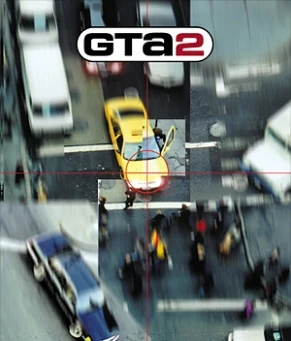
Grand Theft Auto 2
 Dreamcast,
  Game Boy Color,
  PC,
PC,  PS 1
PS 1
 ak tronic Software & Services GmbH,
  Buka,
Buka,  Rockstar Games, Take-Two Interactive Software, ZOO
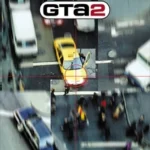
Grand Theft Auto 2 is a 1999 open-world action-adventure game developed by DMA Design (which would later become the legendary Rockstar North) and published by Rockstar Games. Released for the PC, PlayStation, Dreamcast, and Game Boy Color, it is the second mainline installment in the colossal GTA franchise and the final mainline game in the series to utilize the classic top-down, 2D perspective before GTA III revolutionized the 3D open-world genre.
Core Concept and Story
Unlike the grounded, contemporary settings of later entries, GTA 2 takes place in a distinctly retro-futuristic, cyberpunk-tinged metropolis known simply as “Anywhere City.”
You play as a ruthless, small-time thug named Claude Speed (who is entirely distinct from the silent protagonist of GTA III, despite sharing a first name). The narrative is incredibly thin, serving mostly as a sandbox framework. Claude’s singular goal is to claw his way to the top of the criminal underworld by playing the city’s various ruthless syndicates against one another. To do this, he must survive across three distinct sectors of the city: The Downtown District, The Residential District, and The Industrial District.
Gameplay and Features
While it retained the car-jacking and pedestrian-running DNA of the 1997 original, GTA 2 introduced several mechanics that vastly deepened the sandbox:
- The Respect System: This was the game’s defining, most innovative feature. Each district is controlled by three warring syndicates (including factions like the mighty Zaibatsu Corporation, the Yakuza, the Loonies, the SRS Scientists, and the Russian Mafia). To get jobs from a specific gang, you have to earn their “Respect” by assassinating members of their rivals. However, if your respect drops too low into the negative, that gang will actively hunt you down the second you step into their turf.
- Dynamic Law Enforcement: GTA 2 introduced a much more complex “Wanted Level” system. While the first game just sent basic police cars after you, causing enough chaos here eventually escalates the response to SWAT teams, heavily armed Special Agents, and finally, the military rolling in with literal tanks.
- “Jesus Saves”: In one of the most infamously harsh mechanics of the era, you could not simply save your game from a pause menu. You had to physically drive to a church marked with a glowing “Jesus Saves” sign and pay a massive fee of $50,000 just to save your progress.
- Upgraded Tech and Lighting: While still a top-down game, the PC and Dreamcast versions featured a vastly improved engine. It boasted full 3D environments viewed from above and introduced a highly atmospheric dynamic lighting system, making the headlights, neon signs, and muzzle flashes beautifully pop against the gritty, perpetually twilight streets of Anywhere City.
Reception and The Top-Down Finale
Upon its release, Grand Theft Auto 2 received “Mixed” to “Positive” reviews from critics.
Reviewers heavily praised the dynamic gang Respect System, noting that it made the city feel like a living, breathing warzone where your actions actually had immediate, violent consequences. However, it also drew significant criticism for playing it slightly too safe mechanically. In 1999, the gaming industry was rapidly pivoting toward fully 3D action games, and many critics felt that sticking strictly to the 2D, top-down perspective made the game feel a bit dated right out of the box.
Quick Note
Grand Theft Auto 2 is a fascinating, retro-futuristic bridge between the franchise’s arcade origins and its modern blockbuster identity.
In short: The top-down controls can feel incredibly slippery by today’s standards, and the lack of an in-game map makes navigating Anywhere City a serious challenge. But if you want to experience the brilliant, chaotic gang-warfare mechanics that laid the groundwork for Rockstar’s empire, it remains a wildly fun, historically essential piece of late-90s gaming.
Grand Theft Auto news
More news
Dan Houser Is Deliberately Skipping GTA 6 Gameplay Coverage

GTA 6 Reveals Map Size, Weather, and 170+ Animal Species
Take-Two Removing Leaked GTA 5 DLC and GTA 6 Map Content

Canceled GTA 5 DLC and Early GTA 6 Map Leak Online