Nemesis of the Roman Empire
 74
★ /10
74
★ /10
 PC
PC
 Russobit-m
Where to buy

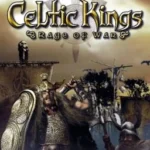
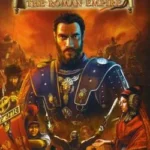
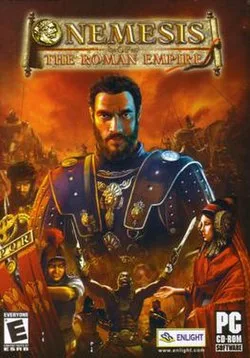
Nemesis of the Roman Empire (released in European territories as Celtic Kings: The Punic Wars, and in Spain and Italy as Imperivm II: La Conquista de Hispania and Imperivm II: Le guerre puniche) is a real-time strategy (RTS) and tactical role-playing video game developed by the Bulgarian studio Haemimont Games and published by Enlight Software and FX Interactive. Released between late 2003 and March 2004 for Microsoft Windows, it is the direct standalone sequel to the 2002 strategy title Celtic Kings: Rage of War.
Set during the ancient Punic Wars and the subsequent Roman conquest of the Iberian Peninsula, the game retains the unique, macro-economic-free RTS-RPG hybrid layout defined by its predecessor. Rather than engaging in traditional base design, players oversee decentralized territorial networks, direct military pack logistics, and level up hero commanders to lead mass formations of historical units.
Technical Specifications
| Attribute | Details |
| Developer | Haemimont Games |
| Publisher(s) | Enlight Software (NA), FX Interactive (Italy/Spain) |
| Engine | Custom 2D Isometric Engine |
| Platform | Microsoft Windows |
| Release Date(s) | • EU: November 27, 2003 • NA: March 25, 2004 |
| Genre(s) | Real-time strategy, Role-playing game |
| Modes | Single-player, Multiplayer |
Gameplay Mechanics: The Strategic Blueprint
Nemesis of the Roman Empire deliberately avoids the traditional RTS mechanics of resource gathering via stationary peons and building custom infrastructure layers. All physical bases—such as capital Strongholds, farming Villages, military Outposts, and Shipyards—are permanently hardcoded into the map geography.
The Food Matrix and Decentralized Logistics
The strategic meta-game maps out two independent resource pools: Gold and Food. Gold is generated through real-time population taxation inside fortified Strongholds and is spent to draft armies and purchase technology tiers. Food is farmed inside rural Villages and is required to continuously sustain the physical health parameters of military columns out in the field.
Because resources are tied directly to the building that extracted them, players must use Pack Mules and transport ships to manually ferry assets between zones. Armies operating away from bases carry limited food reserves in their inventories; if these supplies drop to absolute zero, the units undergo starvation, which caps their physical health bars to minimum thresholds and renders them highly fragile in real-time combat.
Structural Loyalty and Conquest
To capture a neutral or enemy outpost, players march an offensive force directly up to the target’s walls to initiate a siege loop. Structures possess an internal Loyalty Rating that steadily decays when hostile forces outnumber the active garrison defenders.
Once loyalty drops to zero, the base surrenders, automatically flipping its resource vaults and operational alignment to the conqueror. Stationary Catapults can be manually assembled on the field by groups of ten infantry units to strike down fortified gates.
Hero Command Circles
Combat efficiency relies heavily on the Hero System. Heroes are commander units that gather personal experience, equipment items, and mystical artifacts from ancient map shrines to unleash localized magical perks.
A single Hero can attach up to 50 standard soldiers directly to their personal command circle. Units bound to a Hero move in cohesive military formations, match travel velocities, and inherit a percentage of the leader’s experience level as a direct combat power modifier.
Campaigns and Narrative Layout
The single-player component features two sprawling, distinct narrative historical campaigns that function as an intellectual political thriller tracing the ancient Mediterranean power struggle:
- The Roman Campaign: Tracks the expansion of the Roman legions as they launch ambitious trans-continental offensives into North Africa with explicit orders to permanently dismantle the growing economic might of Carthage.
- The Carthaginian Campaign: Focuses on the military tactical genius of Hannibal Barca. The narrative chronicles Hannibal’s retaliatory march over the Alps, utilizing elephant corps and guerrilla tactics to bring the Roman Republic to its knees.
Playable Factions
The game doubles the faction asymmetry of the original title, expanding the playable civilizations from two to four unique historical cultures:
| Faction Civilization | Core Architectural Specialty | Iconic Field Unit Class | Tactical Faction Trait |
| The Romans | Advanced military training pipelines and high structural fortification upgrades. | Praetorians, Hastati, and Velites | High individual defense ratings and disciplined geometric micro-formations. |
| The Gauls | High baseline population acceleration metrics and cheap manpower waves. | Druids, Axemen, and Women Warriors | High-velocity sprint speeds and health-regeneration loops via mystical rituals. |
| The Carthaginians | Wealth generation, mercenary utilization, and specialized beast mastery. | War Elephants, Sacred Band, and Shamans | High single-target health metrics and powerful heavy cavalry shock tactics. |
| The Iberians | Guerilla warfare, high ambush line-of-sight metrics, and combat evasion. | Guerrilleros, Defenders, and Enchantresses | Exceptional terrain camouflage and high passive health-leeching capabilities mid-combat. |
Reception and Modern Preservation (2026)
Upon its initial launch, Nemesis of the Roman Empire received generally favorable reviews from strategy publications. Review aggregator Metacritic calculated a composite score of 74/100, while mainstream outlets like IGN and GameSpot awarded the title an 8.0/10.
Critics heavily praised the game for its unique focus on supply-line management and hero tactics over mundane peon clicking, noting that the inclusion of the Carthaginians and Iberians added significant variety over the original release. It achieved immense commercial success in Southern Europe, earning a “Platinum” sales award from aDeSe for tracking over 80,000 retail conversions within its first 12 months in Spain.
Modern Preservation
As of 2026, Nemesis of the Roman Empire is natively preserved as a retro strategy classic distributed digitally on Steam. The modern client distribution updates the old 2D isometric executable launcher to run cleanly under contemporary 64-bit multi-core desktop architectures on Windows 10 and Windows 11 completely out-of-the-box.
The updated codebase addresses legacy DirectDraw rendering bugs, allowing the detailed historical battles to scale natively into sharp 1080p and 1440p widescreen desktop display monitors without interface stretching, keeping the ancient Punic Wars accessible for strategy historians.