Imperium Romanum
 63
★ /10
63
★ /10
 PC
PC


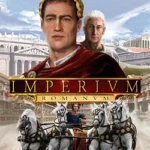
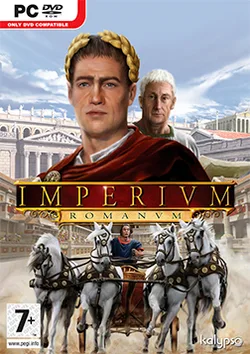
Imperium Romanum is a 3D city-building and economic simulation video game developed by the Bulgarian studio Haemimont Games and published by Kalypso Media. Released in February 2008 for Microsoft Windows, the title is the direct sequel to the studio’s 2006 city-builder Glory of the Roman Empire.
In Southern Europe (specifically Spain and Italy), the game was published by FX Interactive under the title Imperivm: Civitas II to directly align with the commercial brand identity of their historically successful Imperivm strategy franchise.
Tasking the player with acting as a provincial governor (Praetor) across various historical settlements, the game completely overhauls its predecessor’s graphics engine and mechanics, introducing a randomized objective system, dynamic slave mechanics, and grand architectural Roman monuments like the Circus Maximus and the Colosseum.
Technical Specifications
| Attribute | Details |
| Developer | Haemimont Games |
| Publisher(s) | Kalypso Media, SouthPeak Games (NA), FX Interactive (Italy/Spain) |
| Engine | Upgraded 3D Engine (Featuring full 360-degree rotation and smooth scaling) |
| Platform | Microsoft Windows |
| Release Date(s) | • EU: February 22, 2008 • NA: March 11, 2008 • Gold Edition: October 30, 2008 |
| Genre(s) | City-building, Real-time strategy |
| Mode | Single-player |
Gameplay Mechanics: The Civil Blueprint
Unlike traditional, rigid grid layout requirements seen in the classic Caesar series, Imperium Romanum takes an accessible approach to civic engineering, replacing wandering pathfinding agents with passive area-of-effect zoning.
The Tablet of Fate System
The defining structure of the game’s scenarios is the Tablet System. Rather than following a linear list of static win-conditions from the start of a map, players control the operational pace of their mission by actively drawing and resolving “Tablets”. Players can manage up to three tablets simultaneously.
Tablets introduce mandatory primary objectives, optional secondary tasks, historically accurate text facts, or sudden natural curveballs—such as devastating earthquakes, disease plagues, or an unexpected tidal wave that physically flattens coastal infrastructure.
Circle of Effect (Radius) Logistics
The simulation moves away from forcing citizens to strictly walk along road paths to transport commodities. Instead, all buildings emit a visible, radial boundary known as the “Circle of Effect”.
Employment and domestic needs are entirely driven by proximity geometry: if a civilian home sits within the overlapping radial boundary of a clay pit or weapon smithy, the inhabitants automatically secure jobs there. Likewise, citizens fulfill personal needs like food, drink, and religion strictly if a market, tavern, or temple sits within their household’s radius.
Slaves and the Poverty Matrix
The economic framework balances production through class structures and automated workforce distribution:
- Slave Labor: Citizens will not execute manual material transport or building construction. All physical labor is handled entirely by Slaves, which are purchased using gold currency. Slaves must be housed in dedicated slave shelters. If the city’s workload escalates severely or slave shelters are neglected, slaves will initiate a violent Slave Revolt, marching through the streets to set fire to industrial blocks.
- The Crime Cycle: Wealth distribution must be carefully managed. If severe, localized poverty is allowed to fester within residential zones, citizens turn to a life of crime. Crime leads to structural desertion, theft of storehouse goods, and drops global municipal efficiency.
- Military Skirmishes: Border defense requires players to erect stone walls, fortify gates, and build barracks to draft companies of Hastati, Archers, and Cavalry to intercept incoming barbarian warbands before they pillage central stockpiles.
Game Modes
- History Mode: Features 16 distinct historical missions tracking chronological developments across the Roman Empire. Players manage cities facing unique localized resource limitations, spanning from the dense layout of Alexandria to the volcanic threat landscape of Pompeii.
- Rome Mode: Drops the player into a pre-assembled, grand simulation of Rome. The focus shifts toward high-end municipal macro-management, requiring the player to successfully maintain public order while funding the construction of massive, global-buffing Wonders of the World (such as the Circus Maximus or the Colosseum).
- Sandbox Scenarios: Open-ended free-build configurations granting absolute structural freedom across diverse maps without forced objectives or time constraints.
Emperor Expansion Add-on
In the summer of 2008, Haemimont and Kalypso deployed an official expansion pack titled Imperium Romanum: Emperor Expansion. This add-on significantly augmented the base game’s depth by introducing several mechanics:
- 16 Brand-New Missions: Divided across four dedicated campaigns mapping out key historical expansions: Conquest of Britannia, Wilds of Germania, Colonization of Africa, and Caesar’s Civil War.
- Patron Deities: Introduced a religious customization system. When upgrading a city’s Forum structure for the first time, players select a specific patron god (such as Jupiter or Venus). The chosen deity grants distinct, city-wide passive economic or military modifiers to alter the strategy of that specific map.
- Randomized Tablets: The specialized Londinium mission introduced randomized objective tablets, changing tasks with every consecutive playthrough to increase replay longevity.
Reception and Modern Preservation (2026)
Imperium Romanum received generally mixed to positive reviews from strategy critics upon launch, tracking a composite score of 63/100 on review aggregator Metacritic. Outlets like IGN and GameSpot praised the fluid visual fidelity of the 3D assets and lauded the user-friendly nature of the Circle of Effect logistics system. However, reviewers simultaneously noted that the military combat mechanics felt overly shallow and weapon units lacked tactical formation depth compared to dedicated RTS titles.
Steam Digital Standard
Following its retail lifecycle, Kalypso compiled the entire codebase into the Imperium Romanum Gold Edition, which natively packages the base game, the Emperor Expansion, and automated optimization updates into a single digital installer.
As of 2026, the Gold Edition remains preserved and active via Steam. While the 2008 application launcher can trigger graphical stalls or resolution errors on modern multi-core operating architectures out-of-the-box, contemporary strategy historians utilize modern Direct3D wrappers (such as dgVoodoo2) to safely run the software under Windows 10 and Windows 11. This community adjustment allows the detailed Roman cities to scale cleanly into native widescreen display monitors (including 1080p, 1440p, and 4K formats) with steady frame rates.