Glory of the Roman Empire
 66
★ /10
66
★ /10
 PC
PC
 CDV, Enlight Software, FX Interactive
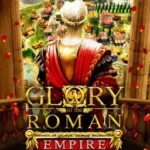
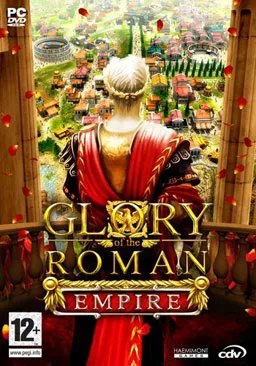
Glory of the Roman Empire is a 3D city-building and economic simulation video game developed by the Bulgarian studio Haemimont Games and co-published by CDV Software Entertainment and Enlight Interactive. Released in June 2006 for Microsoft Windows, the title tasks players with acting as a Roman provincial governor, guiding small, isolated settlements into massive, prosperous architectural communities.
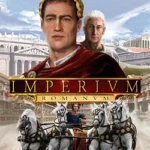
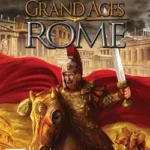
The game serves as the mechanical progenitor to Haemimont’s subsequent ancient Roman city-building titles, directly laying the framework for 2008’s Imperium Romanum and 2009’s Grand Ages: Rome. In Spain and Italy, the game was published by FX Interactive under the title Imperium Civitas to directly capitalize on the massive commercial success of Haemimont’s previous Imperivm real-time tactics franchise in those regions.
Technical Specifications
| Attribute | Details |
|---|---|
| Developer | Haemimont Games |
| Publisher(s) | CDV Software Entertainment, Enlight Interactive, FX Interactive |
| Engine | Custom 3D Engine (Featuring full 360-degree rotation and zoom parameters) |
| Platform | Microsoft Windows |
| Release Date | • EU: June 16, 2006 • NA: June 28, 2006 |
| Genre(s) | City-building, Economic simulation |
| Mode | Single-player |
Core Gameplay & Mechanics
Glory of the Roman Empire streamlines several traditional, micro-intensive structural hurdles frequently found in classic city builders like Caesar III, adopting a more accessible, pick-up-and-play format. Players direct the design layout of municipal structures, coordinate production lines, and oversee the direct physical and psychological welfare of their citizens.
The Slave and Raw Material Economy
The game deviates sharply from genre norms by largely removing a centralized monetary tax economy for standard structural expansion:
- Construction Logic: Base structures, public utilities, and roads do not require a constant expenditure of gold currency to deploy. Instead, buildings are erected and maintained entirely using physical raw commodities—such as Timber, Stone, and Clay—extracted locally or sourced via open trade routes.
- The Utility of Gold: Physical Gold is present but functions under an insulated loop. It is spent almost exclusively to purchase Slaves. Slaves form the foundational logistical spine of the colony, handling all grunt construction labor, structural clearing duties, and resource hauling.
- The Threat of Revolt: Players must keep a sharp eye on their total slave counts. If the collective workload becomes too severe, or if food supplies falter, slaves can launch a massive Spartacus-style rebellion, forcefully setting fire to civilian districts and paralyzing the infrastructure.
Radius-Based Logistics and Divided Labor
The simulation tracks individual character behaviors across a full 3D layout. Logistics and employment are entirely dictated by a “Circle of Effect” (Radius) Matrix rather than requiring citizens to navigate direct road coordinates. Homes and industrial structures emit an invisible radial boundary; citizens will automatically secure employment, fulfill grocery requirements (purchasing bread or sausages), and seek religious comfort at temples strictly within their home radius.
Notably, the game does not enforce negative localized appeal penalties. Players can construct residential insulae or luxury villas directly adjacent to highly polluted pig farms, clay pits, or butcher shops without triggering lower citizen happiness metrics.
Furthermore, the domestic workforce operates on a strict gender-divided labor pipeline. Male citizens are strictly prioritized for heavy agricultural, mining, and military manufacturing work, while female citizens automatically handle service-oriented structures, including working at neighborhood bakeries, managing public baths, and operating local taverns.
Basic Real-Time Combat
While primarily focused on architectural civil growth, the title introduces simplified real-time strategy (RTS) elements to simulate barbarian border threats. Players can raise fortified stone walls, deploy defensive watchtowers, and construct specialized military outposts (Barracks and Stunner Stables) to draft distinct companies of Soldiers, Archers, and Cavalry. Combat tracking is basic, requiring players to route their companies using simple Attack, Stop, or Retreat command vectors to intercept invading barbarian warbands before they can pillage inner civilian storehouses.
Game Modes & Campaigns
The single-player landscape partitions its content across three independent operational variants, moving away from explicit historical linear timelines to focus on specific municipal problem-solving scenarios:
- Historical Campaign Mode: Comprises a fast-paced sequence of missions across ten prominent regions of the ancient Roman Empire. Each colony features localized environmental challenges, ranging from handling localized plague outbreaks to managing extreme fire hazards or repelling aggressive barbarian invasions. Missions occur across the following historical locations:
- Florentia (5 missions)
- Syracusae (4 missions)
- Toletum, Kartagena, Londinium, Colonia Claudia (3 missions apiece)
- Massilia, Mediolanum, Lugdunum (2 missions apiece)
- Pompeii (1 mission)
- Challenge Mode: Tasks players with executing a dynamic gauntlet where they must satisfy random, changing municipal goals across four separate cities under a strict running timer. High scores could historically be exported to online community “walls of fame” registries.
- Sandbox Free-Build Mode: Grants players absolute creative freedom with zero forced economic restrictions, military scripts, or time limits. Sandbox operations can be deployed across unique terrain profiles, including Mountain Paradise, Desert, Highlander, Across the River, Mamertum, Halkedonia, and Rome.
Reception and Preservation Status (2026)
Upon its launch, Glory of the Roman Empire received mixed or “average” reviews from video game critics, tracking a composite score of 69/100 on review aggregator Metacritic.
Strategy publications highly praised the accessible, stress-free pick-up-and-play format of the economy, noting that the absence of a financial currency bottom line allowed for rapid, satisfying city planning loops that casual players could master quickly. However, advanced real-time strategy purists heavily criticized the game’s overall simplicity. Reviewers from outlets like GameSpot noted that the lack of rigorous macroeconomic depth and identical visual assets across diverse buildings caused the mid-game loops to eventually feel repetitive and uninspired.
Current Archival Status
As of 2026, Glory of the Roman Empire is classified as classic legacy abandonware. Following the shifting publishing footprints of CDV Software, the original 2006 title has never received a native digital re-release on major PC platforms like Steam or GOG.com, remaining highly requested on community preservation wishlists.
While its direct mechanical successor, Imperium Romanum, is readily preserved and distributed digitally, players looking to run the original 2006 Glory client on modern Windows 10 and Windows 11 multi-core desktops must rely on physical CD-ROM installations paired with custom, community-maintained Direct3D API wrappers (such as dgVoodoo2) to address legacy rendering limitations, ensure proper camera pacing, and scale the early 3D engine elements into contemporary widescreen formats without crashes.