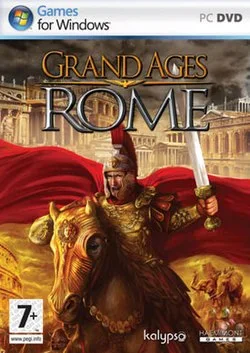
Grand Ages: Rome
 72
★ /10
72
★ /10
 PC
PC
Where to buy

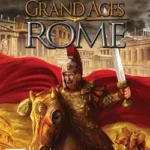
Grand Ages: Rome (originally developed under the working title Imperium Romanum 2) is a 3D city-building and real-time strategy video game developed by the Bulgarian studio Haemimont Games and published by Kalypso Media. Released in March 2009 for Microsoft Windows, the title is the direct sequel to the 2008 city-builder Imperium Romanum.
In Southern Europe (specifically Spain and Italy), the game was published by FX Interactive under the title Imperivm: Civitas III to directly integrate with the massive regional commercial success of Haemimont’s legacy Imperivm strategy franchise.
The game introduces major strategic and graphical updates to the series, implementing a modernized resource management system, family-aligned talent trees, and a branching narrative campaign that explores the political landscape of the late Roman Republic.
Technical Specifications
| Attribute | Details |
| Developer | Haemimont Games |
| Publisher(s) | Kalypso Media, FX Interactive (Italy/Spain), Viva Media (NA) |
| Engine | Custom 3D Engine (Featuring full 360-degree camera tracking and dynamic scaling) |
| Platform | Microsoft Windows |
| Release Date(s) | • EU: March 6, 2009 • NA: March 17, 2009 • Steam: March 20, 2009 |
| Genre(s) | City-building, Real-time strategy |
| Modes | Single-player, Multiplayer |
Gameplay Architecture: The Flow Economy
Grand Ages: Rome changes several physical material-hauling hurdles common to traditional city-builders by establishing a “Flow” Economy. Instead of requiring physical workers or cart-pushers to manually carry goods from an extraction site to a central warehouse, all raw and refined commodities (such as Wood, Bricks, Iron, Stone, and Marble) are stored in an invisible global pool. If a building’s production requirements are actively met, its output is instantly credited directly to the city’s shared bank.
Radius Logistics and Citizen Satisfaction
The baseline logistics network operates entirely on a “Circle of Effect” Radius Matrix. Structures do not strictly require complex road tracking to function; instead, they project a radial boundary across the map grid. The simulation divides the municipal workforce into three distinct social classes, each presenting escalating civic demands:
- Plebs: The foundational working class. They man base agricultural fields, lumber yards, and clay pits. Their core requirements are strictly confined to basic food varieties (Wheat, Pork) and basic housing (Insulae).
- Equites: The middle-class technicians and military personnel. They staff advanced manufacturing structures, tax offices, and military barracks. They require high-tier refined food items (Bread, Sausages) alongside neighborhood entertainment utilities like Odeums or Gladiator Arenas.
- Patricians: The elite noble class. They do not engage in physical labor, but their grand Patrician Villas generate massive, passive financial income for the treasury. They demand high-end luxuries, including wine, pristine religious temples, bathhouses, and dynamic colosseum programs.
If a residential household’s projected radius successfully overlaps with the required services, their satisfaction metrics increase. Conversely, neglecting these parameters crashes popularity ratings, triggering widespread civilian strikes and violent slave revolts that can paralyze city production.
The Five Noble Families
At the creation of a profile, the player designs a custom governor avatar and chooses a baseline alignment with one of five historic Roman noble families. Selecting a lineage shifts the strategic meta-game by granting unique permanent bonuses and unlocking a family-specific tech branch:
- The Julii: The primary military family. They significantly lower the recruitment costs and drafting times of infantry units while granting passive combat power modifiers to squads out in the field.
- The Flavii: The administrative and municipal lineage. They maximize the operational radius of financial structures, decrease the Denarii costs required to raise grand monuments, and boost tax generation yields.
- The Valerii: The diplomatic and maritime lineage. They optimize trade income derived from land-based posts and maritime ports, reduce trade route cooldowns, and lower the costs required to bribe or annex neutral camps.
- The Aemilii: The industrial and architectural lineage. They apply substantial velocity multipliers to agricultural growth loops and raw material refineries, enabling cities to scale infrastructure rapidly.
- The Lucii: The theological and populist lineage. They permanently elevate global citizen popularity ratings across all social classes, minimize the construction expenses of temples, and reduce the frequency of natural disasters.
Narrative and Campaign Framework
The 40-mission single-player campaign plays out like a political thriller set during the final decades of the Roman Republic, specifically capturing the power dynamics of the First Triumvirate. Following years of forced exile after the dictatorship of Sulla, the player’s character returns to Rome to rebuild their tarnished family name.
The narrative integrates historical milestones, tracing events from the massive slave uprising led by Spartacus to Julius Caesar’s historic crossing of the Rubicon. Players coordinate high-stakes tactical assignments under real historical figures, working alongside Marcus Tullius Cicero, Mark Antony, Pompey Magnus, and Marcus Licinius Crassus.
The campaign shifts into a definitive ideological choice: players must choose between backing the conservative Optimates faction under Pompey or aligning with the populist Populares legions led by Julius Caesar. This division branches the final act of the game, dictating whether players spend the endgame wiping out Caesar’s forces or leading a massive army to seize absolute imperial power over Rome.
The Reign of Augustus Expansion
In January 2010, Haemimont and Kalypso deployed a massive official expansion titled Grand Ages: Rome – The Reign of Augustus (released in Southern Europe as Imperivm Online). The expansion added major gameplay features:
- 12-Mission Augustus Campaign: A brand-new single-player narrative campaign tracking the birth of the Roman Empire under Emperor Augustus, introducing custom missions under historical figures like Marcus Agrippa, Drusus, and Tiberius.
- The Authority System: Integrated a secondary, active political currency called Authority. Generated via civic structures like the Senate, Authority functions like an active tactical spellbook; players can spend it to instantly extinguish spreading fires, forcefully fast-track scientific research nodes, or summon an emergency auxiliary infantry squad onto the map mid-combat.
- The Interconnected Road System: While roads were entirely cosmetic in the base game, the expansion turned them into a vital economic tool. Connecting residential blocks directly to major regional highway gates grants a significant passive production modifier to adjacent buildings while substantially increasing the movement speed of military squads.
- New Civil Structures: Introduced four game-altering buildings: The Senate (Authority tracking), The Tax Office (Denarii accumulation), The Odeum (Equites entertainment), and The Hospital (plague prevention and tactical troop healing loops).
Reception and Modern Preservation (2026)
Grand Ages: Rome received generally favorable reviews from mainstream strategy critics, tracking a composite score of 72/100 on review aggregator Metacritic. Publications highly praised the beautiful visual fidelity of the 3D environments and lauded the stress-free nature of the flow economy, finding it an innovative alternative to the tedious logistics of older city builders. Conversely, strategy purists noted that the real-time military combat felt overly simplified and lacked structural formation modifiers compared to dedicated RTS titles.
Current Architectural Preservation
Following its retail lifecycle, Kalypso compiled the entire codebase into the Grand Ages: Rome Gold Edition, which natively packages the base game, the Reign of Augustus expansion, and all add-on skirmish maps into a single unified client launcher.
As of 2026, the Gold Edition remains preserved and active across digital distribution platforms such as Steam and GOG.com. While running the 2009 executable file out-of-the-box on contemporary multi-core architectures can trigger desktop stalls and cursor offsets, modern strategy historians utilize the open-source dgVoodoo2 Direct3D graphics wrapper wrapper. This community wrapper safely re-routes legacy DirectX 9 calls into contemporary graphics pipelines, allowing the sprawling Roman cities to scale cleanly into native widescreen resolutions (including 1080p, 1440p, and 4K display monitors) with flawless frame-pacing.