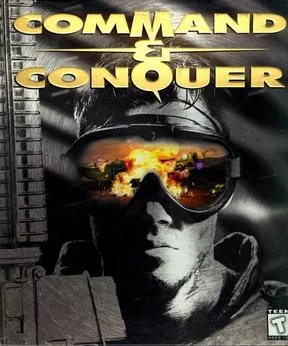
Command & Conquer
 94
★ /10
94
★ /10
 Amiga,
  Nintendo 64,
  PC,
PC,  PS 1,
PS 1,  Sega Saturn
 Westwood Studios
 Virgin Interactive Entertainment
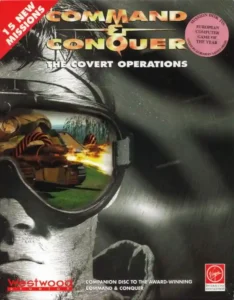
Command & Conquer (often retroactively referred to as Command & Conquer: Tiberian Dawn) is a 1995 real-time strategy (RTS) masterpiece developed by Westwood Studios and published by Virgin Interactive. If Dune II created the blueprint for the RTS genre, Command & Conquer was the game that perfected the formula, catapulting it into the mainstream and sparking a massive, global obsession with base-building warfare that would define PC gaming for the next decade.
The narrative abandons the high-fantasy and distant sci-fi of its predecessors in favor of a gritty, alternate-1990s geopolitical thriller. A mysterious meteorite crashes near the River Tiber in Italy, seeding the Earth with an extraterrestrial, highly toxic, yet infinitely energy-rich crystalline substance known as Tiberium. As the crystal rapidly spreads across the globe, consuming plant life and mutating the environment, two massive global superpowers emerge to fight an apocalyptic war over its control.
Gameplay
Command & Conquer took the clunky, archaic mechanics of early 90s strategy games and streamlined them into a lightning-fast, highly aggressive combat loop.
Key gameplay mechanics and massive historical innovations include:
- The “Drag-Box” Unit Selection: This was an absolute game-changer. Instead of clicking units one-by-one like in Dune II, C&C allowed players to click and drag a massive square over their troops, instantly grouping dozens of soldiers and tanks together to issue simultaneous move and attack orders.
- The Sidebar Interface: Westwood moved all the building and unit production menus to a permanent, streamlined sidebar on the right side of the screen. This allowed players to constantly queue up new tanks and infantry without ever having to look away from the battlefield.
- The Tiberium Economy: Spice was replaced by Tiberium. Players had to build Refineries and protect their slow, vulnerable Harvesters as they ventured out to suck up the glowing green crystals to fund the war effort.
- Multiplayer Warfare: While the campaign was legendary, C&C introduced robust local area network (LAN) and dial-up modem multiplayer. This birthed the modern competitive RTS scene, allowing up to four players to build bases and annihilate each other in real-time.
- Full-Motion Video (FMV): Between missions, the story was told through heavily stylized, live-action video briefings featuring real actors, green screens, and early CGI. This campy, incredibly entertaining storytelling method became the undisputed signature of the entire franchise.
The Factions
The game perfectly established the concept of highly asymmetrical warfare. The two factions didn’t just look different; they required entirely different tactical mindsets to play effectively:
- The Global Defense Initiative (GDI): The United Nations-backed, conventional global military force. GDI relies on overwhelming, heavily armored brute force. Their arsenal features medium tanks, massive Mammoth Tanks, Orca attack aircraft, and the devastating orbital Ion Cannon super-weapon.
- The Brotherhood of Nod: A shadowy, stateless, global terrorist network functioning as a religious cult, led by the enigmatic, messianic figure known only as Kane (played brilliantly by Joseph D. Kucan). Nod relies on speed, stealth, and guerrilla warfare. Their arsenal features fast attack buggies, cloaking Stealth Tanks, the iconic Obelisk of Light laser defense towers, and the apocalyptic Nuclear Missile strike.
Development and Legacy
Released in August 1995, Command & Conquer was an absolute cultural phenomenon. It was universally praised for its addictive pacing, stunning pre-rendered graphics, and unparalleled atmospheric presentation.
A massive part of the game’s identity was its legendary soundtrack, composed by Frank Klepacki. Blending heavy industrial metal, hip-hop beats, and electronic synth (with iconic tracks like Act on Instinct and Mechanical Man), it gave the game a pulsating, aggressive energy that perfectly matched the on-screen explosions.
The success of Tiberian Dawn birthed one of the most successful franchises in gaming history. It spawned direct sequels (Tiberian Sun, Command & Conquer 3), the wildly popular alternate-history spin-off series (Command & Conquer: Red Alert), and the modern-military Generals universe.
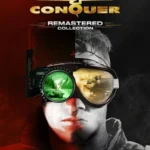
After years of the franchise sitting dormant, Electronic Arts partnered with Petroglyph Games (a studio composed of many original Westwood developers) to release the Command & Conquer Remastered Collection in 2020. This breathtakingly faithful remaster completely overhauled the 1995 2D graphics into crisp 4K, upscaled the original FMV cutscenes, and modernized the multiplayer backend, allowing a new generation to experience the game exactly as veteran players remember it.
Key Features:
- The RTS Pioneer — Play the genre-defining classic that streamlined base-building, introduced drag-box unit selection, and popularized multiplayer strategy gaming.
- GDI vs. Nod — Choose a side in the iconic Tiberium conflict, mastering either the heavy armor of the UN forces or the guerrilla stealth tactics of the Brotherhood.
- The Rise of Kane — Experience the campy, brilliant 90s FMV cutscenes that introduced the gaming world to one of its greatest, most enduring villains.
- Industrial Soundtrack — Wage war to the incredibly aggressive, iconic industrial-electronic soundtrack composed by Frank Klepacki.
- Flawlessly Remastered — Experience the 2020 PC Remastered Collection, featuring one-click toggling between the classic 1995 pixels and high-definition 4K visuals.
Release Platforms:
- MS-DOS (PC) — September 26, 1995
- Mac OS — 1996
- Sega Saturn / PlayStation 1 — 1996 / 1997
- Nintendo 64 — 1999 (Features 3D models instead of 2D sprites).
- Microsoft Windows (PC) — June 5, 2020 (As part of the Command & Conquer Remastered Collection via Steam/Origin).