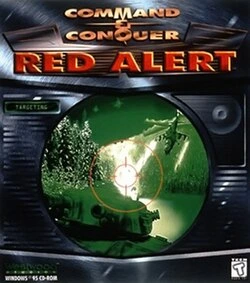
Command & Conquer: Red Alert
 90
★ /10
90
★ /10
 PC
PC PS 1
PS 1 Westwood Studios
 Virgin Interactive Entertainment
Where to buy

Command & Conquer: Red Alert is a 1996 real-time strategy (RTS) masterpiece developed by Westwood Studios and published by Virgin Interactive. Originally conceived as a simple expansion pack for the groundbreaking 1995 Tiberian Dawn, the project rapidly ballooned in scope. It evolved into a massive, standalone prequel that spawned its own wildly successful, deeply beloved alternate-history spin-off franchise, arguably eclipsing the original game in global popularity.
The narrative features one of the most iconic, unhinged opening cinematics in video game history. In 1946, Albert Einstein utilizes an experimental time machine to travel back to Landsberg, Germany in 1924. He meets a young Adolf Hitler upon his release from prison, shakes his hand, and erases him from the space-time continuum to prevent the horrors of World War II. However, this creates a massive temporal paradox. Without Nazi Germany to act as a buffer, Joseph Stalin’s Soviet Union grows into an unchecked, hyper-militarized superpower and launches a devastating, unprovoked invasion of Europe.
Gameplay
Red Alert took the lightning-fast, highly aggressive foundation of the original Command & Conquer and cranked the speed and tactical options up to eleven.
Key gameplay mechanics and historical innovations include:
- Ore and Gems: With the story set decades before the arrival of the alien Tiberium crystal, the economy was grounded in more traditional resources. Players used highly vulnerable Harvesters to mine fields of Ore and highly lucrative, slower-to-regenerate Gems to fund their war machine.
- Naval Warfare: Red Alert introduced deep, impactful naval combat to the franchise. The oceans became critical battlegrounds, forcing players to build Naval Yards and Sub Pens to secure the waters alongside traditional land and air combat.
- The Action Queue: A massive quality-of-life improvement over the 1995 original. Players could now queue up the production of multiple units at their factories, rather than having to manually click the sidebar every single time a single tank finished building.
- Special Infantry: The game introduced highly specialized tactical infantry. The Allies could train Spies to infiltrate enemy buildings for radar data and Thieves to steal credits from Soviet ore silos, adding a layer of espionage to the base-building loop.
- Super-Weapons: The sci-fi element was heavily preserved through late-game tech. The Allies utilized the Chronosphere (capable of teleporting a vehicle anywhere on the map), while the Soviets wielded the Iron Curtain (granting a vehicle temporary, absolute invulnerability).
The Factions
The asymmetrical balance of the franchise was perfected here. The two factions played incredibly differently, requiring entirely separate mentalities to master:
- The Allied Forces: A coalition of European nations operating with finesse, speed, and tactical superiority. On land, their Medium and Light tanks are weaker but faster. However, they possess absolute dominance on the seas with the terrifying Cruiser (which can level a coastal base in seconds). Their signature unit is Tanya, a wisecracking, dual-wielding commando who can instantly obliterate infantry and blow up buildings with C4.
- The Soviet Union: The embodiment of blunt-force trauma and heavy armor. The Soviets rely on raw, overwhelming firepower. Their land forces are anchored by the heavily armored Heavy Tank and the legendary, self-healing Mammoth Tank. They dominate the skies with Yak planes and MiGs, and defend their bases with the iconic, deadly Tesla Coil—a massive tower that fries approaching infantry and tanks with arcs of raw electricity.
Development and Legacy
Released in late 1996, Red Alert was a critical and commercial juggernaut. It sold millions of copies and permanently cemented Westwood Studios as the undisputed kings of the 1990s RTS boom.
A massive part of the game’s cultural footprint is its soundtrack, once again composed by Frank Klepacki. The game’s main theme, “Hell March”, is widely considered one of the greatest pieces of video game music ever written. The sound of marching boots layered over heavy guitar riffs and aggressive synth became the absolute anthem of PC gaming in the late 90s.
The storytelling also leaned heavily into the campy, delightful Full-Motion Video (FMV) style of the original. Actors chewing the scenery on green screens became a beloved staple, and the game famously features a subtle cameo by Kane (the leader of the Brotherhood of Nod), acting as a shadowy advisor to Stalin and linking the Red Alert universe directly to the origins of the Tiberian universe.
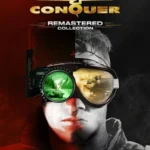
Just like the 1995 original, the absolute best way to experience the game today is via the Command & Conquer Remastered Collection (2020). Developed in part by original Westwood creators at Petroglyph, it perfectly preserves the 1996 gameplay while upgrading the sprites to gorgeous 4K resolution, restoring the FMV cutscenes, and modernizing the multiplayer matchmaking.
Key Features:
- Time-Bending Alternate History — Experience the legendary narrative where Einstein’s attempt to erase Hitler creates a terrifying, hyper-aggressive Soviet superpower.
- Allies vs. Soviets — Master the tactical, naval-focused speed of the Allied Forces or crush your enemies with the brutal, Tesla-powered armor of the Soviet Union.
- Hell March — Command your armies to the beat of Frank Klepacki’s legendary, blood-pumping industrial metal soundtrack.
- Land, Sea, and Air — Fight across massive maps that require you to balance tank columns, MiG bombing runs, and submarine wolfpacks simultaneously.
- Flawlessly Remastered — Play the definitive version of the game via the 2020 Remastered Collection, featuring one-click toggling between classic 1996 graphics and crisp 4K visuals.
Release Platforms:
- MS-DOS / Windows 95 (PC) — November 1996
- PlayStation 1 — October 1997 (Released with the ‘Retaliation’ expansion later in 1998).
- Microsoft Windows (PC) — June 5, 2020 (As part of the Command & Conquer Remastered Collection via Steam/Origin).