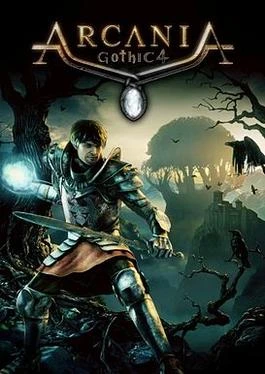
Arcania: Gothic 4
 63
★ /10
63
★ /10
 PC
PC PS 3
PS 3 PS4
PS4 Xbox 360
 Akella
 THQ Nordic


Arcania: Gothic 4 is a 2010 action role-playing game developed by Spellbound Entertainment and published by JoWooD Productions. Released for PC and Xbox 360 on October 12–19, 2010 — the year after Piranha Bytes released Risen, widely described by the community as “the real Gothic 4” — it is the fourth numbered entry in the Gothic franchise and the only one not developed by Piranha Bytes. In September 2014, Nordic Games removed “Gothic 4” from the title. The game is now sold as Arcania on Steam and GOG, with all references to the Gothic series stripped from its store description.
This did not happen accidentally.
It holds a Metacritic score of 63 on PC and 64 on Xbox 360.
Technical Specifications
| Attribute | Details |
|---|---|
| Developer | Spellbound Entertainment |
| Publisher | JoWooD Productions (original) · Nordic Games → THQ Nordic (current) |
| Engine | Trinigy Vision Engine 7/8 |
| Platform(s) | PC · Xbox 360 · PS3 (2013) · PS4 (May 8, 2015) · PS5 (backward compat) |
| Release Date | October 12–19, 2010 (PC, Xbox 360) |
| Expansion | Fall of Setarrif (October 25, 2011) |
| Complete Edition | Arcania: The Complete Tale — PS3/Xbox 360 (May 2013) · PS4 (May 8, 2015, dev: Black Forest Games) |
| Current Availability | Steam · GOG (as “Arcania”) · PlayStation Store (PS4, €19.99) |
| Metacritic | 63 (PC) · 64 (Xbox 360) |
How This Game Came to Exist
By 2007, JoWooD Productions — the publisher who had released Gothic 3 in 2006 — was in financial difficulty. Piranha Bytes, the creator of the Gothic series, was under contract for a Gothic continuation but the relationship between studio and publisher had deteriorated. Piranha Bytes began developing what would become Risen (2009) independently. JoWooD, needing a Gothic product, contracted Spellbound Entertainment — a Munich studio whose previous work included Desperados: Wanted Dead or Alive (2001) and Robin Hood: The Legend of Sherwood (2002) — to develop the fourth Gothic entry.
The project went through several name changes: Gothic 4: Genesis, then Gothic 4: Arcania, then Arcania: A Gothic Tale, before settling on Arcania: Gothic 4 for release. JoWooD’s stated ambition was to make it “one of the best RPGs of 2010.”
When JoWooD went bankrupt in 2011, the assets were acquired by Nordic Games (later THQ Nordic). In the same year, the Gothic intellectual property rights reverted to Piranha Bytes. In 2014, with Piranha Bytes and the Gothic brand separated from Arcania‘s chain of ownership, Nordic Games quietly renamed the game, removed the Gothic 4 subtitle, and struck all franchise references from the store description.
What Arcania Is
GameSpot’s 2010 review was precise: “a Gothic game in name alone.” Where the Piranha Bytes trilogy was built around open-world exploration without level scaling, living NPCs with schedules, faction depth, and the specific difficulty that derived from a world that did not adjust to the player’s capability, Arcania is a linear action-RPG with defined corridors, invisible walls limiting off-path exploration, quest markers directing the player to every objective, and combat calibrated for accessibility rather than consequence.
The experience is competent rather than broken. New Game Network’s assessment was: “Arcania: Gothic 4 fails as a Gothic game, but it isn’t broken.” The environments are visually appealing for 2010, the quest log system is well-designed (giving directions rather than pinpoint markers — one of the few deliberate design nods toward the series’ tradition), and the game functions without the catastrophic launch issues of Gothic 3. It is approximately 15 hours long.
What Was Removed
The specific features the Gothic community identifies as missing:
NPC schedules and routines. The living-world simulation — the NPCs who wake, eat, work, and sleep on timetables — is absent. NPCs exist as quest dispensers and merchants rather than inhabitants.
Faction depth. The three-camp system of Gothic 1, the guild joining of Gothic 2, and the multi-faction allegiance mechanics of Gothic 3 are all gone. The player follows a linear quest line without choosing which social structure to embed within.
Crafting and survival mechanics. Cooking meat, treating wounds, and the physical interactions with the world that gave Piranha Bytes’ games their texture were removed.
The open world. Invisible walls restrict movement. Areas are smaller and more channelled. The sense of a world that extends in all directions and rewards arbitrary exploration is absent.
The protagonist. The Nameless Hero from Gothic 1–3 does not appear as the player character. The game’s New Hero is a farmer. The Nameless Hero appears in the story — as King Rhobar III, corrupted by a demonic force — in a narrative handling that the community found disrespectful to the character.
The New Hero and the Story
The player controls a new unnamed protagonist, a farmer living on a southern island with his fiancée. King Rhobar III’s forces attack the island, killing the fiancée and destroying the village. The New Hero pursues revenge, discovers that the king is possessed by an ancient demonic entity, and ultimately frees the king from possession. The story is self-contained and reaches a complete conclusion within the game’s runtime. A post-credits scene establishes setup for a sequel that was never produced.
The decision to feature a new protagonist rather than the Nameless Hero was framed as making the game accessible to players without franchise history. The Gothic community received it as evidence that Spellbound did not understand what they had been given.
Fall of Setarrif
The expansion Fall of Setarrif was released October 25, 2011 as a standalone product. It follows the New Hero to the city of Setarrif to confront a dark wizard, adds new areas, and extends the game’s runtime by a few hours. It was slightly better received than the base game — the narrower, more focused structure suited the linear design philosophy better — but did not change the reception of Arcania as a franchise entry.
Both games are included in Arcania: The Complete Tale, the compilation released for PS3 and Xbox 360 in May 2013 — the PS3 port that had originally been promised for 2011 but delayed until after Spellbound’s development had effectively concluded.
Who It Is For
The Metacritic user review section for Arcania contains two distinct populations: Gothic fans who find the game a betrayal of the franchise, and players who came to it without franchise expectations and found a functional if shallow action-RPG. The Steam forum question “Why is this overwhelmingly negative?” received an answer that described both accurately.
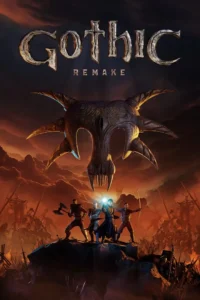
For players who want to understand the Gothic franchise’s complete commercial history — including how the series nearly died between Gothic 3 and the THQ Nordic revival — Arcania is that chapter. For players who want to experience what made Gothic worth reviving, the original trilogy and the 2026 remake are the answer.
The game is not part of the Gothic Classic console releases (Gothic Classic, Gothic II Complete Classic, Gothic III Classic). It is available on Steam and GOG under its current title of Arcania for approximately $6.99.