Master of Orion III
 64
★ /10
64
★ /10
 PC
PC


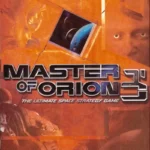
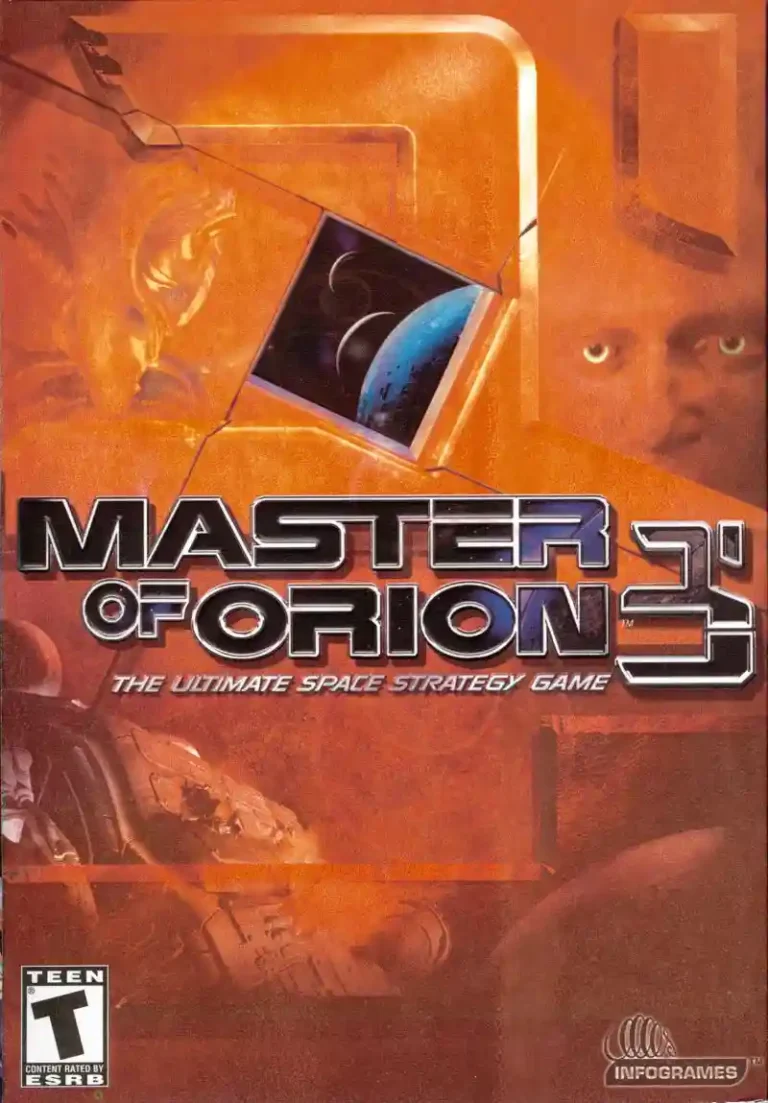
Master of Orion III (commonly abbreviated as MoO3) is a turn-based science-fiction strategy 4X video game developed by Quicksilver Software and published by Infogrames Interactive. Released on February 25, 2003, for Microsoft Windows, with a Mac OS X port handled by MacSoft following shortly after, the title represents one of the most ambitious—and deeply divisive—entries in the history of the 4X genre.
Directed by Rantz A. Hoseley and featuring design contributions from strategy veteran Alan Emrich, Master of Orion III set out to fundamentally alter the genre’s formula. While its 1996 predecessor was celebrated for its granular, intimate control over individual starships and colonies, the third installment aggressively pivoted to a macro-scale simulation.
By introducing absolute empire-wide automation, real-time task force space battles, a layered Galactic Senate, and a massive spreadsheet-style interface, the game attempted to model the structural realities of running a multi-stellar civilization.
Technical Specifications
| Attribute | Details |
|---|---|
| Developer | Quicksilver Software |
| Publisher | Infogrames Interactive (Mac OS X port: MacSoft / Current Digital: Wargaming Labs) |
| Lead Designers | Alan Emrich, Tom Hughes, William C. Fisher, Rantz A. Hoseley |
| Composer | Brian Williams |
| Engine | Proprietary 2D Engine (Natively locked at 800×600 resolution) |
| Platform(s) | Microsoft Windows, Mac OS X |
| Release Date | February 25, 2003 |
| Genre(s) | Turn-based strategy, 4X Space Grand Strategy |
| Mode(s) | Single-player, Multiplayer |
The Macro-Management Philosophy: Imperial Automation
The defining, and ultimately most controversial, design pillar of Master of Orion III is its focus on “Macromanagement.” Quicksilver Software explicitly sought to eliminate the overwhelming micro-management that traditionally plagues the endgames of massive 4X strategies.
Instead of acting as a local mayor who physically chooses every single structure or shipyard modification, the player is cast strictly as a high-level cosmic Emperor who delegates day-to-day administrative authority to regional computer-controlled governors.
The gameplay loop shifts away from clicking individual tiles to focusing on sweeping policy mandates:
- The Imperial Slider Sliders: Players set overarching funding percentages and development templates for broad categories like military infrastructure, social funding, and ecological stability.
- Autonomous AI Governors: The local artificial intelligence automatically interprets your imperial decrees, handling the physical placement of facilities, spaceport logistics, and agricultural zoning.
- The Spreadsheet UI: To present this massive, high-level data stream, the user interface abandoned cinematic layouts in favor of dense text grids and data tables, famously leading critics and players to describe the experience as “playing an interactive Excel spreadsheet.”
Expanding the Cosmos: The 16 Races
The game vastly expanded the franchise’s biodiversity pool by introducing 16 distinct playable races, categorized across seven unique biological classifications. These groupings heavily alter how factions handle core environmental factors like homeworld gravity, atmospheric dependencies, and nutritional needs:
- Humanoids (Humans and Evons): Highly charismatic, politically minded diplomats who excel at manipulating global treaties and trade logistics.
- Ethereals (Psilons and Imsaeis): Deeply cerebral, intellectual factions that receive immense passive multipliers to scientific research velocities.
- Geoids (Silicoids and Crystons): Crystalline lifeforms that consume raw minerals instead of biological food, possessing near-total immunity to industrial environmental pollution.
- Insectoids (Klackons and Tachidi): Highly coordinated hiveminds that utilize extreme labor density to maximize factory manufacturing outputs.
- Ichthoids (Trilarians and Nommo): Specialized aquatic entities fully optimized for exploiting ocean-based real estate and maritime trade routes.
- Arachnoids (Darloks and Alkari): Asymmetric operators split between phantom espionage saboteurs and elite, nimble space pilots.
- Cynoïds and Meklars: Bio-mechanical and fully cybernetic civilizations engineered to sustain massive, industrial-scale production infrastructure.
Task Force Space Combat & Cylindrical Invasions
Interstellar warfare underwent a complete architectural rewrite, discarding the turn-based, individual ship-to-ship chess matches of Master of Orion II.
Real-Time Task Force Combat
Tactical space encounters are resolved inside a continuous Real-Time Combat Screen. Because maps feature massive stellar fleets, players no longer issue movement commands to individual spaceships. Instead, ships are organized into pre-set Task Forces (such as Long-Range Engagement, Direct Assault, Escort, or Point-Defense).
The player acts as an admiral on a flag deck, issuing high-level spatial instructions (such as ordering an entire task force to flank, hold line, or target an enemy division), while the local ship commanders automatically handle individual firing angles and weapon tracking loops.
Cylindrical Ground Operations
Planetside ground invasions move away from generic abstract numbers to deploy a detailed Cylindrical Surface Projection system. When executing a planetary siege, the game models troop drops across a rolling topographical map of the world.
Players review frontline progression, choosing broad combat methodologies (such as guerrilla warfare, blitzkrieg charges, or structural orbital softening) while receiving fully voiced-over radio updates charting the real-time success or collapse of their infantries.
The New Galactic Senate & The Antaran Lore
The political metagame of the sequel is anchored by the New Galactic Senate. At the start of a match, the galaxy is already heavily integrated under a unified, corrupt parliamentary body presided over by the series’ long-running antagonists: the hyper-technological Antaran Overlords.
Rather than acting as a simple endgame scoreboard mechanism, the Senate functions as a continuous, active international house where factions propose, debate, and vote on binding planetary laws, imperial tax scales, military constraints, and trade embargoes.
The ultimate goal of the game is to expand your economic and military influence within the Senate to slowly undermine Antaran supremacy, eventually launching a grand campaign to unlock the coordinates of the legendary throne world of Orion to secure ancestral super-technologies and establish absolute galactic hegemony.
Critical Reception & Modern Digital Preservation (2026 Status)
Upon its release in early 2003, Master of Orion III was met with intense critical backlash, cementing it as one of the most notorious and polarizing disappointments in PC gaming history. Mainstream reviewers heavily criticized the title for its sterile, text-heavy spreadsheet user interface, erratic automated governor AI that frequently overrode human choices, and a complete lack of tactical agency during space combat.
However, retro strategy historians continuously defend the game as a vital, highly visionary experiment that courageously tried to push the stale formulas of the 4X genre forward by modeling true imperial delegation.
As of May 2026, the game is fully preserved and distributed digitally across platforms like Steam and GOG.com for a standard price of $9.99 under the publishing umbrella of Wargaming Labs.
The game functions stably out-of-the-box under modern 64-bit multi-core Windows 11 environments. To render the complex title truly playable and enjoyable for contemporary players, the legacy community continuously maintains several vital open-source overhaul modifications:
- The Strawberry & Vanilla Overhaul Mods: Massive, community-driven balance modules that completely rewrite the game’s broken AI governor scripts, ensuring the computer handles planet zoning and ship component allocations logically rather than destroying its own infrastructure in endless loops.
- Bhruic’s Executable Patches: Hardcoded machine-language corrections that repair deep-seated engine bugs, stabilize multiplayer netcode, and smooth out user interface performance bottlenecks.
- UI High-Resolution Wrappers: Lightweight graphic translation layers that safely bypass the game’s archaic native lock of 800×600 pixels, scaling the dense data fields and galactic map grids cleanly onto modern high-definition widescreen displays for proper historical preservation.