Master of Orion
 PC
PC


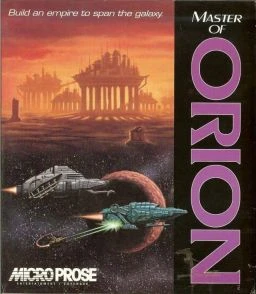
Master of Orion (commonly abbreviated as MoO or MoO1) is a foundational turn-based science-fiction strategy 4X video game developed by SimTex and published by MicroProse. Originally released in September 1993 for MS-DOS, with a Macintosh port handled by Take-Two Interactive following in 1995, it is universally celebrated as the grand pioneer of space-based grand strategy.
While older strategy titles laid out basic exploration and combat concepts, Master of Orion single-handedly defined the modern genre blueprint. In a preview article written for Computer Gaming World in 1993, strategy writer Alan Emrich famously coined the acronym “4X” to describe the game’s core loop: eXplore, eXpand, eXploit, and eXterminate.
The game eschewed tedious micromanagement in favor of high-level macroscopic sliders, asymmetric alien factions, modular ship design, and a cutthroat galactic political landscape that strategy developers still strive to emulate today.
Technical Specifications
| Attribute | Details |
| Developer | SimTex |
| Publisher | MicroProse (Mac OS port: GameTek / Take-Two) |
| Lead Designer | Steve Barcia |
| Engine | Proprietary 2D Top-Down Grid Engine |
| Platform(s) | MS-DOS, Mac OS |
| Release Date | September 1993 |
| Genre(s) | Turn-based strategy, 4X Space Grand Strategy |
| Mode(s) | Single-player |
The Ten Asymmetric Factions
Master of Orion rejected uniform nation templates, forcing players to choose from ten highly distinct alien races. Every race possesses a massive, gameplay-altering passive trait that radically alters economic priorities, scientific focus, or military deployment:
- Humans: Masters of trade and inter-species diplomacy. They earn higher financial revenues from commercial treaties, and the computer AI is naturally predisposed to trust their diplomatic proposals.
- Psilons: The undisputed intellectual titans of the galaxy. They receive a permanent, massive 50% bonus to all scientific research generation across the board.
- Klackons: A highly unified, insectoid hivemind. Their citizens require significantly lower maintenance overhead, generating extreme production bonuses for factory manufacturing.
- Silicoids: Crystalline lifeforms that completely ignore industrial pollution. They can physically colonize any hostile planet classification immediately without researching survival tech, though they suffer from a severely throttled population growth curve.
- Sakkra: Hyper-fecund reptilians who boast a massive 50% bonus to population growth velocity, allowing them to rapidly swamp new colonies in pure civilian density.
- Bulrathi: Massive, armored humanoids who excel at ground operations. They receive a permanent, overwhelming attack and defense bonus during planetary troop invasions.
- Alkari: Elite avian dogfighters. Their space fleets inherit a massive passive defense rating during ship-to-ship tactical combat, making them exceptionally difficult for enemy lasers to target.
- Mrrshan: Highly aggressive feline gunners. They receive a major accuracy and offensive fire multiplier during space combat encounters, effectively striking down enemy fleets first.
- Darloks: Master shape-shifters and phantom infiltrators. They excel at deep espionage, stealing rival technologies and sabotaging factories with minimal risk of detection, while possessing a high natural defense against foreign spies.
- Meklars: Cybernetic industrialists who utilize mechanical endoskeletons. They can operate significantly more factories per population point than any other race, turning their worlds into absolute industrial manufacturing hubs.
Slider-Driven Economics & Miniaturization
Unlike subsequent strategy games that task players with manually moving worker units across tiles or logging items into long construction queues, the original Master of Orion streamlines empire management using a clean, macroscopic Slider-Driven Economic Interface.
The Five Budget Pillars
Every colony’s gross industrial output is divided entirely by percentage sliders across five operational fields:
- Ship (Shipbuilding): Funnels manufacturing power directly into active space fleet construction.
- Def (Defense): Constructs defensive planetary missile bases and shields to repel orbital bombardments.
- Ind (Industry): Builds new factories to permanently expand the planet’s baseline manufacturing cap.
- Eco (Ecology): Clears toxic industrial pollution to prevent a population collapse, or funds terraforming projects to increase the world’s maximum population capacity.
- Tech (Technology): Pumps raw funding straight into the global empire-wide research pool.
The Six Technology Fields
Instead of scrolling down a traditional linear tree with hardcoded paths, players allocate percentage sliders into six independent scientific fields: Computers, Construction, Force Fields, Planetary Science, Propulsion, and Weapons. The actual technologies available to research within these fields are randomized at the start of every match, ensuring that players cannot rely on a single, repetitive optimal build path.
The Miniaturization Mechanic
As a civilization advances further down a specific technology vector, the game engine automatically applies a passive benefit called Miniaturization. Advanced levels of research make previously discovered ship components (like shields, engines, or weapons) exponentially smaller and cheaper to build.
An advanced weapon that initially required a massive, expensive Battleship hull to carry can eventually be shrunken down via miniaturization until it fits cleanly into a cheap, swarming Small hull cruiser, dynamically shifting tactical design parameters as the centuries march forward.
Orion & The Guardian
The narrative centerpiece and ultimate economic prize of the galaxy is Orion, the fabled, pristine homeworld of the ancients. Seeded randomly in the deep reaches of space, Orion is a legendary super-world that boasts unmatched ecological and research parameters, yielding a permanent quadruple bonus to any scientific points generated on its surface.
However, the planet is violently protected by The Guardian, a hyper-advanced, automated sentinel starship armed with high-tier shields, death rays, and lightning-fast speed metrics.
The Guardian acts as an iconic mid-to-late game boss encounter. Defeating it requires players to field massive, highly specialized capital ship designs to absorb its overwhelming firepower.
The first civilization to successfully destroy The Guardian and land a colony pod on Orion is instantly rewarded with an unmatched bounty: a massive chunk of galactic prestige and immediate access to ancient, un-researchable super-technologies (such as the Death Ray or the Xenon Shield), instantly shifting the geopolitical balance of power across the stars.
Paths to Galactic Dominance
To claim absolute victory over the galaxy, civilizations are limited to two distinct victory paths, tracking the ultimate choice between brute force or peaceful consensus:
1. Total Conquest (The Extermination Path)
The classic militaristic solution. A player wins the match immediately by building overwhelming space fleets, organizing massive ground troop transports, and systematically glassing or capturing every single enemy homeworld until their flag is the only one remaining across the star map.
2. The Galactic High Council (The Diplomatic Victory)
Periodically, after the galaxy has been fully explored, the game automatically convenes the Galactic High Council. The council brings together all remaining factions to vote for a supreme leader to peacefully unify the galaxy. The two candidate slots are automatically given to the two most powerful superpowers on the map.
Votes are allocated dynamically based on each empire’s total population count. To win a diplomatic victory, a candidate must secure a strict two-thirds majority vote.
This voting mechanic introduces a cutthroat endgame twist: if an AI leader realizes that you are about to win the High Council election, they can choose to reject the democratic consensus entirely. Refusing the vote instantly plunges the entire galaxy into an absolute, apocalyptic “Final War,” forcing the remaining factions into a permanent alliance dedicated to wiping your empire off the map.
Modern Preservation & Engine Recreation (2026 Status)
As of May 2026, the 1993 original Master of Orion is fully active, widely celebrated, and preserved with absolute technical precision. The game is natively distributed alongside its legendary successor under the compilation title Master of Orion 1 + 2 across mainstream digital platforms including Steam and GOG.com for a standard price of $5.99. The official commercial download comes pre-packaged inside an optimized, pre-configured DOSBox container, allowing it to execute out-of-the-box on modern 64-bit Windows 11 architectures.
For strategy purists seeking a modernized engine execution without utilizing old DOSBox performance structures, the preservation community actively maintains 1oom—a highly sophisticated, open-source game engine recreation that hit its definitive 2.0 “Vanilla Tracking” baseline in recent community updates.
The 1oom framework requires the raw asset files from an original, licensed copy of the game. It completely bypasses old MS-DOS memory bottlenecks, repairs deep-seated legacy machine code bugs, and implements native SDL2 graphics rendering.
This open-source architecture enables the vintage 1993 masterpiece to scale cleanly into modern fullscreen monitor aspect ratios, introducing essential quality-of-life interface improvements while flawlessly preserving the tight, slider-driven balance that made Master of Orion an timeless standard of grand strategy design.