 Nintendo DS
 PC
PC PS 3
PS 3 PSP
PSP Wii
Wii Xbox 360
 Ubisoft
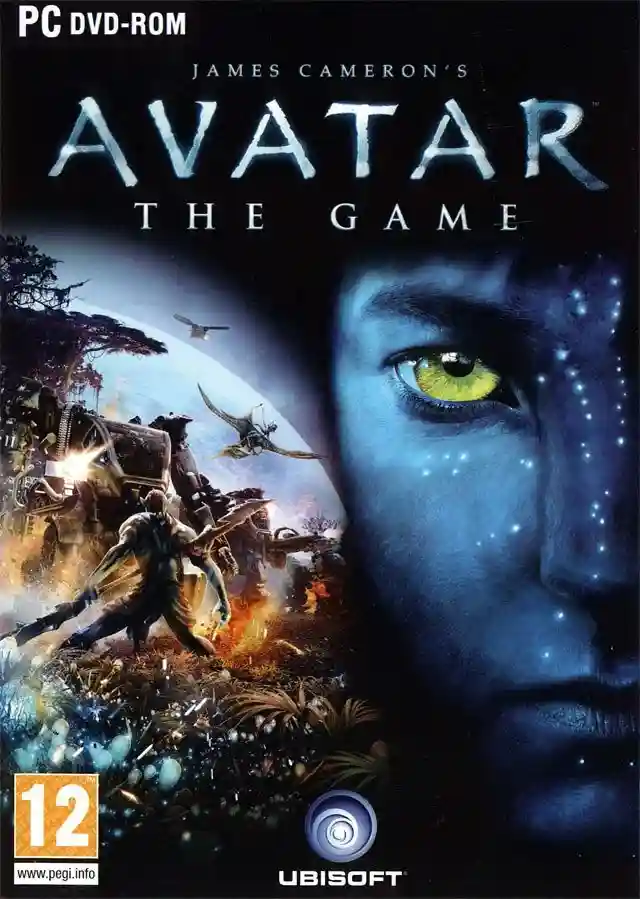
James Cameron’s Avatar: The Game is a 2009 open-world third-person action-adventure video game developed by Ubisoft Montreal and published by Ubisoft. Released in December 2009 alongside the historic, record-breaking theatrical debut of the film, the title was deployed across Microsoft Windows, PlayStation 3, Xbox 360, and Wii (with alternative standalone iterations designed for handheld architectures).
Unlike typical movie-licensed tie-ins that rush to replicate the exact cinematic plot points of their source material, Avatar: The Game operates as a fully canonical prequel. Developed in close collaboration with director James Cameron and Lightstorm Entertainment, the game takes place two years before Jake Sully ever sets foot on Pandora, serving as a rich world-building laboratory for the ecology, technology, and lore of the broader sci-fi universe.
Technical Specifications
| Attribute | Details |
| Developer | Ubisoft Montreal |
| Publisher | Ubisoft |
| Engine | Dunia Engine (Highly modified iteration of the Far Cry 2 framework) |
| Platform(s) | Microsoft Windows, PlayStation 3, Xbox 360, Wii, PSP, Nintendo DS |
| Release Date | December 1, 2009 |
| Genre | Action-adventure, Third-person shooter |
| Mode(s) | Single-player, Online Multiplayer (Defunct) |
Choosing a Side: The Dual Campaign Binary
The narrative centers on Able Ryder, an elite signals specialist deployed to the stunning, bioluminescent moon of Pandora. Ryder is tasked with bridging communications within the Avatar Program, a scientific venture using human-Na’vi hybrids to foster diplomatic relationships with the native population. However, the fragile peace quickly shatters due to the aggressive corporate resource extraction demands of the RDA (Resource Development Administration).
Roughly a quarter of the way through the campaign, the game forces the player into an absolute, irreversible structural crossroads. Players must choose to betray their species or purge the natives, triggering two completely independent campaigns that feature completely unique hub maps, mission structures, traversal physics, and combat mechanics:
1. The RDA Campaign (The Industrial Machine)
Choosing the human path transforms the title into a conventional, tactical third-person military shooter. Ryder rejects the Na’vi lifestyle, picking up a high-tech arsenal of assault rifles, flamethrowers, grenade launchers, and dual-wielded pistols. Traversal relies entirely on corporate hardware, allowing players to pilot heavily armed Aerospatiale Samson gunships, drive armored buggies, and step inside massive, mechanized AMP Suits (Amplified Mobility Platforms) to completely level the Pandoran rainforest. Combat focuses on managing weapon heat, maintaining safe defensive perimeter distances, and utilizing tactical corporate skills like orbital scans, cloaking fields, and supersonic defensive blasts.
2. The Na’vi Campaign (The Spiritual Rebellion)
Defecting to the native side forces Ryder’s human consciousness permanently into their 10-foot-tall Na’vi Avatar body. The gameplay instantly sheds its military shooter skin to become a high-speed, acrobatic melee action game. Trading firearms for traditional weapons, players master the mechanical arcs of massive longbows, high-impact combat staves, dual blades, and heavy clubs. Traversal shifts to organic Pandoran biology; players sprint across high-altitude forest canopies, ride horse-like Direhorses, and leap off cliffs to tame flying Banshees (Ikran) to wage high-altitude guerrilla warfare. Instead of tech gadgets, players invoke the spiritual forces of Eywa, triggering map-wide healing monsoons, defensive swarm defenses, and blinding wildlife battle cries.
The Pandorapedia Integration: To flesh out the environmental logic of the moon, Ubisoft integrated a massive, in-game encyclopedia known as the Pandorapedia. By scanning exotic alien fauna, analyzing toxic flora, and collecting historical data logs across both campaigns, players manually compiled deep scientific breakdowns of Pandoran life, satisfying hardcore lore purists who wanted a deeper understanding of the moon’s ecosystem.
Tech Showcase: Stereoscopic 3D and the Dunia Engine
Ubisoft Montreal utilized a heavily modified iteration of the Dunia Engine (originally engineered to process the massive, dynamic fire-propagation physics and open savannas of 2008’s Far Cry 2). Reconfigured to capture a completely different environment, the engine masterfully handled complex dense jungle geometry, brilliant real-time bioluminescent night lighting, and vast aerial draw distances.
Most notably, the title stands as an industrial milestone for display engineering: it was the first AAA video game to natively support Stereoscopic 3D. Working directly with James Cameron’s cinematic visual pipelines, Ubisoft built native compatibility for HDMI 1.4 3D televisions, utilizing active shutter technology to split rendering fields to create genuine, breathtaking depth-of-field illusions, mirroring the revolutionary theatrical presentation of the film.
Contemporary Stance & 2026 Perspective
Looking back from mid-2026, nearly seventeen years after its original deployment, James Cameron’s Avatar: The Game occupies an incredibly fascinating, highly nostalgic niche within retrospective gaming communities. For years, it was dismissed as a standard, somewhat clunky relic of the late-2000s movie tie-in era.
However, following the massive late-2023 global rollout of Ubisoft’s spiritual successor, Avatar: Frontiers of Pandora, appreciation for the 2009 original has experienced an immense resurgence. While the modern 2023 game is universally praised for its spectacular first-person visuals, sandbox purists often look back at the 2009 client with immense fondness due to its bold willingness to offer a true, uncompromised choice of perspectives, letting players fully embrace the cold, mechanized villainy of the RDA.
The modern preservation of the title presents a unique digital hurdle across current systems:
The game has long since been completely expunged and delisted from all modern digital digital storefronts like Steam, Ubisoft Connect, or Xbox Live due to the natural expiration of the film’s 15-year licensing copyright agreements. Furthermore, the master peer-to-peer multiplayer servers were permanently deactivated by Ubisoft years ago.
Because the game never received an official backward compatibility upgrade for modern eighth or ninth-generation consoles, the physical Xbox 360 and PlayStation 3 discs remain completely unplayable on modern PlayStation 5 or Xbox Series X/S hardware.
Consequently, in 2026, the absolute definitive destination to experience the title is via the PC version preserved across digital archive channels like MyAbandonware. While the original retail setup featured highly restrictive disc-based DRM parameters (SecuROM), the modern community has compiled completely clean, standalone digital wrappers.
Running under a modern 64-bit Windows 11 desktop environment, contemporary PC players can easily upscale the Dunia engine to native 4K resolutions at flawless, un-capped frame rates exceeding 120Hz, ensuring that Able Ryder’s original choice between corporate greed and environmental salvation remains beautifully preserved for retrospective sci-fi squads.