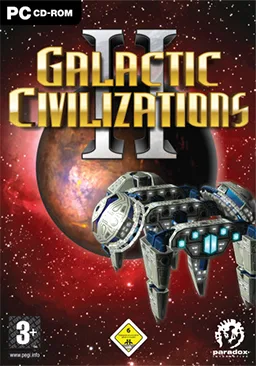
Galactic Civilizations II: Dread Lords
 86
★ /10
86
★ /10
 PC
PC
 1C Company, Paradox Interactive, Stardock


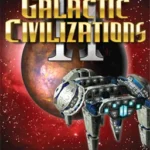
Galactic Civilizations II: Dread Lords (commonly abbreviated as GalCiv II) is a critically acclaimed turn-based space grand strategy 4X video game developed and published by Stardock. Released on February 21, 2006, for Microsoft Windows, the game is the direct commercial successor to 2003’s Galactic Civilizations and stands as a towering, universally celebrated masterpiece of the genre, frequently ranked by critics alongside Master of Orion II as one of the greatest 4X strategy games ever coded.
While the original 2003 title was locked to a flat 2D plane and abstract macroeconomic sliders, Dread Lords dragged the franchise into a fully realized 3D engine. By introducing a revolutionary, piece-by-piece modular ship customization sandbox, transforming planet management into localized tactical tile grids, and formalizing a strict “rock-paper-scissors” military matrix, the game offered an unprecedented layer of creative and strategic freedom that fundamentally redefined turn-based space operas.
Technical Specifications
| Attribute | Details |
| Developer | Stardock |
| Publisher | Stardock, Paradox |
| Lead Designer / Writer | Brad Wardell |
| Engine | Proprietary 3D Object-Oriented Engine |
| Platform | Microsoft Windows (XP / Vista / 7 / 10 / 11) |
| Release Date | February 21, 2006 |
| Genre(s) | Turn-based strategy, Space Grand Strategy, 4X |
| Mode | Single-player |
Core Gameplay Mechanics: The Four Innovations
Galactic Civilizations II preserved the award-winning, non-cheating artificial intelligence, ethical alignment systems, and the United Planets galactic senate from its predecessor, but completely overhauled the underlying mechanical loop via four major design pillars:
1. The 3D Modular Ship Designer
The absolute signature hallmark of the title was its revolutionary ship creation terminal. Instead of forcing players to buy preset hull templates, Dread Lords gave players complete engineering autonomy. Hulls are divided into five scale classes (Tiny, Small, Cargo, Medium, Large, and Huge), each governed by a strict internal mass and capacity ceiling.
Players spend manufacturing points to bolt on functional sub-systems—such as life support, warp engines, weapon hardpoints, and defensive shields. Crucially, the engine paired this with a massive library of purely cosmetic structural attachments (wings, nacelles, sensory dishes, hulls). These cosmetic parts cost zero mass or credits, allowing players to visually sculpt completely unique starfleet ethics, ranging from faithful replicas of iconic sci-fi pop-culture vessels to bizarre geometric monstrosities.
2. Planetary Surface Tile Grids
Moving away from abstract empire-wide sliders, Dread Lords introduced a localized, highly tactical tile-placement system for planet management. Worlds are rated by a baseline “Planet Class” (e.g., a Class 10 world features exactly 10 usable construction tiles).
Players manually drop down specific facilities grid-by-grid, balancing factories, research laboratories, starports, agricultural hubs, and morale-boosting entertainment centers. Strategy relies heavily on exploiting terrain multipliers: a planet tile containing a native “Precursor Relic” might grant a +100% boost to any research lab erected directly on top of it, forcing players to hyper-specialize worlds into dedicated industrial forges, banking capitals, or scientific havens.
3. The Structural Combat Triad
Interstellar warfare abandoned generic attack and defense values to implement a strict, three-pronged tactical counters matrix. Weapons and defenses are hardcoded into three mutually exclusive operational disciplines:
| Weapon Class | Defensive Counter | Strategic Vulnerability |
| Beam Weapons (Lasers, Phasers) | Energy Shields | Completely absorbed by shields; bypasses point-defense and armor. |
| Mass Drivers (Kinetic Railguns) | Chobham Armor Plates | Deflected by heavy armor hull plating; easily cracks energy shields. |
| Missiles (Photon Torpedoes) | Point-Defense Systems | Shot down in mid-flight by point-defense arrays; deals devastating raw hull damage if undefended. |
This triad turned military production into a dynamic intelligence war. If an aggressive enemy empire spams battleships outfitted entirely with heavy missiles, a player can completely blunt their offensive vanguard by quickly researching and retrofitting their own fleet hulls with cheap, dedicated point-defense interceptors.
4. Zero-Velocity Tactical Combat
True to Stardock’s commitment to grand-scale strategy over micro-management, space battles completely omit manual ship steering. When two adversarial armadas intercept each other within a coordinate sector, the engine opens a fully 3D cinematic theater.
The battle plays out automatically based entirely on your pre-engineered ship speeds, weapon ranges, and defense triad calculations. Players watch the laser batteries flash and shields flare from a variety of dramatic camera angles, stripping away operational click-fatigue to keep the player focused entirely on macro-level imperial logistics.
The Campaign Narrative: Awakening the Dread Lords
The overarching story of the game expands upon the lore of the Precursors—an ancient, god-like species that ruled the galaxy hundreds of thousands of years ago before splitting into two ideological factions: the benevolent Arceans and the malevolent, omnipotent Dread Lords.
Set in the year 2225, the campaign chronicles a massive system-wide trap. The merciless, insectoid Drengin Empire coordinates a massive interstellar war to systematically corner the human Terran Alliance. However, the conflict accidentally shatters a pocket-dimension seal, unleashing the long-imprisoned Dread Lords back into the material plane.
Possessing starships that can instantly vaporize entire fleets, the Dread Lords function as an asymmetric global threat. To survive, traditional mortal enemies—including humans, Drengin, and the spiritual Altarians—are forced to form fragile, highly volatile political coalitions to prevent total galactic extinction.
Expansions and The Ultimate Edition Evolution
Following the massive critical success of the base game, Stardock deployed two expansion packs that significantly expanded the strategic sandbox:
- Dark Avatar (2007): Injected a deep espionage system, environmental world colonization restrictions (forcing players to research specific techs to settle toxic or radioactive rocks), and unique asteroid-mining bases.
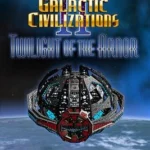
- Twilight of the Arnor (2008): The definitive overhaul that completely redesigned the 4X landscape by replacing the generic shared technology tree with a 100% unique, completely asymmetric technology tree for every single playable race in the game, alongside introducing planet-killing Terror Stars.
Modern Preservation Status (2026 Perspective)
As of May 2026, Galactic Civilizations II stands perfectly preserved and readily accessible as an immortal milestone of PC strategy gaming history. The entire compiled saga—bundling the base Dread Lords client alongside Dark Avatar and Twilight of the Arnor—is actively distributed on major digital storefronts including Steam and GOG.com under the definitive title Galactic Civilizations II: Ultimate Edition for a standard retail price of $19.99.
Because Stardock built the game around highly scalable 32-bit Windows API layers and robust multithreaded coding frameworks rather than legacy command-line or DOS environments, the Ultimate Edition installer executes natively out-of-the-box on contemporary 64-bit Windows 11 architectures without requiring external emulators or heavy configuration mods.
Modern digital storefront updates ensure full native compatibility for modern widescreen monitor configurations, clean UI font scaling up to high resolutions, and zero-latency performance stability, allowing contemporary strategy purists to experience the flawless tactical ship design, deep planetary tile grids, and masterclass non-cheating AI with absolute technical fidelity.